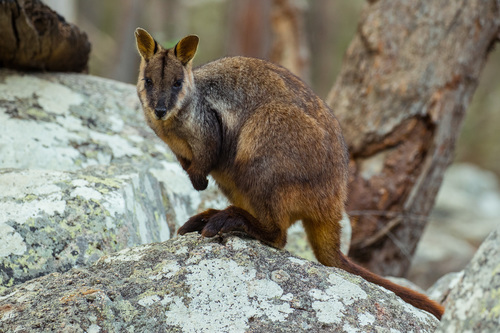
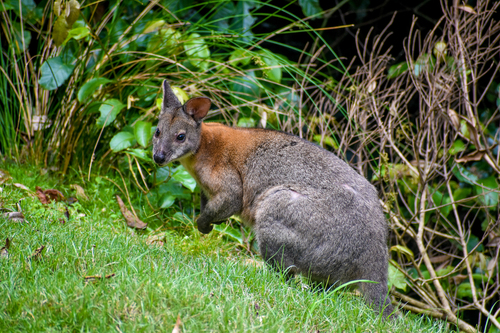
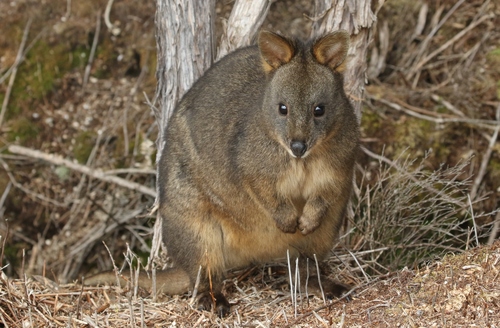
How to Identify Macropodidae

Macropodidae is a animal family in the Animalia kingdom, order Diprotodontia, class Mammalia. The family contains 24 accepted species worldwide.

Key Identification Features

For instant identification in the field, use the iNature app — AI-powered, works offline.
Representative Macropodidae Species

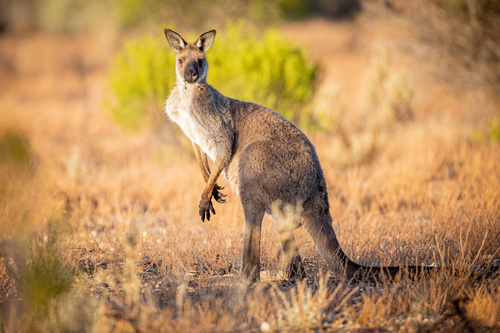
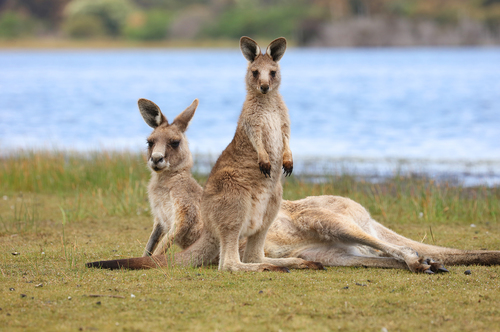
How to identify Macropus giganteus Shaw, 1790

Macropus giganteus Shaw, 1790

Macropus giganteus Shaw, 1790

Macropus giganteus (eastern grey kangaroo) is Australia's common large marsupial…

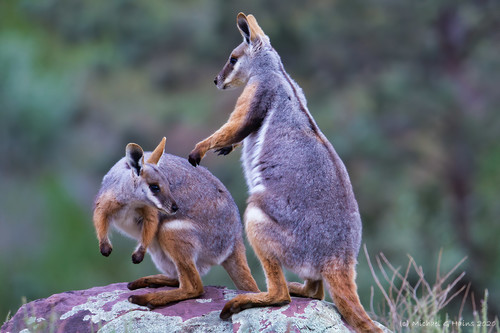
How to identify Petrogale xanthopus Gray, 1854

Petrogale xanthopus Gray, 1854

Petrogale xanthopus Gray, 1854

Petrogale xanthopus, the yellow-footed rock-wallaby, is a coloured wallaby found…

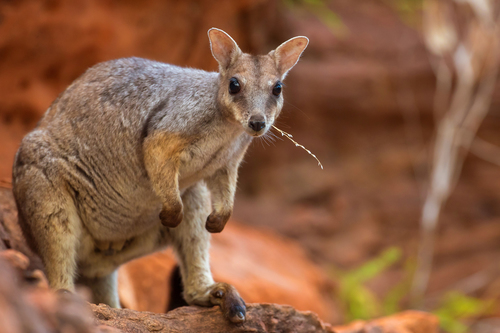
How to identify Petrogale brachyotis (Gould, 1840)

Petrogale brachyotis (Gould, 1840)

Petrogale brachyotis (Gould, 1840)

Petrogale brachyotis, the short-eared rock-wallaby, is a varied rock-wallaby spe…

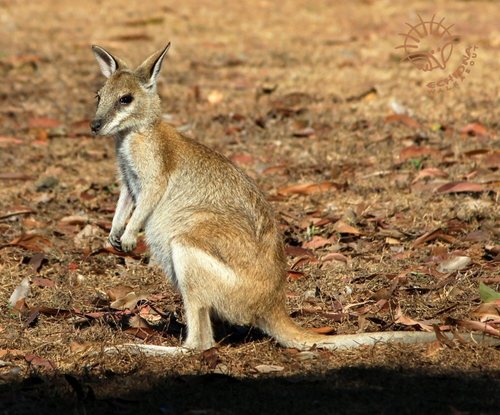
How to identify Macropus agilis (Gould, 1841)

Macropus agilis (Gould, 1841)

Macropus agilis (Gould, 1841)

Macropus agilis, the agile wallaby, is a sexually dimorphic Australian and New G…

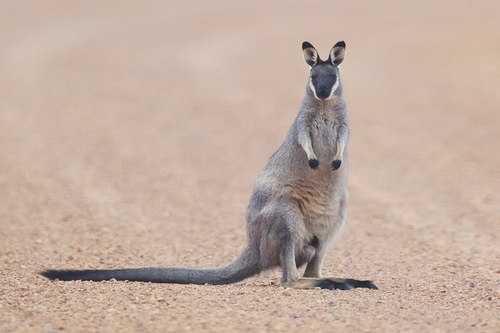
How to identify Notamacropus irma (Jourdan, 1837)

Notamacropus irma (Jourdan, 1837)

Notamacropus irma (Jourdan, 1837)

Notamacropus irma, the western brush wallaby, is a small marsupial native to sou…

How to identify Macropus fuliginosus (Desmarest, 1817)

Macropus fuliginosus (Desmarest, 1817)

Macropus fuliginosus (Desmarest, 1817)

Macropus fuliginosus, the western grey kangaroo, is a large Australian macropod …

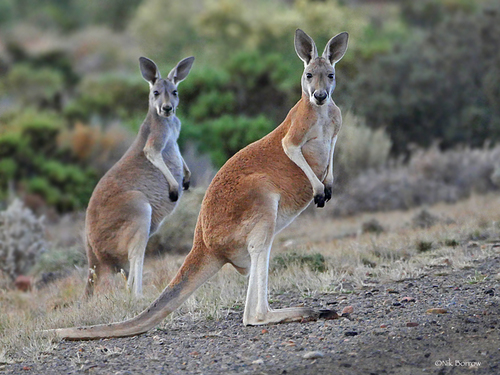
How to identify Macropus rufus (Desmarest, 1822)

Macropus rufus (Desmarest, 1822)

Macropus rufus (Desmarest, 1822)

Macropus rufus, the red kangaroo, is the largest kangaroo species native to inla…

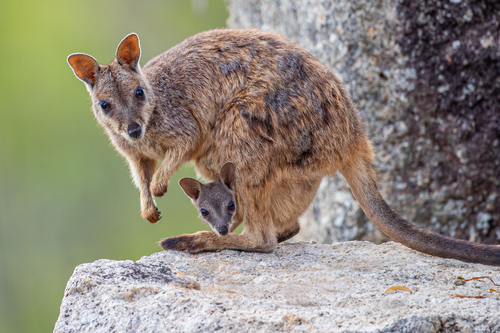
How to identify Petrogale mareeba Eldredge & Close, 1992

Petrogale mareeba Eldredge & Close, 1992

Petrogale mareeba Eldredge & Close, 1992

Petrogale mareeba, the Mareeba rock-wallaby, is a rare rock-wallaby found in res…

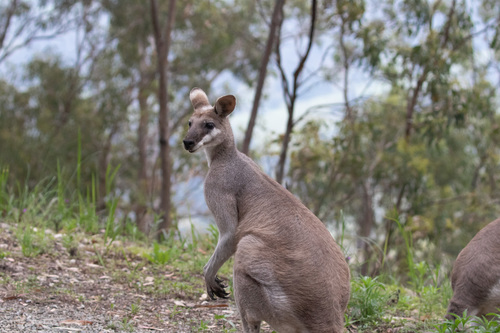
How to identify Notamacropus parryi Bennett, 1835

Notamacropus parryi Bennett, 1835

Notamacropus parryi Bennett, 1835

Notamacropus parryi, the whiptail wallaby, is a marsupial with distinct fur mark…

How to identify Petrogale penicillata (Gray, 1827)

Petrogale penicillata (Gray, 1827)

Petrogale penicillata (Gray, 1827)

Petrogale penicillata, the brush-tailed rock-wallaby, is a rock-dwelling wallaby…

How to identify Thylogale thetis (Lesson, 1828)

Thylogale thetis (Lesson, 1828)

Thylogale thetis (Lesson, 1828)

The red-necked pademelon (Thylogale thetis) is a small, shy crepuscular macropod…

How to identify Thylogale billardierii (Desmarest, 1822)

Thylogale billardierii (Desmarest, 1822)

Thylogale billardierii (Desmarest, 1822)

Thylogale billardierii, the Tasmanian pademelon, is an abundant marsupial found …

Browse all 24 Macropodidae species →

Frequently Asked Questions

How do you identify Macropodidae?

Macropodidae animals belong to the Diprotodontia order in the Animalia kingdom. Eastern grey kangaroos are easy to identify by their distinctive soft grey coat, and they generally occupy moister, more fertile habitats than red kangaroos. For instant identification, use the iNature app — AI-powered and works offline.

What are the key characteristics of Macropodidae?

Macropodidae is classified in the order Diprotodontia, class Mammalia, phylum Chordata. It has a black mid-dorsal stripe running from the crown of the head to the centre of the back, plus a distinct white stripe along its cheek.

Sources: GBIF, iNaturalist, Wikipedia · Disclaimer

Start Exploring Nature Today

Download iNature for free. 10 identifications on us. No account needed. No credit card required.

App Store
Scan to download from App Store

Scan with iPhone camera

Google Play
Scan to download from Google Play

Scan with Android camera