About Macropus giganteus Shaw, 1790
Nomenclature and Classification
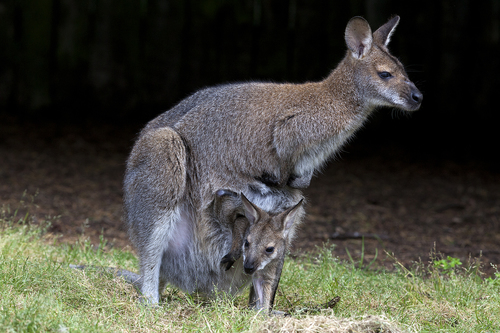
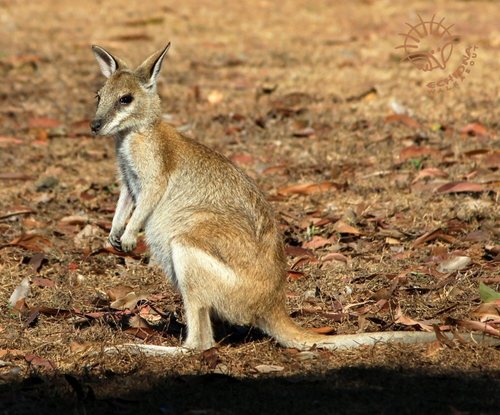
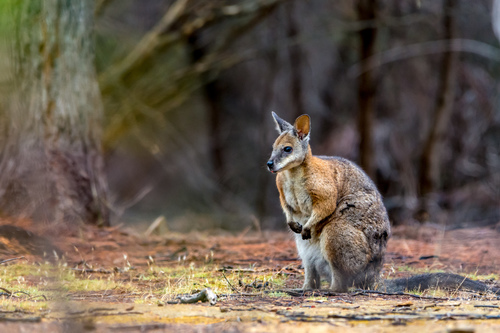
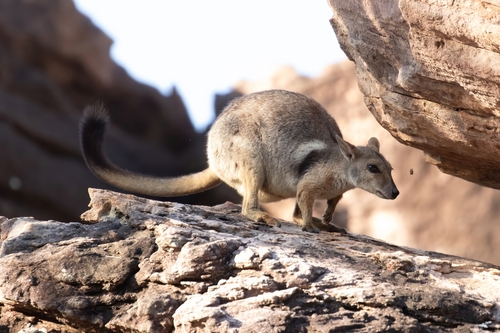
The eastern grey kangaroo, with the scientific name Macropus giganteus Shaw, 1790, is the second largest and heaviest living marsupial and native land mammal native to Australia.
Common Adult Weight
Common adult males typically weigh 50 to 66 kg (110 to 146 lb), while common adult females typically weigh 17 to 40 kg (37 to 88 lb).
Adult Male Tail Length
Adult males have a powerful tail that grows to over 1 m (3 ft 3 in) long.
Record Specimen Weight and Length
One individual shot in eastern Tasmania weighed 82 kg (181 lb), with a total length of 2.64 m (8 ft 8 in) from nose to tail, measured possibly along the curves.
Largest Confirmed Specimen Measurements
The largest known confirmed specimen, examined by Lydekker, weighed 91 kg (201 lb) and measured 2.92 m (9 ft 7 in) along the curves; when its skin was laid flat, it measured 2.49 m (8 ft 2 in) in length.
Coat and General Habitat Preference
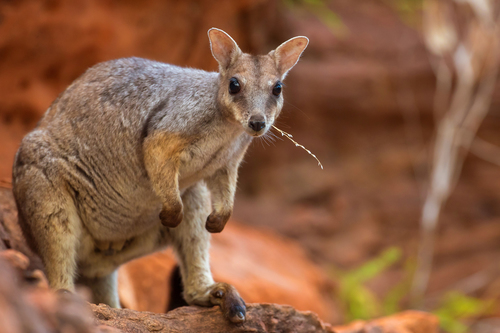
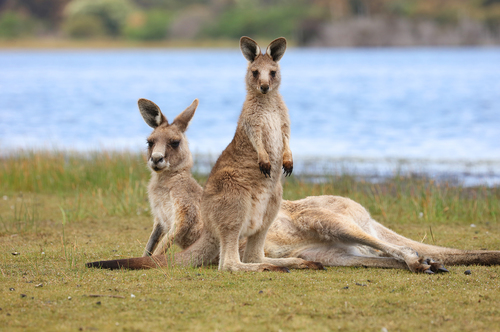
Eastern grey kangaroos are easy to identify by their distinctive soft grey coat, and they generally occupy moister, more fertile habitats than red kangaroos.
Facial Differences from Red Kangaroos
While red kangaroos sometimes have a grey-blue colour, their facial structure is entirely different from that of eastern grey kangaroos: red kangaroos have unique black and white markings alongside their muzzles and along the sides of their face, markings that eastern grey kangaroos lack, and eastern grey kangaroos have noticeably large, wide open eyes.
Similarity to Western Grey Kangaroos
Where their geographic ranges overlap, it is far harder to distinguish between the closely related eastern grey and western grey kangaroos, as the two species have very similar body and facial structure.
Muzzle Hair Trait Shared with Western Greys
Both species have muzzles fully covered in fine hair; while this trait is not visible at a distance, their noses are still noticeably different from the noses of red kangaroos and wallaroos.
Coat Colour Differences from Western Greys
The eastern grey kangaroo’s fur is light grey or brownish-grey, with a lighter silver or cream, sometimes nearly white, belly, while the western grey kangaroo has a dark dusty brown coat, with more colour contrast especially around the head.
Aboriginal Common Names
Australian Aboriginal names for this species include iyirrbir in the Kunjen language and kucha in the Pakanha language.
Record Speed
The fastest speed ever recorded for any kangaroo was 64 km/h (40 mph), set by a large female eastern grey kangaroo.
Human Encounter Frequency
Although red kangaroos are more widely known, eastern grey kangaroos are the kangaroo species most frequently encountered by people in Australia, due to their high adaptability.
Australian Population Distribution
Few Australians travel to the arid interior of the continent, while most Australians live in and around the major cities along the southern and eastern coasts.
Proximity to Urban Areas
From these cities, it is typically only a short drive to remaining patches of near-city bushland where eastern grey kangaroos can be found easily.
Preferred Primary Habitat
The eastern grey kangaroo prefers open grassland with areas of bush to use as daytime shelter, and mainly lives in the wetter regions of Australia.
Additional Occupied Habitats
It also occupies coastal areas, woodlands, sub-tropical forests, mountain forests, and inland scrubs.
Mating System
Eastern grey kangaroos are polygynous, meaning one male mates with multiple females.
Male-Male Competition for Mates
Males compete heavily with one another for access to mates, including male-male fights that establish dominance between competing individuals.
Courtship and Copulation Process
When a dominant male encounters a female in estrus, he will court the female before the pair copulates.
Post-Copulation Mate Guarding
After copulation, the male guards the female from other males.
Reproductive Interaction Duration
The full process, from courting through the end of guarding, takes approximately one hour.
Female Kinship Benefits
Female eastern grey kangaroos may form strong kinship bonds with their female relatives, and females with living female relatives have a higher chance of successfully reproducing.
Birth Seasonality
Most eastern grey kangaroo births take place during the summer.
Obligate Breeding Trait
Eastern grey kangaroos are obligate breeders, meaning they can only reproduce in one specific type of habitat.
Embryonic Diapause
Female eastern grey kangaroos are usually permanently pregnant except on the day they give birth, but they have the ability to pause an embryo’s development until the previous joey is able to leave the pouch.
Diapause Trigger Conditions
This process is called embryonic diapause, and it typically occurs during periods of drought or in areas with limited food resources.
Milk Nutrient Adjustment
The nutritional composition of the milk a mother produces changes to match the needs of her current joey.
Foraging Adjustments During Lactation
Because lactation requires a great deal of energy, lactating females typically adjust some of their foraging habits: some females forage more quickly to spend more time tending to their joey, while others forage more aggressively to consume as much food as possible.
Simultaneous Dual Milk Production
Additionally, a mother can produce two different types of milk at the same time, one for a newborn joey and one for an older joey still living in her pouch.
Reproductive Response to Dry Conditions
Unusually for a mammal, during dry periods, male eastern grey kangaroos do not produce sperm, and females will only conceive if enough rain has fallen to grow a large amount of green vegetation.
Parental Care
Only females care for young, with no assistance from males.
Predation Risk Reduction for Mothers with Joeys
Females with a joey often feed alone to separate themselves from other kangaroos and reduce the risk of predation.
Weaning Age
Joeys remain heavily dependent on their mother for around 550 days, at which point they are weaned.
Sexual Maturity Ages
Female eastern grey kangaroos reach sexual maturity between 17 and 28 months of age, while males reach sexual maturity at around 25 months of age.