About Petrogale brachyotis (Gould, 1840)
Taxonomic Classification
This species, scientifically named Petrogale brachyotis (Gould, 1840), is a member of the Petrogale genus, which is commonly known as rock-wallabies. This taxon displays variation in size and coloration, and has been recognized as a distinct species group called the brachyotis species group within the genus.
Species Group Research
The group occurs in an area that has made research difficult, but a 2014 examination of specimens separated one new species from the group and identified additional cryptic taxa within the original population. Before this taxonomic revision, the general description of Petrogale brachyotis (sensu lato) included variations that were later recognized as unique distinguishing characters of separate taxa.
Fur Coloration
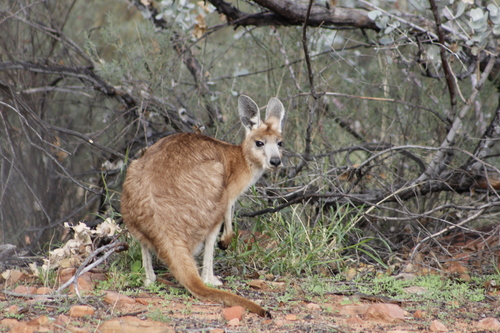
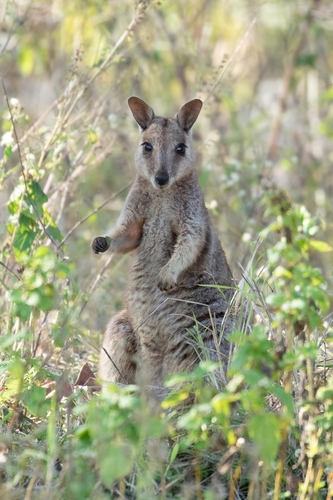
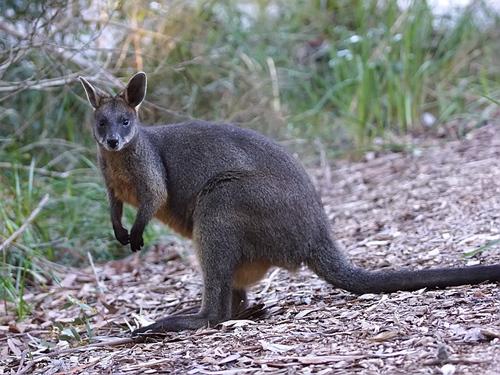
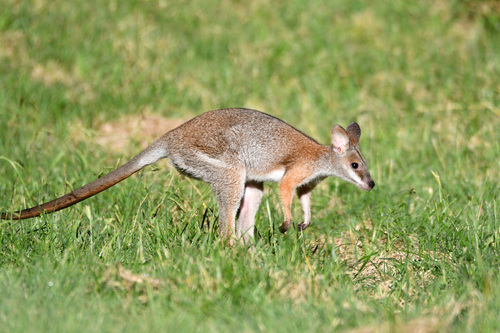
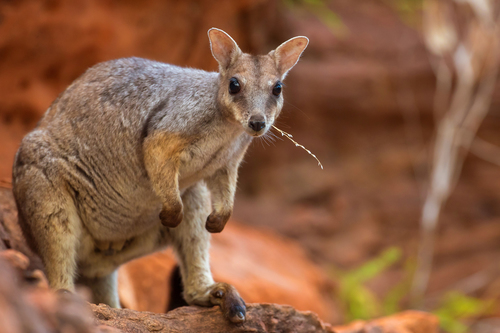
The fur of P. brachyotis is grey-brown, interspersed with silver hairs that highlight its overall color, while the underside is pale grey.
Size and Weight
The combined head and body length ranges from 415 to 550 millimetres (16.3 to 21.7 in), and individuals weigh between 2.2 and 5.5 kilograms (4.9 to 12.1 lb).
Tail Characteristics
The tail is relatively short for a member of the Petrogale genus, measuring 320 to 550 mm (13 to 22 in); it is mostly cinnamon brown, with a dark brown to blackish tuft of fur at the tip.
Ear Size
The ears are also relatively small, measuring less than half the length of the head at 40 to 48 mm (1.6 to 1.9 in).
Limb and Flank Markings
Cinnamon coloring extends to the legs, which is interrupted by a buff or whitish stripe along the thigh that continues across the flank and over the shoulder, where a darker patch appears below the forelimb.
Facial Markings
A buff patch on the side of the snout has an off-white stripe below it that reaches toward the eye.
Dorsal Stripe
A dark stripe starting at the crown of the head runs to the middle of the back.
Regional Color Variation
All coloration is duller and striping is less distinct in populations found in the Victoria River and Kimberley region.
Nominate Subspecies Origin
The description of the nominate subspecies is based on a specimen collected at Hanover Bay.
Second Subspecies Status
A second subspecies is currently recognized, described from four specimens from a single population; this subspecies may be elevated to full species rank after examination of additional material.
Subspecies Holotype Collection
The holotype of Petrogale brachyotis victoriae was collected in 1974 at Lobby Creek in the Bradshaw region of the Northern Territory.
Subspecies Etymology
This population is only known from collections made near the Victoria River, which led authors to choose victoriae as the subspecies' epithet.
Geographic Distribution
P. brachyotis has a patchy distribution across a wide range that extends west from the Queensland-Northern Territory border, through the Top End, to Windjana Gorge in northwestern Australia. Its inland range is restricted to areas with annual rainfall above the 600 mm isohyet.
Island Populations
It also occurs as island populations in the Gulf of Carpentaria.
Habitat Preferences
Its preferred habitat includes monsoonal rainforest and open grassland, where it occupies cliffs, hills and valleys that provide both refuge and foraging opportunities.