Key Identification Features
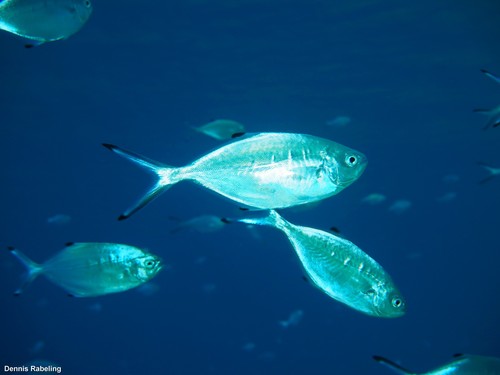
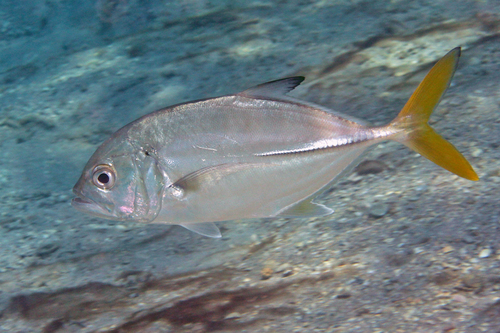
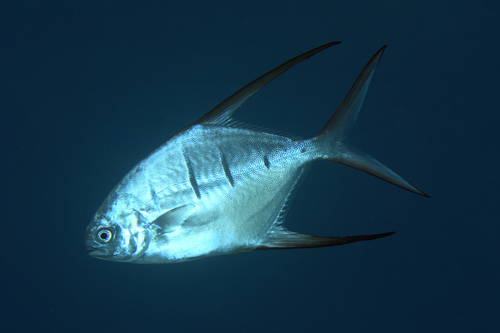
- The caudal fin is distinctly forked, with black margins and a white spot on the fin's upper half.
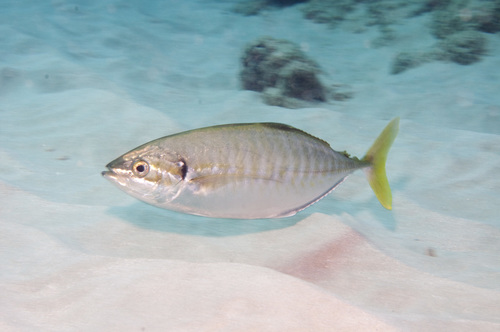
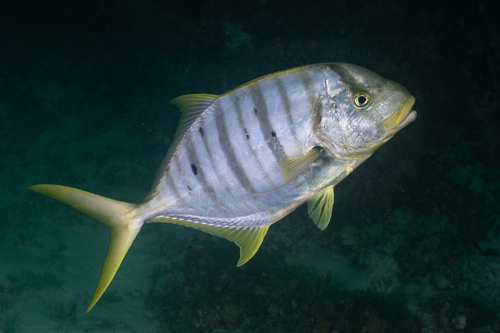
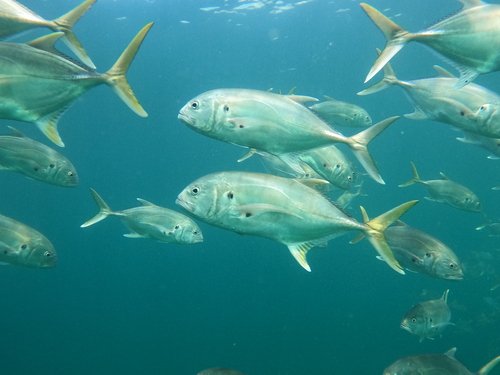
- All fins are yellow to dusky, except for the caudal fin: the caudal fin has a dusky upper lobe, a dusky to yellow lower lobe, and a distinct narrow white band along its trailing edge.
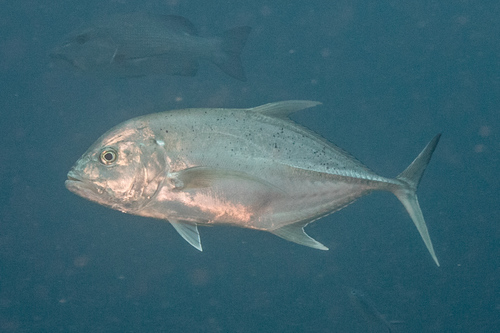
- This species is often mistaken for the giant trevally, Caranx ignobilis, but can be easily distinguished by its lighter dorsal coloring and high number of black spots.
- Its dorsal fin is split into two distinct parts: the first part has eight spines, and the second part has one spine and 21 to 23 soft rays.
For instant identification in the field, use the iNature app — AI-powered, works offline.