About Trachurus novaezelandiae Richardson, 1843
Scientific Name and Common Name
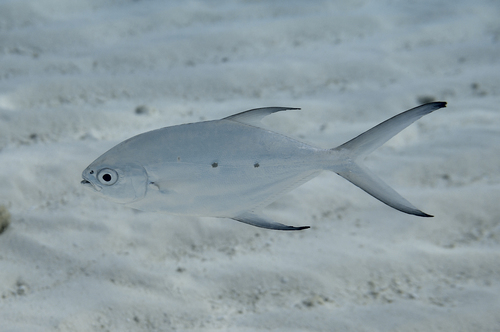
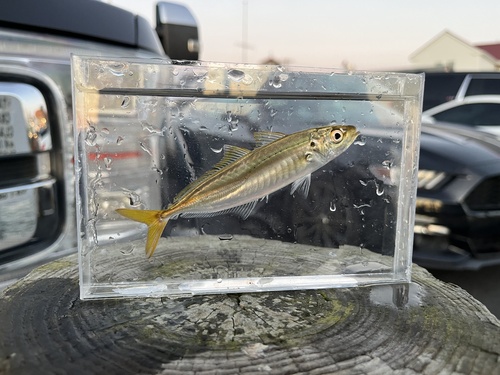
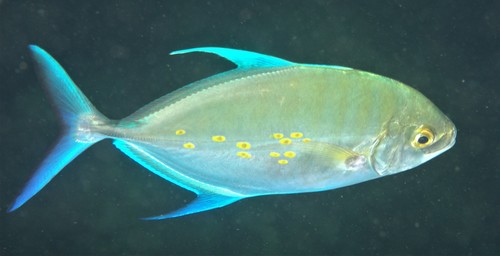
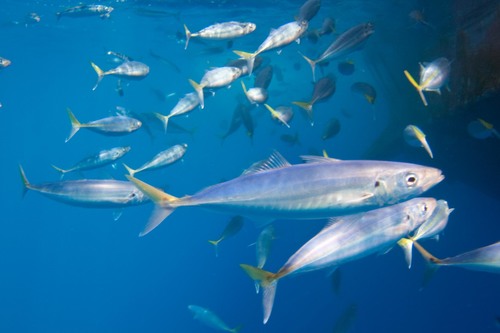
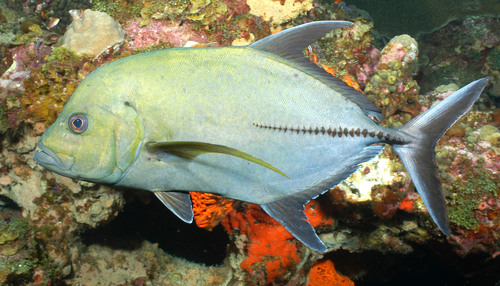
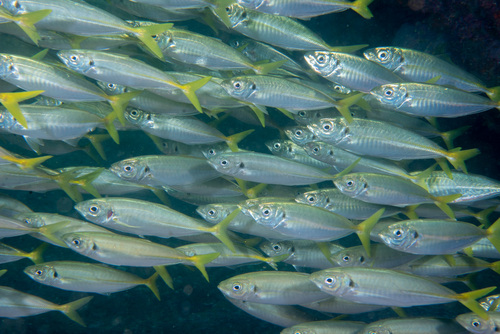
Trachurus novaezelandiae, commonly called the yellowtail horse mackerel, has a moderately compressed, oval-shaped body.
Species Distinction and Lateral Line Scutes
This species is very similar to the greenback horse mackerel, but differs in the number of lateral line scutes: it has 68 to 73 lateral line scutes, while the greenback horse mackerel has 76 to 82.
Body Coloration
Yellowtail horse mackerels are bright olive green on the upper body, which transitions to golden green on the lower sides before becoming silvery white on the underside.
Body Markings
Nine to 16 faint grey vertical bars run along the fish's sides.
Operculum Spot
There is also a black spot slightly smaller than the eye located on the upper margin of the operculum and adjacent shoulder region.
Parasite Infection Prevalence
In some areas of Australia, yellowtail horse mackerel (locally called Yakka) are often infected by the parasite Cymothoa exigua.
Parasite Behavior
This parasite first eats the host fish's tongue, then replaces it.
Parasite Impacts
The parasite does not cause additional harm to the fish, and it has no effect on humans, but it should be removed before the fish is consumed.
Adult Habitat and Depth Range
Adult yellowtail horse mackerels live in coastal waters and estuaries, and prefer depths of less than 150 metres and water temperatures no lower than 13 °C.
Schooling and Water Position
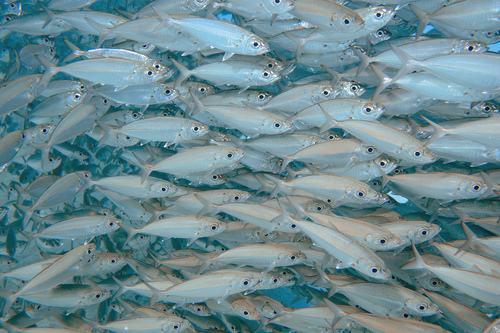
They are most commonly found near the seabed or in midwater, and are only rarely recorded near the surface, swimming in large schools.
Habitat by Life Stage
Adult fish are typically found over offshore rocky reefs, while juveniles prefer shallow waters with soft substrates.