About Trachinotus blochii (Lacepède, 1801)
Body Shape
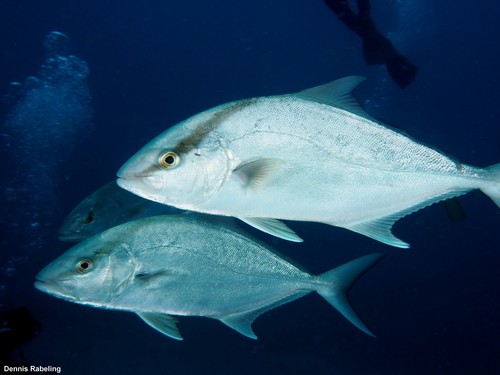
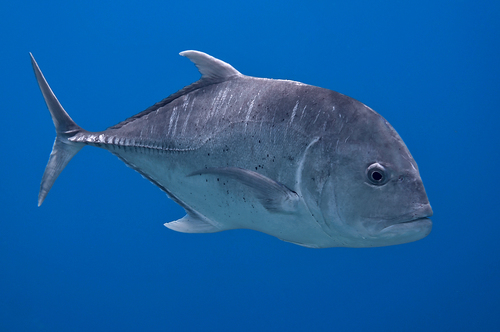
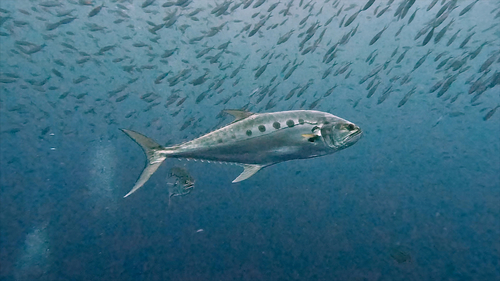
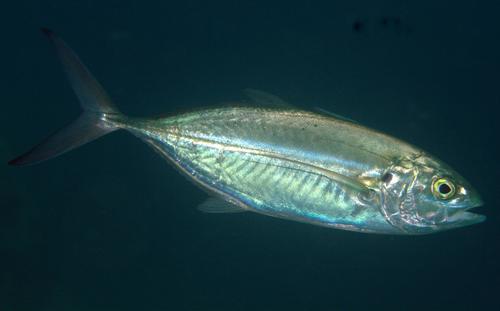
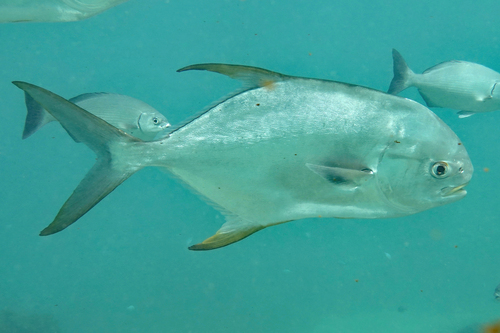
Trachinotus blochii has a fusiform, streamlined, torpedo-like body that is elongated, which reduces drag for burst swimming—an adaptation for evading predators.
Countershading Adaptation
Its coloration is another anti-predator adaptation: the darker dorsal side camouflages the fish when viewed from above, while the lighter ventral (abdominal) side helps it blend in when viewed from below.
Common Name Etymology
Its overall yellow coloration gives it the common name "golden".
Sexual Size Dimorphism
Females are typically larger than males; one study recorded females as 17% larger than males after the fish reach 7 months of age.
Adult Size
Adults measure 40–65 cm (16–26 in) in length, and typically weigh around 3.4 kg (7.5 lb).
Diet Requirements
This species is metabolically active and swims continuously, so it requires a high-energy diet.
Geographic Range
Trachinotus blochii occurs across a range from the Indian Ocean, Red Sea, and eastern Africa to the central Pacific Ocean, extending as far north as Japan and as far south as the coast of southern New South Wales.
Habitat Associations
Golden pompano are pelagic fish associated with rocky reefs, coral reefs, and inshore habitats.
Environmental Preferences
They live in warm waters between 25–29°C, at depths of 7–55 m (23–180 ft), and can inhabit brackish water.
Sexual Dimorphism Traits
This species is sexually dimorphic. While males and females have similar coloration, they have different growth rates: females typically mature and grow faster than males.
Spawning Behavior
The life cycle starts when females release eggs into offshore waters.
Egg Characteristics
The eggs are approximately 1 mm (0.039 in) in diameter, and they usually hatch within 24 hours.
Larval Development
After hatching, larvae undergo metamorphosis to develop into the juvenile form, a process that takes around 15 days to complete.
Juvenile Habitat
Juveniles are found in offshore sandy areas.