About Lithobates pipiens (Schreber, 1782)
Scientific Naming and Size
The northern leopard frog, scientifically named Lithobates pipiens (Schreber, 1782), is a fairly large frog species that reaches approximately 11 cm (4.3 in) in snout-to-vent length.
Dorsal Coloration and Spots
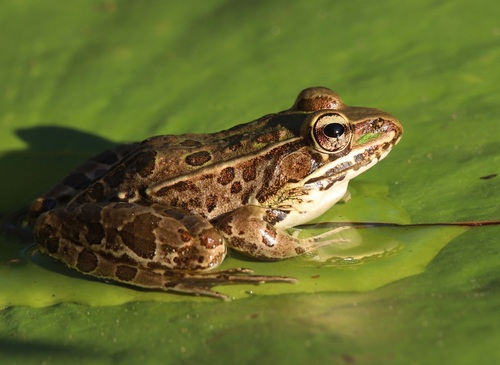
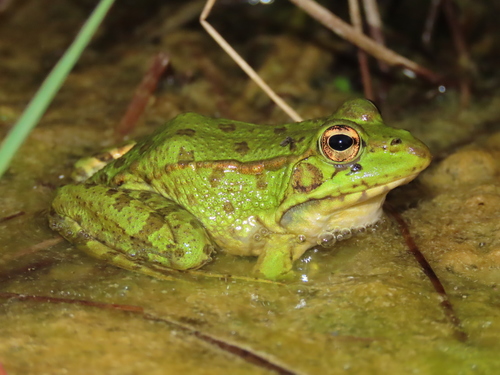
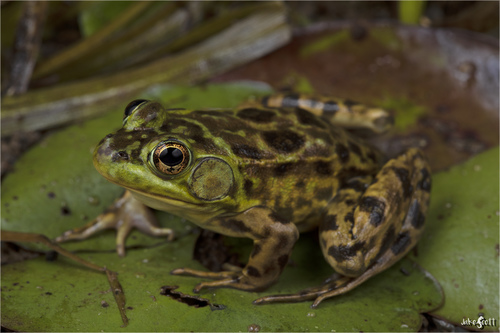
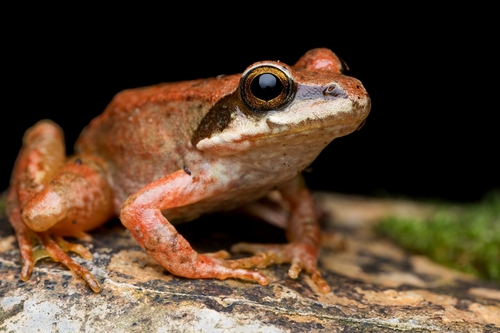
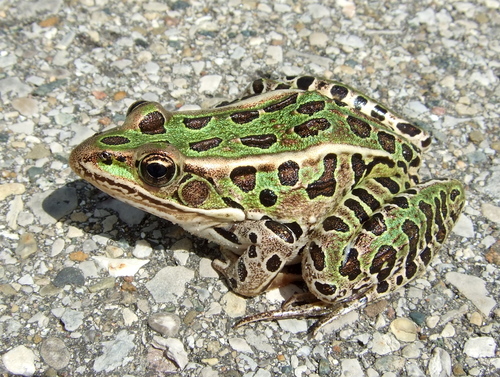
Its dorsal body color ranges from green to brown, with large, dark, circular spots on its back, sides, and legs. Each spot is typically surrounded by a lighter-colored ring.
Dorsolateral Folds
A pair of dorsolateral folds begins behind the eye and runs parallel down the back; these folds are often lighter in color, and occasionally pinkish.
Facial Stripe
A pale stripe extends from the nostril, under the eye and tympanum, and ends at the shoulder.
Ventral Surface and Limb Features
The frog’s ventral surface is white or pale green, its iris is golden, and its toes are webbed.
Tadpole Appearance
Tadpoles of this species are dark brown or grey, with light blotches on the underside, and a pale tan tail.
North American Distribution
Northern leopard frogs range from Great Slave Lake and Hudson Bay, Canada, south to Kentucky and New Mexico, USA.
Panamanian Population
The species is also found in Panama, where it occurs only in the central cordillera and western Pacific lowlands, though this Panamanian population is most likely an undescribed separate species.
General Habitat Types
They inhabit grasslands, lakeshores, and marshes, and occupy a broad range of other habitats including permanent ponds, swamps, slow-moving streams across forested, open, and urban areas. They usually live in water bodies with abundant aquatic vegetation.
Summer Terrestrial Movement
In summer, they often leave ponds to move into grassy areas and lawns.
Elevation and Cold Adaptation
They are well-adapted to cold conditions and can be found at elevations above 3,000 m (9,840 ft) above mean sea level.
Male Mating Call
During spring and summer, males produce a short, snore-like call from the water.
Breeding Season
Breeding occurs in spring, between March and June.
Egg Laying and Tadpole Development
Females can lay up to 6500 eggs in water, and tadpoles finish their development within the breeding pond. Breeding tadpoles are light brown with black spots, and development takes 70 to 110 days, depending on environmental conditions.
Post-Metamorphosis Juveniles
Young frogs after metamorphosis are 2–3 cm (0.79–1.18 in) long and already resemble adult northern leopard frogs.
Population Decline Onset
This species was once very common across parts of western Canada and the United States, but population declines began in the 1970s.
Decline Contributing Factors
While the exact cause of the decline has not been confirmed, habitat loss and fragmentation, environmental contaminants, introduced fish, drought, and disease have all been proposed as contributing factors, and these issues are likely preventing the species’ recovery in many areas. Many northern leopard frog populations have not yet recovered from these declines.
Predator Species
Northern leopard frogs are preyed on by a wide variety of animals, including bass, pike, herons, garter snakes, water snakes, raccoons, green frogs, American bullfrogs, hawks, gulls, red foxes, American mink, North American river otters, leeches, newts, turtles, diving beetles, giant water bugs, and dragonfly larvae.
Anti-Predator Adaptation
They do not produce distasteful skin secretions, so they rely on speed to escape predators.
Typical Prey Items
They eat a broad variety of prey, including crickets, flies, worms, and smaller frogs.
Unusual Large Prey Records
With their large mouths, they can even swallow small birds and garter snakes; one record notes that a bat was eaten by this frog.
Similar Species
This species is similar in appearance to the pickerel frog (Lithobates palustris) and the southern leopard frog (Lithobates sphenocephalus).
Oocyte Ribonucleases
Northern leopard frogs produce specific ribonucleases in their oocytes. These enzymes are being studied as potential cancer treatments.
Ranpirnase Medical Applications
One of these molecules, called ranpirnase (also known as onconase), is currently in clinical trials as a treatment for pleural mesothelioma and lung tumors.
Amphinase Medical Applications
A second enzyme, amphinase, has been identified as a potential treatment for brain tumors.