About Gloydius halys (Pallas, 1776)
Female Size
Gloydius halys, also known by its scientific name Gloydius halys (Pallas, 1776), reaches a maximum recorded total length of 59 cm (23 in) in females, including a tail length of 68 mm (2.7 in).
Male Size
The largest male on record measures 53 cm (21 in) in total length, including an 80 mm (3.1 in) tail.
Body Shape
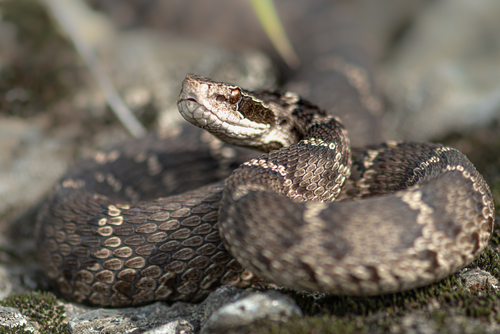
This species has a moderately stout body build, with a snout that is slightly upturned when viewed from the side.
Dorsal Coloration
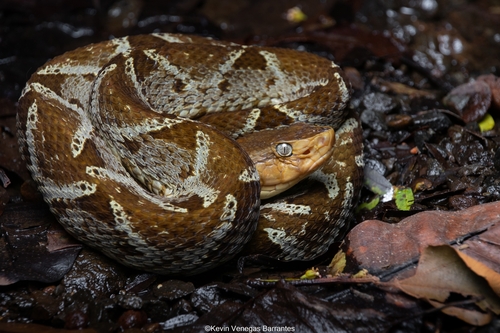
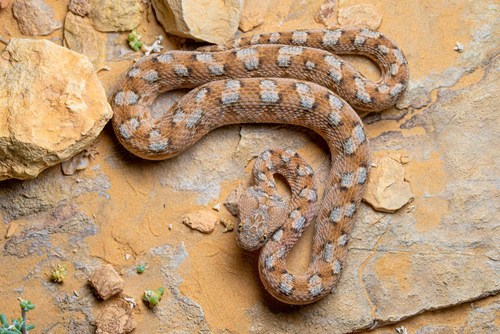
Dorsally, G. halys can be grayish, pale brown, reddish, or yellowish, and is marked with large dark spots or crossbars that have serrated borders.
Lateral Markings
One or two lateral series of smaller dark spots are present along the sides.
Postocular Stripe
There is a wide dark stripe behind the eye, which is bordered by light stripes both above and below.
Ventral Coloration
The venter is whitish, and is speckled with gray or brown.
Dorsal Scales
The strongly keeled dorsal scales are arranged in 23 rows at midbody.
Ventral Scales
Ventral scales number between 149 and 174.
Anal Plate
The anal plate is entire.
Subcaudal Scales
Subcaudal scales number between 31 and 44, and are divided and paired.
Geographic Distribution
This species is distributed across Russia from east of the Ural Mountains through Siberia, Iran, Mongolia, northern and central China, and the southern Ryukyu Islands of Japan.
Original Type Locality
The originally given type locality, cited by Gloyd and Conant (1990), is "Salt Lake near the Lugaskoi Sawod (factory) on the Upper Yenisey" in Siberia, Russia.
Redefined Type Locality
This type locality was redefined by Bour (1993) as "Naryn or Ryn Peski desert, near the Russia-Kazakhstan border".