About Calidris alpina (Linnaeus, 1758)
Morphological Measurements
Measurements: Length 16–20 cm (6.3–7.9 in), weight 34–77 g (1+1⁄4–2+3⁄4 oz), wingspan 38–43 cm (15–17 in).
Breeding Adult Plumage
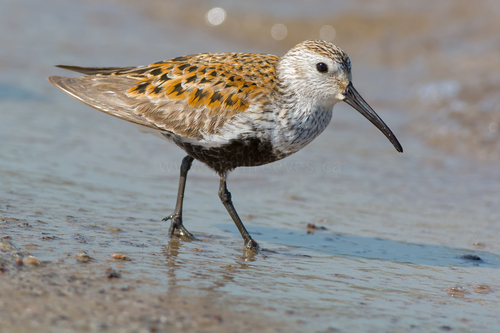
An adult dunlin in breeding plumage has a distinctive black belly that no other similar-sized wader has.
Non-breeding Adult Plumage
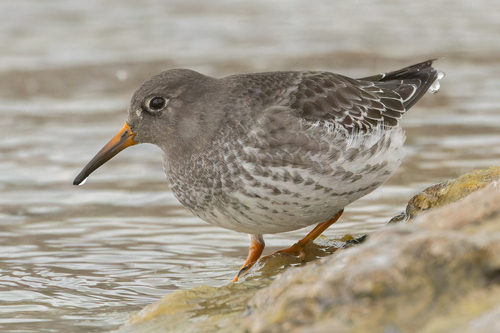
In winter, dunlins are greyish-brown on their upperparts and white on their underparts.
Juvenile Plumage
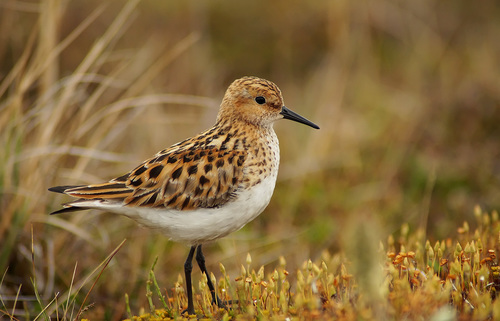
Juveniles are brown above with two faint whitish V-shaped markings on the back; these markings are less obvious than the same feature seen on little stints and some other species in the Calidris genus. Juveniles usually have black markings on their flanks or belly.
Shared Plumage Features
All age classes show a narrow white wingbar when in flight. The legs and slightly decurved bill are black.
Subspecies Plumage Variation
Subspecies differ most noticeably in the extent of rufous plumage, the size of the black belly patch during the breeding season, and bill length. In winter, there are no plumage differences between subspecies, and only bill length provides limited help for identification.
Sexual Bill Dimorphism
Bill length also differs between sexes: females have longer bills than males, which makes identifying winter subspecies even more complicated.
Bill Sensory Structure
The tip of the dunlin's bill has a soft blood-filled covering with many nerve endings, which forms a sensitive probe used to locate invertebrate prey in mud and sand.
Bill Morphology Variation
While the bill can appear sharp-pointed in preserved dead specimens, it is blunt in living birds.
Vocalizations
The dunlin's call is a typical sandpiper "chreep", and its display song is a harsh trill.
Migratory and Philopatric Traits
Dunlins are small migratory waders, and they exhibit strong philopatry: individuals of the southern subspecies Calidris alpina schinzii in Sweden and Finland return to or very near their natal habitat patches.
Habitat Fragmentation Effects
Habitat fragmentation has reduced the availability of suitable habitat patches for these birds, by decreasing patch size and increasing isolation between patches. This reduced connectivity between patches limits dunlin movement, making these local populations more vulnerable to inbreeding.