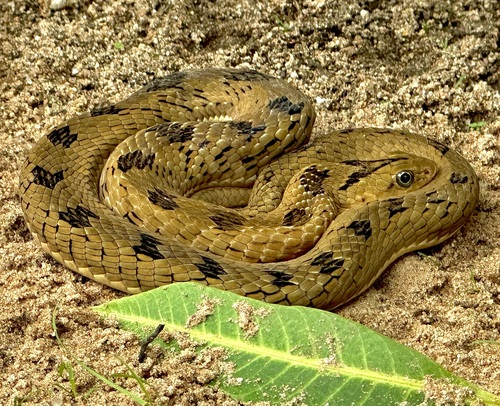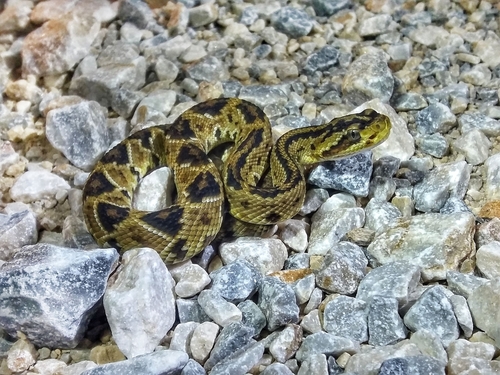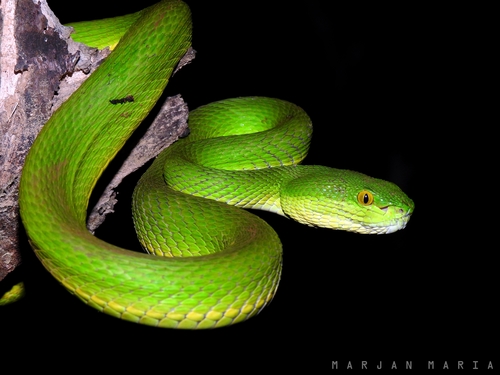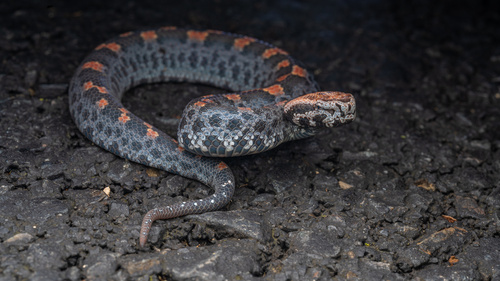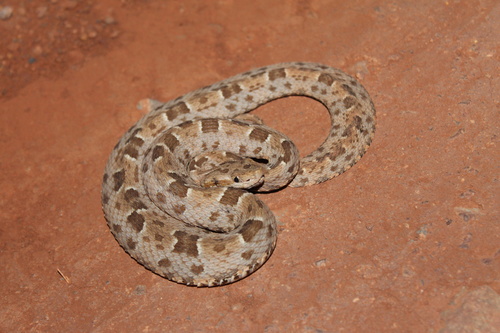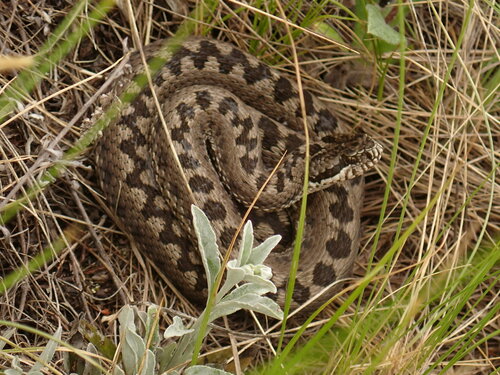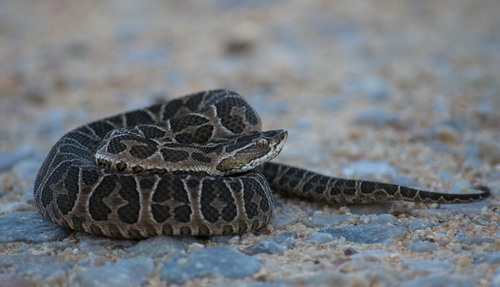
About Bothrops alternatus Duméril, Bibron & Duméril, 1854
Common Names and Basic Identity
Bothrops alternatus, which has common names including crossed pit viper, yarará grande, and urutu, is a highly venomous pit viper species native to South America. Across its distribution range, it is a major cause of snakebite.
Etymology of Species Name
Its species-specific epithet alternatus is Latin for "alternating", and this name is thought to refer to the staggered markings along the snake's body. Currently, no subspecies of this species are recognized.
General Distribution Range
This species is distributed across southeastern Brazil, Paraguay, Uruguay, and northern Argentina. In Argentina, it occurs in the provinces of Buenos Aires, Catamarca, Córdoba, Corrientes, Chaco, Entre Ríos, Formosa, La Pampa, Misiones, San Luis, Santa Fe, Santiago del Estero, and Tucumán.
Type Locality
The documented type locality for the species is listed as "Amérique méridionale" and "Paraguay".
General Habitat Types
Bothrops alternatus can be found in tropical and semitropical forests, as well as temperate deciduous forests. A 1977 report by Gallardo notes that the species prefers marshes, low-lying swamps, riparian zones, and other humid habitats.
Anthropogenic and Regional Habitats
It is also commonly found in sugarcane plantations. Depending on latitude, it can occupy a wide variety of habitats: in Argentina, this includes open fields and rocky areas in Córdoba's Sierra de Achiras and Buenos Aires' Sierra de la Ventana, as well as fluvial areas, grasslands, and cerrado.
Habitat Limitations
Despite this habitat flexibility, it is typically not found in dry environments.
Reproductive Mode
Female Bothrops alternatus give birth to live young, and the number of offspring produced depends on the female's size. Leitão de Araujo and Ely (1980) documented two litters from captive females, which produced 3 to 12 young total.
Newborn Morphometrics
These two litters had average newborn weights of 17.4 grams (0.61 oz) and 17.5 grams (0.62 oz), and average total newborn lengths of 31.0 centimetres (12.2 in) and 31.3 centimetres (12.3 in). Cardinale and Avila (1997) collected a single female in 1995 that contained 26 embryos.
Litter Size Range
Haller and Martins (1999) confirmed that this species can produce between 1 and 24 offspring per birth. Newborn neonates match adult snakes in appearance, except that their coloration is brighter.
Neonatal Traits
Neonates are able to deliver a venomous strike immediately after birth.