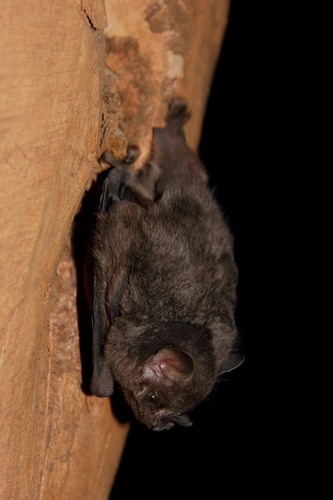
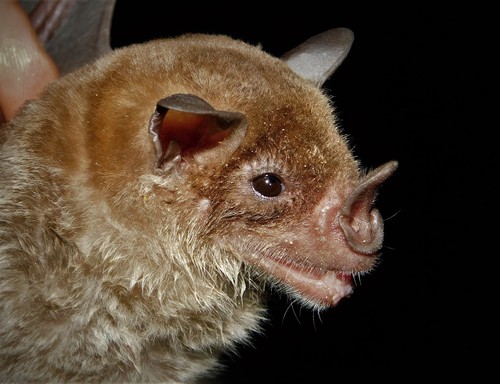
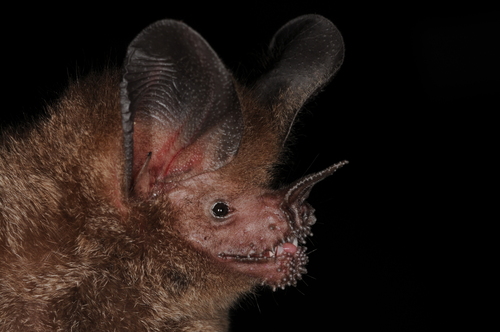
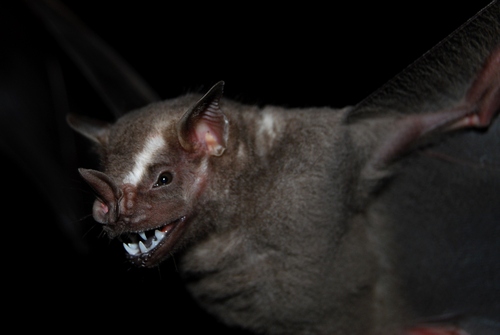
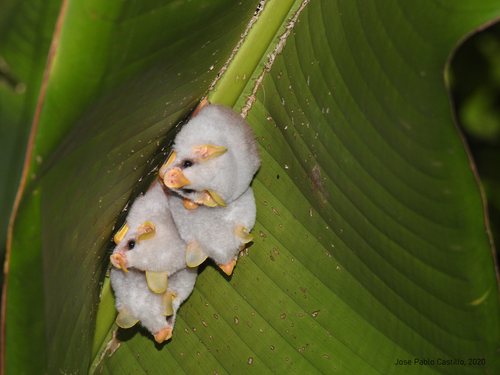
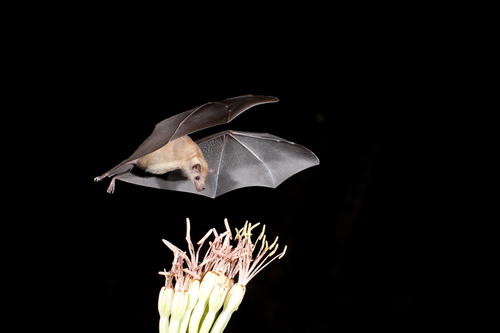
How to Identify Phyllostomidae

Phyllostomidae is a animal family in the Animalia kingdom, order Chiroptera, class Mammalia. The family contains 34 accepted species worldwide.

Key Identification Features

For instant identification in the field, use the iNature app — AI-powered, works offline.
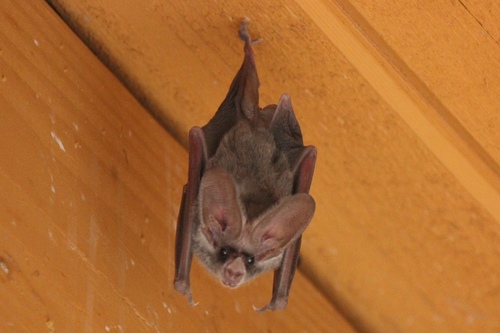
Representative Phyllostomidae Species

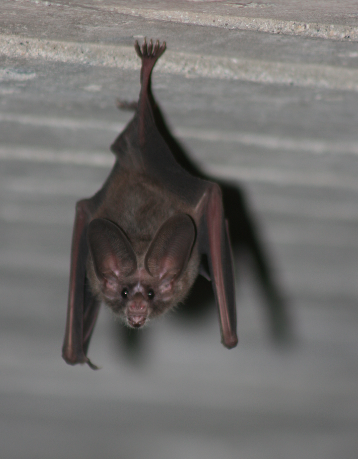
How to identify Macrotus californicus Baird, 1858

Macrotus californicus Baird, 1858

Macrotus californicus Baird, 1858

Macrotus californicus, the California leaf-nosed bat, is a non-migratory desert …

How to identify Macrotus waterhousii Gray, 1843

Macrotus waterhousii Gray, 1843

Macrotus waterhousii Gray, 1843

Macrotus waterhousii, or Waterhouse's leaf-nosed bat, is a big-eared Phyllostomi…

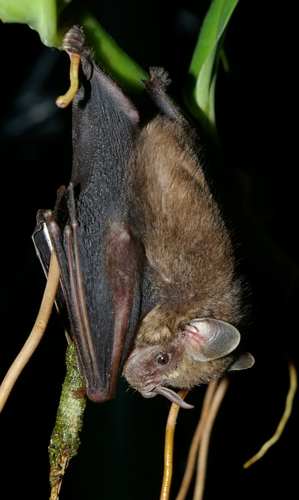
How to identify Artibeus phaeotis phaeotis

Artibeus phaeotis phaeotis

Artibeus phaeotis phaeotis

Artibeus phaeotis phaeotis, the pygmy fruit-eating bat, is a small nocturnal fru…

How to identify Chrotopterus auritus (Peters, 1856)

Chrotopterus auritus (Peters, 1856)

Chrotopterus auritus (Peters, 1856)

Chrotopterus auritus, the big-eared woolly bat, is a large predatory Neotropical…

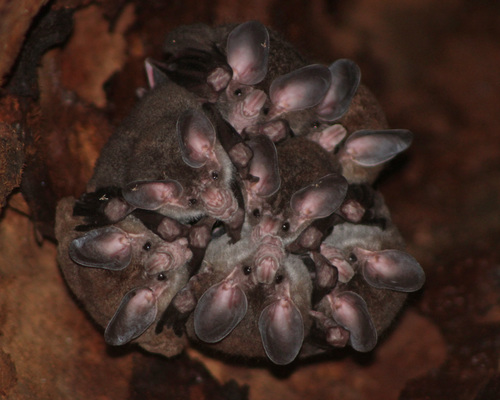
How to identify Mesophylla macconnelli Thomas, 1901

Mesophylla macconnelli Thomas, 1901

Mesophylla macconnelli Thomas, 1901

MacConnell's bat (Mesophylla macconnelli) is a monotypic bat species native to S…

How to identify Artibeus aztecus aztecus

Artibeus aztecus aztecus

Artibeus aztecus aztecus

Artibeus aztecus aztecus is a large, tailless nocturnal bat subspecies found in …

How to identify Phyllostomus discolor Wagner, 1843

Phyllostomus discolor Wagner, 1843

Phyllostomus discolor Wagner, 1843

Phyllostomus discolor, the pale spear-nosed bat, is a robust phyllostomid bat fo…

How to identify Trachops cirrhosus (Spix, 1823)

Trachops cirrhosus (Spix, 1823)

Trachops cirrhosus (Spix, 1823)

Trachops cirrhosus, the fringe-lipped bat, is a medium omnivorous neotropical ba…

How to identify Uroderma bilobatum Peters, 1866

Uroderma bilobatum Peters, 1866

Uroderma bilobatum Peters, 1866

Uroderma bilobatum is a medium-sized striped frugivorous bat found from Mexico t…

How to identify Artibeus lituratus (Olfers, 1818)

Artibeus lituratus (Olfers, 1818)

Artibeus lituratus (Olfers, 1818)

Artibeus lituratus is a species with unique heart structures, observed carrying …

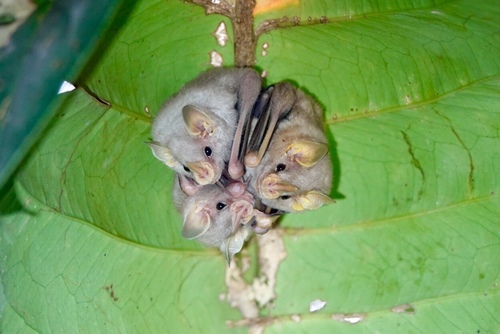
How to identify Ectophylla alba H.Allen, 1892

Ectophylla alba H.Allen, 1892

Ectophylla alba H.Allen, 1892

Ectophylla alba, the Honduran white bat, is a small bright white Central America…

How to identify Leptonycteris yerbabuenae Martínez & Villa-R., 1940

Leptonycteris yerbabuenae Martínez & Villa-R., 1940

Leptonycteris yerbabuenae Martínez & Villa-R., 1940

Leptonycteris yerbabuenae, the lesser long-nosed bat, is a small nectar-feeding …

Browse all 34 Phyllostomidae species →

Frequently Asked Questions

How do you identify Phyllostomidae?

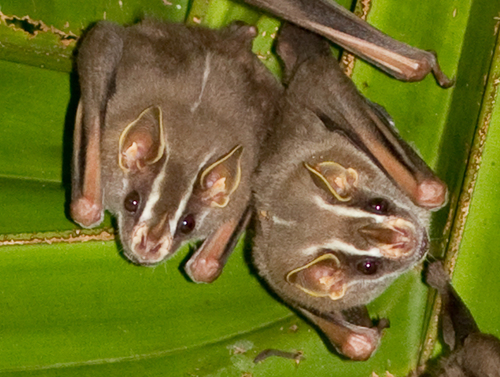
Phyllostomidae animals belong to the Chiroptera order in the Animalia kingdom. The face features two distinct, symmetrical pairs of white stripes: one pair extends across the head, between and behind the ears, while the other pair sits just below each eye. For instant identification, use the iNature app — AI-powered and works offline.

What are the key characteristics of Phyllostomidae?

Phyllostomidae is classified in the order Chiroptera, class Mammalia, phylum Chordata. A second 2019 study found that the distinctive yellow pigment may have been selected for due to the species' tent-roosting behavior.

Sources: GBIF, iNaturalist, Wikipedia · Disclaimer

Start Exploring Nature Today

Download iNature for free. 10 identifications on us. No account needed. No credit card required.

App Store
Scan to download from App Store

Scan with iPhone camera

Google Play
Scan to download from Google Play

Scan with Android camera