About Uroderma bilobatum Peters, 1866
Size and Proportions
Uroderma bilobatum is a medium-sized bat species, with individuals weighing 13 to 20 grams and a body length of 59–69 millimeters. Females are typically slightly larger than males.
Fur Coloration
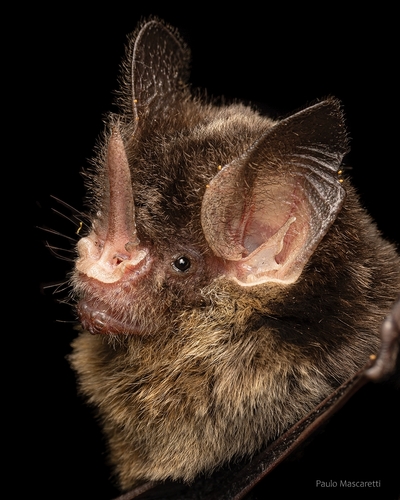
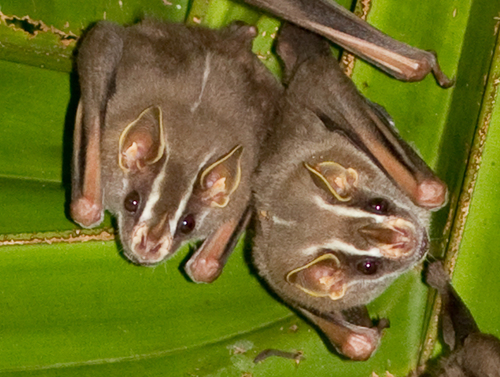
Their fur (pelage) ranges in color from dark gray to grayish brown, with the belly being a lighter shade than the back. Each individual hair in their coat is bicolored, lighter at the base than the tip. A thin white stripe runs along the center of the back, from behind the head to the rump.
Facial Markings
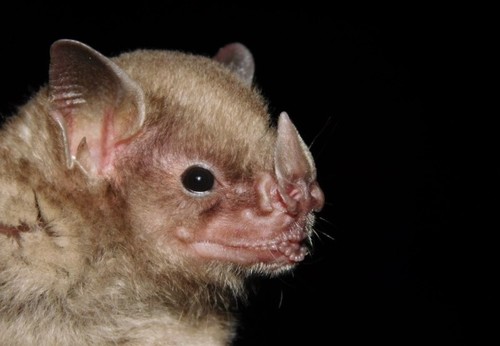
The face features two distinct, symmetrical pairs of white stripes: one pair extends across the head, between and behind the ears, while the other pair sits just below each eye. This striped facial pattern may work as camouflage, making the eyes less noticeable to potential predators.
Noseleaf and Tail
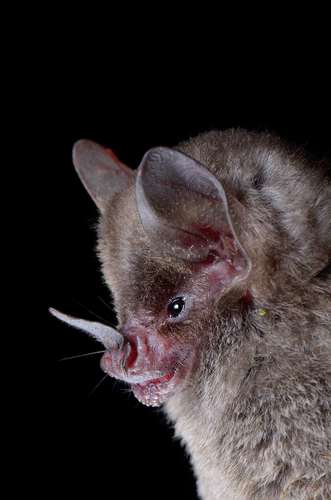
The species' brown noseleaf and ears are edged with yellow or white. They have a U-shaped, nearly hairless tail membrane that measures 14–16 mm in length.
Skull and Dentition
When viewed from above, the skull shows a noticeable depression between the frontal bone and the snout. Their dental formula is i 2/2, c 1/1, p 2/2, m 3/3, giving them a total of 32 teeth. They also have a calcar and a slightly pigmented, permanently open dactylopatagium minus.
Geographic Range
Geographically, these bats are found in Central America ranging from Oaxaca and Veracruz, Mexico, south to Peru, Bolivia, and southeastern Brazil. They also inhabit the island of Trinidad.
Elevation
Most specimens have been collected at elevations below 600 m, though some individuals have been recorded as high as 1500 m above sea level.
Habitat
Uroderma bilobatum inhabits low-elevation evergreen forests, deciduous forests, second-growth forests, and fruit groves.
Diet
It is primarily frugivorous; individuals have been observed carrying small, unripe figs in their mouths. They also feed on the pericarp of small palm fruits and occasionally consume common guavas. At times, they may supplement their diet with insects, flower parts, nectar, or pollen.
Breeding Cycle
Female Uroderma bilobatum, also called tent-making bats, can reproduce twice in a single year. In Panama, pregnant females have been recorded in February and June. In Costa Rica, pregnant females move into coconut groves in July, at the start of the wet season, and give birth in synchrony. Each litter produces only one pup, born after a 4–5 month gestation period.
Maternity Colonies
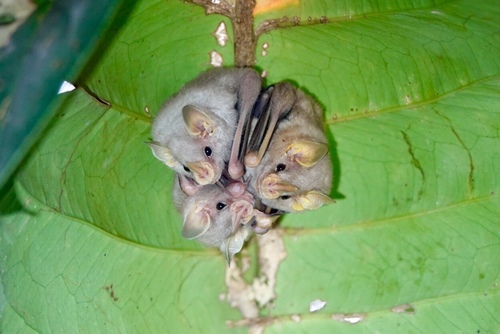
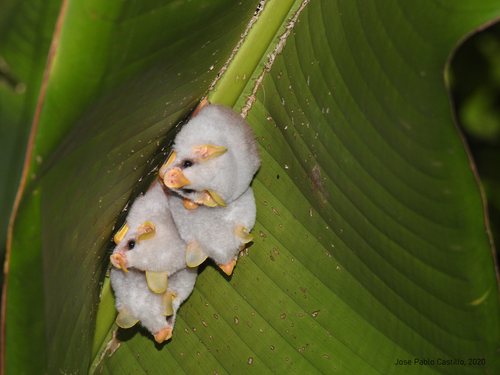
Nursing females form maternity colonies of 20–40 individuals that share a single tent roost. Group roosting may provide thermoregulation benefits for both pups and lactating mothers.
Pup Care
Females do not carry their pups with them on nightly foraging flights, but evidence suggests they may move pups to more protected roost sites before leaving to forage. Pups become independent one month after birth.