About Trachops cirrhosus (Spix, 1823)
Etymology
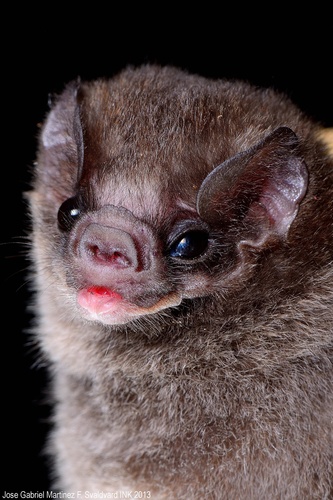
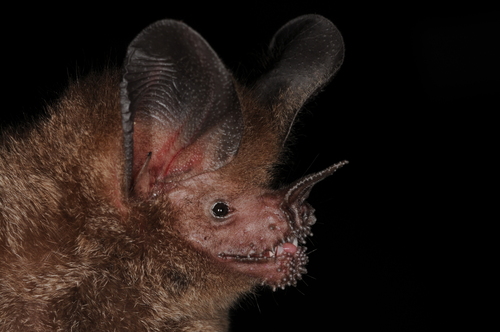
Trachops cirrhosus, commonly called the fringe-lipped bat, gets its name from the wart-like bumps present on its lips and muzzle.
Size and Fur
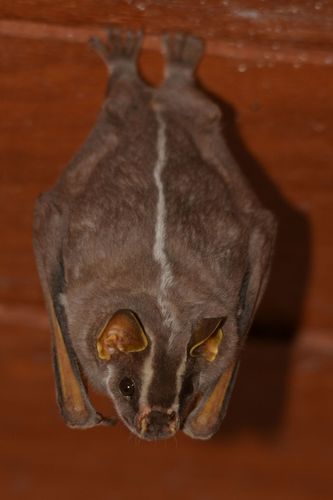
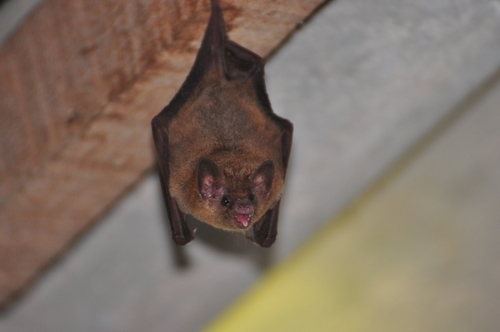
This medium-sized bat weighs approximately 32 grams, and has long, woolly fur. Its body is mostly reddish brown, with gray fur on its belly.
Morphology
It has a short tail, a nose-leaf with serrated edges, and a low wing-aspect ratio combined with high wing loading.
Dental Structure
In terms of dental and skull structure, it has two pairs of lower incisors, three pairs of lower premolars, and molars that have tubercular depressions and w-shaped cusps.
Skull Structure
Its rostrum is shorter than the braincase, but matches the braincase in width.
Mating Season
Fringe-lipped bats typically mate during the tropical dry season, which runs from January to June.
Sexual Dimorphism
There are no notable appearance differences between males and females.
Reproduction
This species gives birth to a single offspring at a time, and young bats remain with their parents for a relatively long period.
Habitat
The preferred habitat of the fringe-lipped bat is located close to ponds or streams, within tropical dry or moist forests.
Roosting Sites
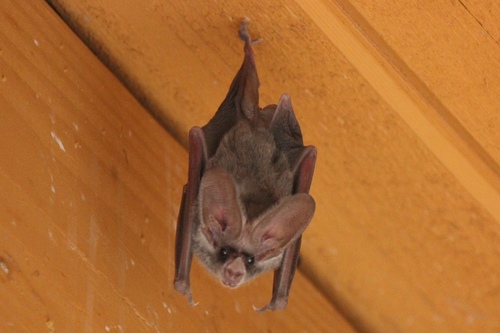
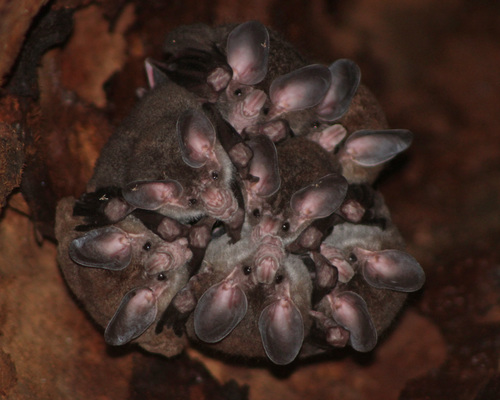
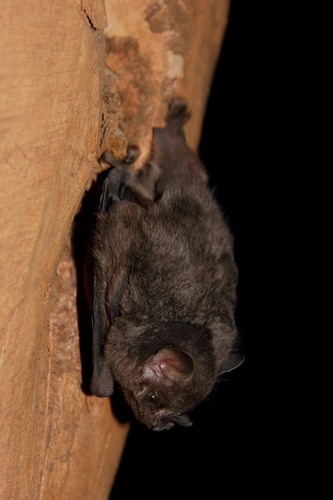
It roosts in trees, hollow logs, and sometimes caves.
Feeding Type
It is an opportunistic foliage-gleaning omnivore.
Diet Composition
Its diet mainly consists of insects, and also includes lizards, frogs such as Hyalinobatrachium fleischmanni, fruits, and seeds. Rarely, it has been recorded eating other bat species, including Furipterus horrens.
Interactions and Predation
Fringe-lipped bats sometimes share their roosts with other bat species, and are occasionally preyed on by gray four-eyed opossums.