About Leptonycteris yerbabuenae Martínez & Villa-R., 1940
Size and Weight
Description: Lesser long-nosed bats (Leptonycteris yerbabuenae) are relatively small bats. Adult individuals have a total length of around 8 centimetres (3.1 in), and weigh between 15 and 25 grams (0.53 and 0.88 oz), with weight varying based on time of year. Males and females are similar in size and virtually indistinguishable from one another.
Snout and Tail Features
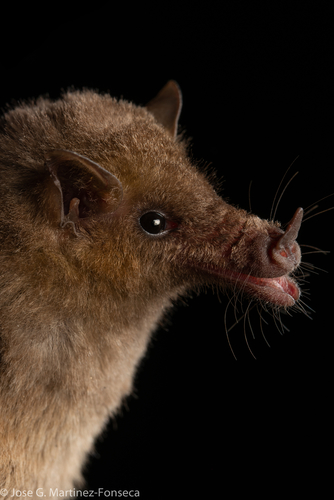
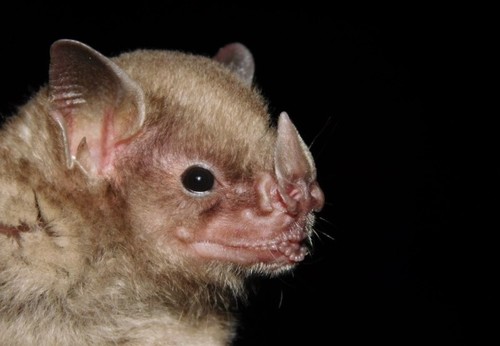
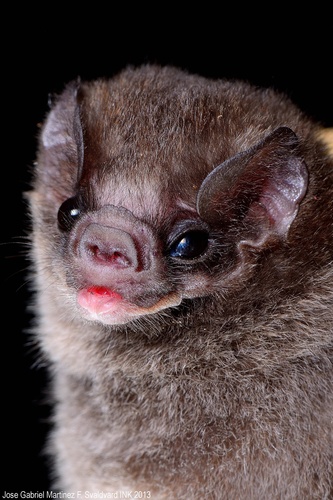
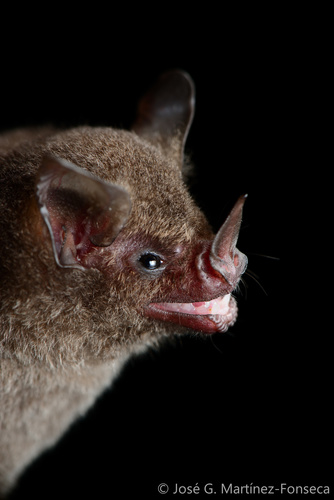
As their common name suggests, they have a long, narrow snout that ends in a small triangular nose-leaf. While they have three internal caudal vertebrae, they have no visible external tail.
Tongue Adaptations
The tongue of this species has several adaptations for lapping nectar, including long ridges and rough, conical papillae; these structures may also help scrape teeth clean, which protects against periodontal disease.
Wing Structure
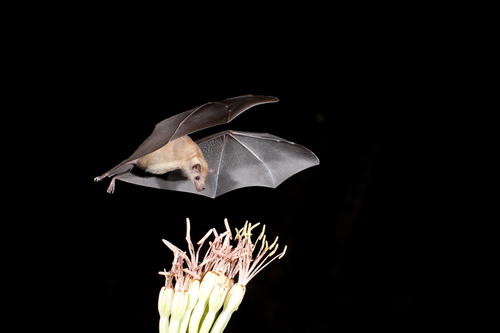
Their wings have high wing loading, which enables energy-efficient long-distance flight in open habitats, but reduces manoeuvrability.
Similar Nose-Leaf Bat Species
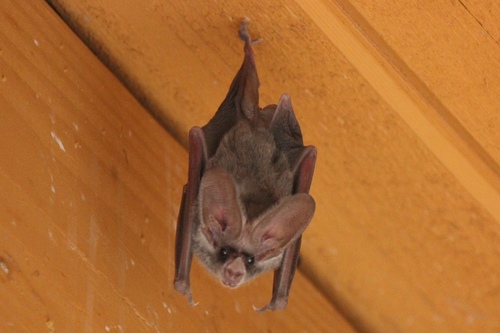
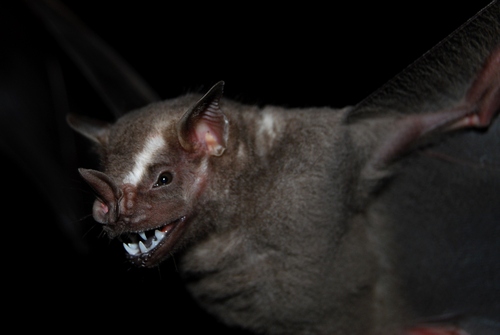
Only three other North American bat species have a nose-leaf. Two of these, the Mexican long-tongued bat and the California leaf-nosed bat, both have a distinct tail; the California leaf-nosed bat also has much larger ears than the lesser long-nosed bat.
Greater Long-Nosed Bat Comparison
Lesser long-nosed bats are most easily confused with their close relatives, the greater long-nosed bats. Greater long-nosed bats are around 10% larger than lesser long-nosed bats, have shorter, greyish fur, and proportionately longer wings.
Fur and Ear Characteristics
Adult lesser long-nosed bats have yellow-brown or grey fur on their upper bodies, and rusty brown fur on their underbodies. Their ears are small.
Habitat Types
Distribution and habitat: Lesser long-nosed bats live in semi-arid grassland, scrub, or forest habitats below approximately 550 metres (1,800 ft).
Temperature Tolerance
They can tolerate unusually high temperatures up to 41 °C (106 °F), which is partly due to their low metabolic rate. They do not enter torpor or hibernate, and die at ambient temperatures below roughly 10 °C (50 °F).
Northern Range Distribution
In the northern part of their range, they reach southern California, Arizona and New Mexico in the United States. They only occur as summer migrants in the United States, and more generally in areas north of mid-Sonora.
Migration Timing and Distance
They arrive in these northern regions between April and July, and migrate south again in September. Some individual bats are estimated to migrate as far as 1,600 kilometres (990 mi) each year.
Migration Drivers and Year-Round Range
Their migratory patterns follow a path shaped by the seasonal availability of food plants; cacti, Agave, and plants using the C3 metabolic pathway are strong predictors of their distribution. They are found year-round in western and southern Mexico, along Mexico's east coast, and in Guatemala, El Salvador, and Honduras.
Taxonomic Status
No subspecies of this species are currently recognised.
Breeding Seasons
Reproduction: For bats that migrate northward during the summer, the breeding season lasts from November to December. For bats that give birth in the southern part of the range, the breeding season falls from May to June. Despite having two distinct mating seasons across the population, individual bats mate only once per year.
Gestation and Birth
Gestation lasts approximately six months, and results in the birth of a single pup. Birth timing aligns with the period of local peak flower availability in each region.
Pup Development
Newborn pups weigh 4 to 7 grams (0.14 to 0.25 oz), and are fully weaned at four to eight weeks of age. Pups can fly after one month of age, but do not start leaving the maternity cave for an additional two to three weeks.
Lifespan
In the wild, lesser long-nosed bats are known to live for at least eight years.