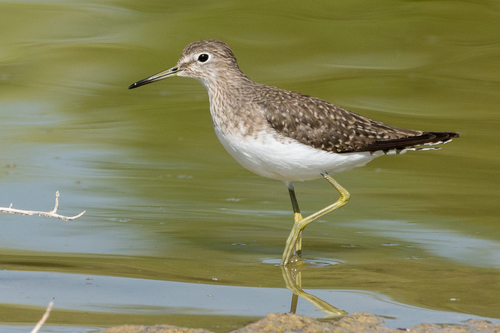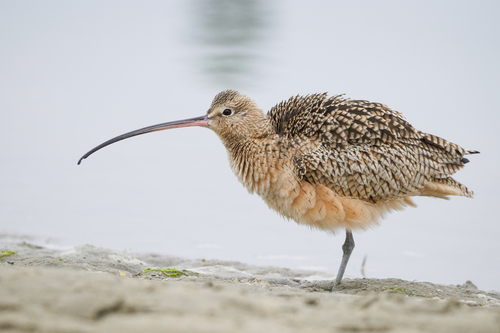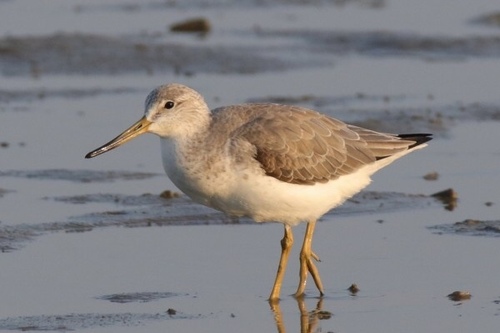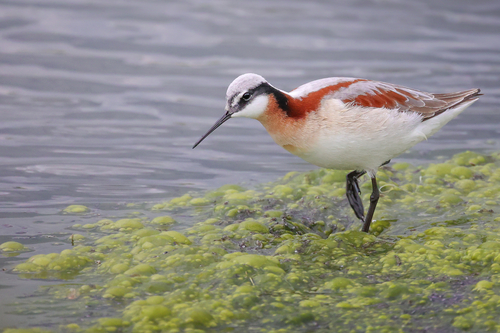
About Tringa erythropus (Pallas, 1764)
Common & Scientific Name
Tringa erythropus, the spotted redshank, is a large shorebird.
Size Measurements
It measures 29 to 31 cm (11 to 12 in) in length, has a wingspan of 61 to 67 cm (24 to 26 in), and weighs between 121 and 205 g (4.3 to 7.2 oz).
Adult Breeding & Non-Breeding Plumage
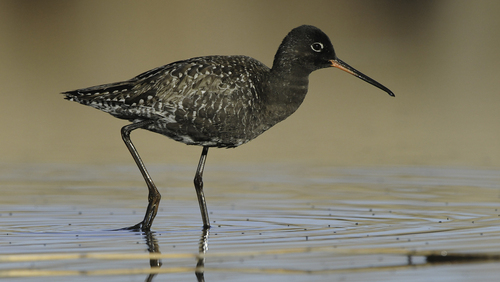
Adult spotted redshanks have solid black plumage during the breeding season, and very pale plumage in winter.
Adult Field Markings
They have red legs and a red bill, and display a distinct white oval patch on their back when in flight.
Juvenile Plumage
Juveniles are grey-brown with fine white speckling on their upperparts, and have pale underparts marked with fine barring.
Adult Post-Breeding Moult
Complete moulting of adult spotted redshanks occurs between July and October.
Adult Pre-Breeding Moult
In spring, adults moult their body plumage between March and May.
Juvenile Moult
Juveniles undergo a partial moult between August and February.
Vocalizations
The species' typical call is a creaking whistle described as teu-it, which is somewhat similar to the call of a roseate tern, while its alarm call is kyip-kyip-kyip.
Breeding Range
Spotted redshanks breed in the Arctic across most of the Palearctic, ranging from Lapland in the west to Chukotskaya in the east.
Diet
Like most waders, the spotted redshank feeds on small invertebrates.