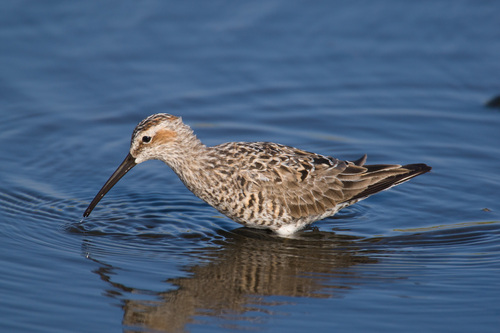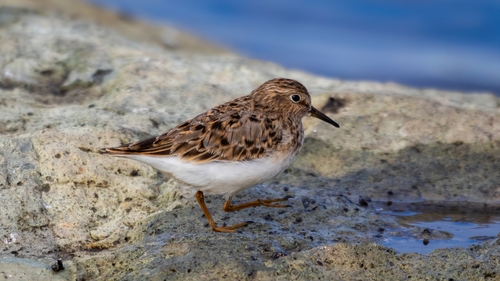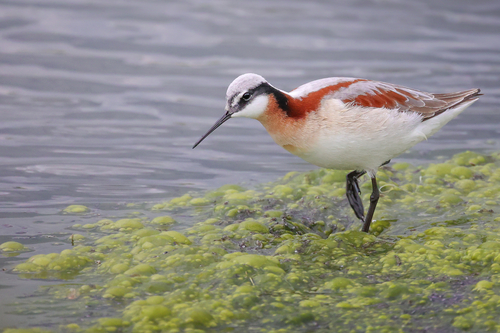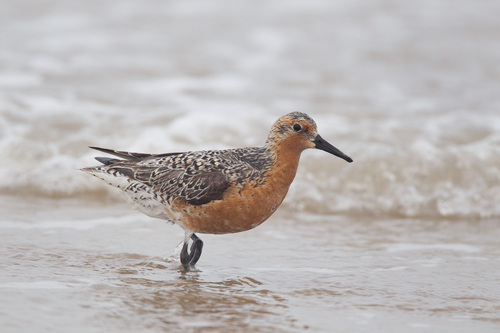
About Calidris pusilla (Linnaeus, 1766)
Taxonomy and Naming
Calidris pusilla, described by Linnaeus in 1766, is a small sandpiper.
Size Measurements
It measures 15–18 centimetres (6–7 inches) in length, weighs 18–51.5 grams (0.63–1.82 ounces), and has a wingspan ranging from 35 to 37 centimetres (13.8 to 14.6 inches).
External Morphology
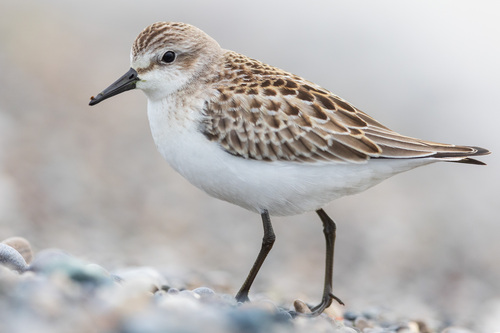
Adult individuals have black legs and a short, stout, straight dark bill.
Coloration
Their upper body is dark grey-brown, and their underparts are white; the head and neck have a light grey-brown tint.
Species Identification Notes
This species can be hard to tell apart from other similar tiny shorebirds, especially the western sandpiper; this group of small shorebirds is collectively known as "peeps" or "stints".
Identification Research Reference
A 1984 work by Jonsson and Grant focused on the identification of stints and peeps in British Birds 77(7):293-315.
Breeding Habitat
This species' breeding habitat is southern tundra near water in Canada and Alaska.
Nesting Behavior
They nest on the ground: the male creates several shallow scrapes, the female selects one and lines it with grass and other materials.
Incubation
The female lays 4 eggs, and the male helps with incubation.
Post-Hatching Care
A few days after hatching, the female leaves the young in the male's care, and the young feed themselves.
Foraging Behavior
These birds forage on mudflats, picking up food by both sight and touch with their bill.
General Diet
Their diet mainly consists of aquatic insects and their larvae, spiders, snails, worms, and crustaceans.
Migration Food Source
Semipalmated sandpipers depend heavily on horseshoe crab eggs during spring migration.
Female Calcium Intake During Egg Laying
During egg laying, females also eat small mammal bones as an additional source of calcium.