About Tamias senex J.A.Allen, 1890
Adult Body Measurements
Allen's chipmunk, scientifically named Tamias senex J.A.Allen, 1890, has a total adult length of approximately 229–261 mm (9.0–10.3 in), and a tail length of 90–111 mm (3.5–4.4 in). Adult body weight ranges from 66.8–108.5 g (2.36–3.83 oz).
Sexual Dimorphism
On average, females are larger than males, with the species having a sexual dimorphism ratio of 1.033.
Recognized Subspecies
Two subspecies are recognized.
Coastal Subspecies Fur
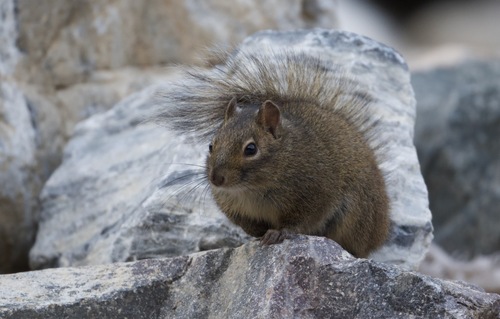
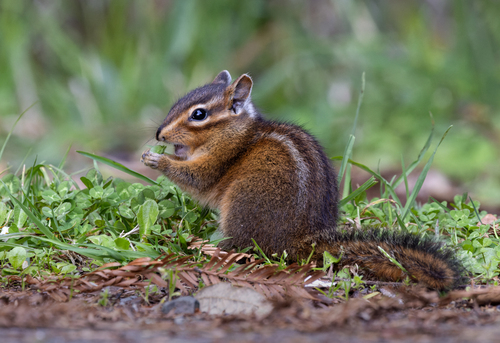
The coastal subspecies Neotamias senex pacifica has an overall dark fur color with indistinct dorsal stripes, a trait similar to Neotamias townsendii.
Inland Subspecies Fur
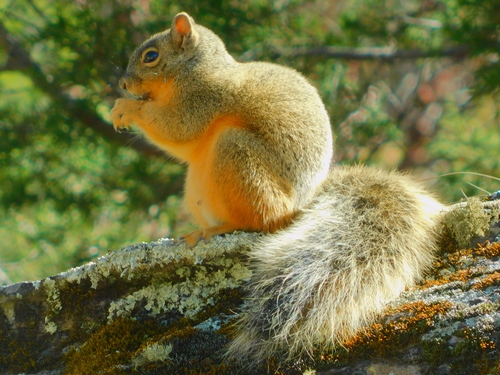
The inland nominate subspecies Neotamias senex senex has a much lighter fur color, consisting of brownish-yellow fur tinged with smoky gray.
Distinctive Dorsal Stripe
Regardless of subspecies, Allen's chipmunk carries a distinctive black median dorsal stripe along its back in both summer and winter.
Coastal Subspecies Range
The coastal subspecies occurs only along California's redwood forest belt. This range extends from the Pacific coast to roughly 32 km (20 mi) inland, and spans from the Eel River in Humboldt County (southern end) to the Klamath River in Del Norte County (northern end).
Inland Subspecies Range
The inland subspecies' range begins at Shaver Lake in Fresno County, California, and extends north and west into the Sierra Nevada, Cascade, Warner, and Yolla Bolly mountain ranges, where it borders the easternmost edge of the coastal subspecies' range.
Habitat Preferences
Allen's chipmunk is a primarily arboreal species. It lives in coniferous forests and their dense understory shrubbery, as well as adjacent areas of chaparral. It is the only chipmunk species observed to prefer old-growth, closed-canopy forests.
Nesting Sites
Nests are most often built in fallen logs or hollow trees, especially hollow ponderosa pines and Jeffrey pines. In the Sierra Nevada, nests have been recorded on top of partially broken-off trees up to 27 m (88.6 ft) above ground. This species also nests in tree stumps and woodpecker holes.
Coastal Elevation Range
Elevation ranges differ between the two subspecies. The coastal subspecies is found from sea level up to approximately 150 m.
Inland Elevation Range
The inland subspecies in the Sierra Nevada is most common between 1,220 and 2,350 m (4,000–7,700 ft), and has been recorded as high as 2900 m (9,500 ft) in Yosemite National Park.