About Tamias striatus (Linnaeus, 1758)
Size and Weight
This is a small species that reaches approximately 30 cm (12 in) in total length when including the tail, and weighs between 66 and 150 g (2.3–5.3 oz).
Body Fur and Striping
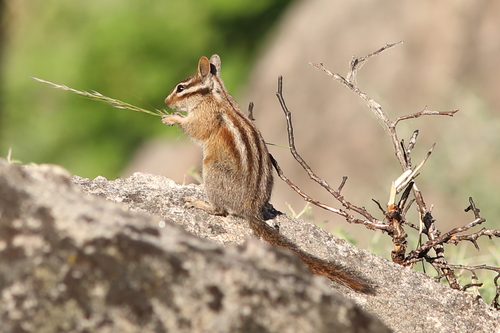
Its upper body is covered in reddish-brown fur, and five dark brown stripes run along its back, contrasting with lighter brown stripes.
Tail and Underbody Coloration
Its tail is dark, and the fur on the lower part of its body is lighter in color.
Facial Markings
A tawny stripe runs from its whiskers to below its ears, and there are light stripes above its eyes.
Dental Characteristics
It has two fewer teeth than other chipmunk species.
Limb Toe Count
It has four toes on each front leg, and five toes on each hind leg.
Appearance Consistency
This chipmunk’s appearance stays consistent throughout its life.
Sexual Dimorphism
There is no external difference in appearance between males and females, except for the obvious anatomical characteristics of the genitalia during fertile periods.
Molting Pattern
Molting occurs once or twice each year, taking place in May or June, and sometimes a second time in October.
Color Variants
Both albino and melanistic specimens have been recorded, and these color variants do not show any specific geographical pattern.
Geographical Range
The eastern chipmunk inhabits deciduous wooded areas and urban parks across the eastern United States and southern Canada.
Habitat Preferences
It prefers habitats that include rocky areas, brush or log piles, and shrubs, which provide it with cover.