About Sigmodon arizonae Mearns, 1890
Taxonomic History
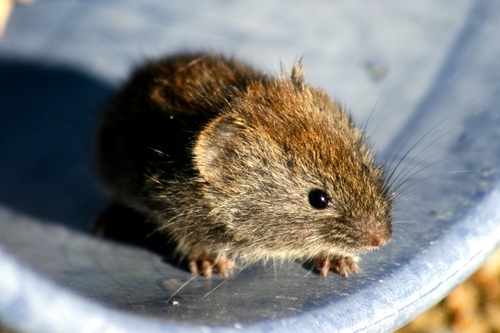
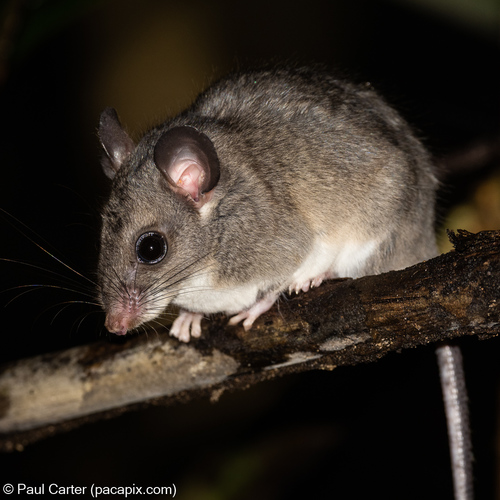
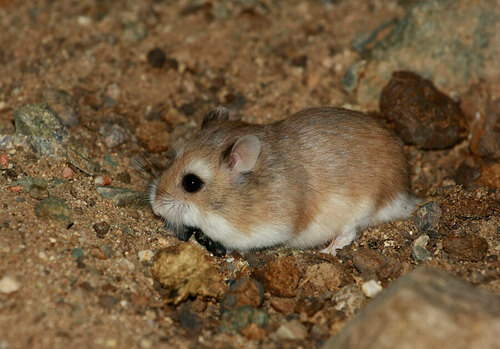
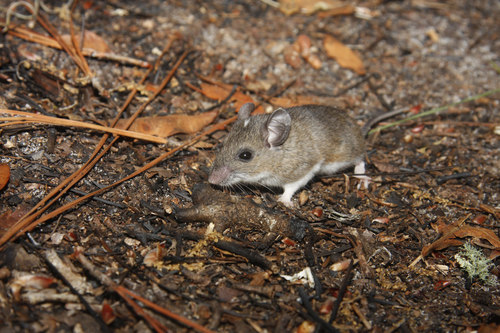
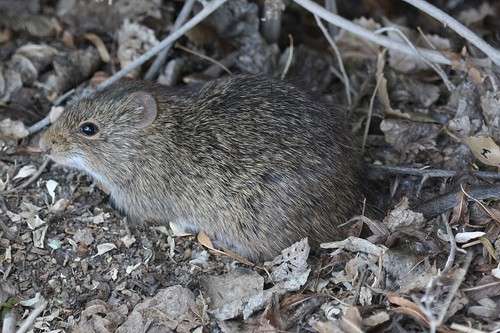
The Arizona cotton rat (scientific name: Sigmodon arizonae Mearns, 1890) has a typical rat-like appearance. It is very similar to the hispid cotton rat, and was classified as part of the hispid cotton rat species until 1970, when genetic analysis confirmed that it is a distinct species.
Fur Coloration
Most of its body is covered in bristly brownish fur, its underparts are whitish, and its feet are grey. Its scaly tail is dark, and has very sparse fur.
Body Length
The total body length of adult Arizona cotton rats ranges from 9.8 to 14.2 inches (250 to 360 mm), and this measurement includes the tail which is 3.9 to 5.9 inches (99 to 150 mm) long.
Weight
Adults weigh between 2.9 and 10.6 ounces (82 to 301 g).
Sexual Dimorphism
Males are slightly larger than females, but the two sexes look very similar otherwise.
Reproductive Traits
Females have either ten or twelve teats, which suggests the maximum litter size for the species is around this number. Reproduction is believed to occur year-round.
Geographic Distribution
The Arizona cotton rat is distributed in southern and central Arizona, the extreme southwestern corner of New Mexico, and western Mexico from Sonora to Nayarit.
Habitat Requirements
Within this range, these rats live close to rivers, streams, and other sources of fresh water, in habitats including semidesert, open grassland, or swampy areas. They depend especially on regions with dense grassy vegetation.
Subspecies Status
Five subspecies are currently recognized, and two of these, including the nominate subspecies Sigmodon arizonae arizonae, are thought to have gone extinct during the twentieth century.
Extant Subspecies
Three subspecies remain: Sigmodon arizonae cienegae, found in Arizona and northern Sonora; Sigmodon arizonae major, found in southern Sonora, Sinaloa, and Nayarit; and Sigmodon arizonae plenus, found in western La Paz County, Arizona.