About Peromyscus gossypinus (Le Conte, 1853)
Adult Size and Weight
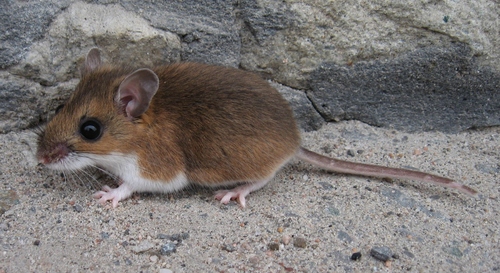
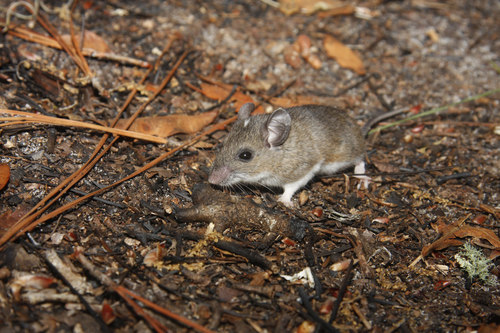
Adult Peromyscus gossypinus, commonly called the cotton mouse, measure around 180 mm (7.1 in) in total length, with a tail of approximately 78 mm (3.1 in), and weigh between 34 and 51 grams.
Morphological Comparison to White-Footed Mouse
Its general appearance is very similar to the white-footed mouse, but the cotton mouse is larger, with a longer skull and longer hind feet.
Coloration
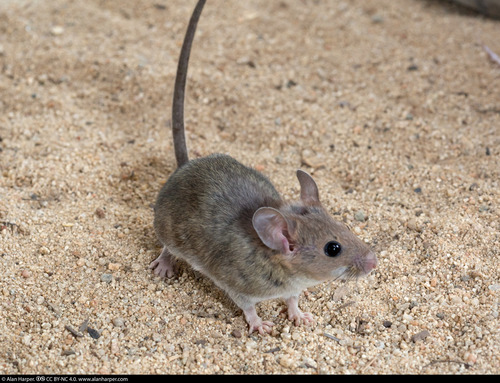
It has a dark brown body, with white feet and a white belly.
Etymology of Common Name
Its common name comes from the observed habit of using raw cotton to build nests.
Extinct Subspecies
One subspecies, the Chadwick Beach cotton mouse (P. g. restrictus), was last recorded in 1938 and is now presumed extinct.
Endangered Subspecies
Another subspecies, the Key Largo cotton mouse (P. g. allapaticola), is currently listed as endangered by the United States Fish and Wildlife Service.
Geographic Range
The cotton mouse is found in the Southeastern United States, in a range roughly bounded by southeastern Virginia, Florida, Texas, and Kentucky.
Habitat Types
It occupies a wide variety of habitats, including hardwood forests, swamps, margins of cleared fields, edges of salt savanna and dunes, scrub, and rocky bluffs and ledges.
Preferred Habitat Characteristics
It probably prefers terrain that is regularly inundated with water.
Local Extirpation
Though it was once native to Illinois, it is now considered extirpated from the state.
Use of Underground Refuges
Cotton mice use underground refuges such as stump holes, tree cavities, root boles, and burrows to avoid predators and wildfires. These underground refuges also provide lower temperatures and lower humidity during the summer months.
Population Response to Fire in Related Species
Most Peromyscus species experience large population declines after fire events, caused by emigration, increased predation, direct fire mortality, or loss of habitat and protection.
Fire Survival Adaptation
However, because of their use of underground refuges, cotton mice can survive fires without significant population loss.
Diet
Cotton mice are omnivorous, feeding on both seeds and insects.
Breeding Timing
Breeding can take place throughout the year, but typically occurs in early spring and fall.
Litter Production
They can produce up to four litters per year, with up to seven young per litter.
Newborn Characteristics
Newborn cotton mice are helpless and naked at birth.
Development Stages
They are weaned between 20 and 25 days of age, and reach sexual maturity at around two months old.
Lifespan
Their typical lifespan is four to five months, and only a rare few individuals live up to one year.
Predators
Predators of cotton mice include owls, snakes, weasels, and bobcats.
Parasites
Cotton mice are also parasitized by Cuterebra fontinella, commonly known as the mouse botfly.
Sympatric Golden Mouse Similarities
The golden mouse (Ochrotomys nuttalli) shares similar characteristics, habitat, and geographic range with the cotton mouse.
Coexistence Mechanisms with Golden Mice
Coexistence between the two species in shared habitat is possible because they use common refuges with different daily and seasonal activity patterns. The cotton mouse selects refuges more broadly, switching between different refuges, and this is suggested to be the most important factor allowing this coexistence.
Hybridization with White-Footed Mouse Cause
Evidence of hybridization between the cotton mouse and the white-footed mouse has been found, due to small population sizes that reduce the chance of encountering mates of the same species. Although the two are recognized as separate species, hybridization occurs when there are limited options for mating.
Hybridization Detection Method
Hybridization between the two species was detected through toe-clip sampling, which identified a heterozygous GPI-1 marker.