About Saccopteryx leptura (Schreber, 1774)
Taxonomy and Naming
The lesser white-lined bat, with the scientific name Saccopteryx leptura, belongs to the genus Saccopteryx.
Dorsal Markings
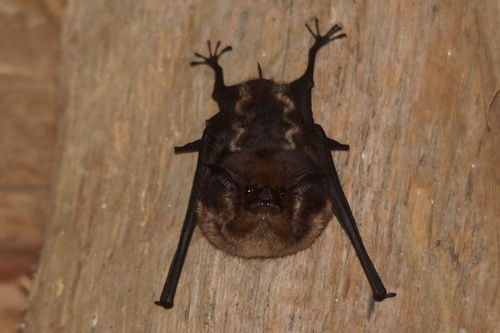
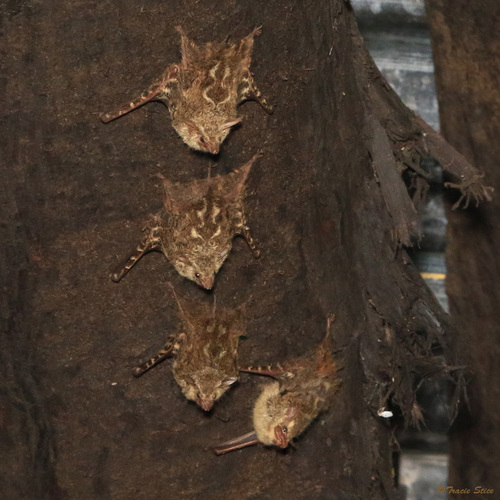
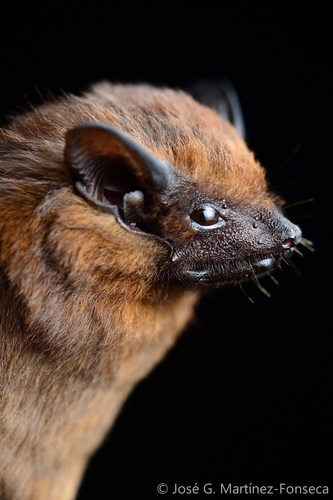
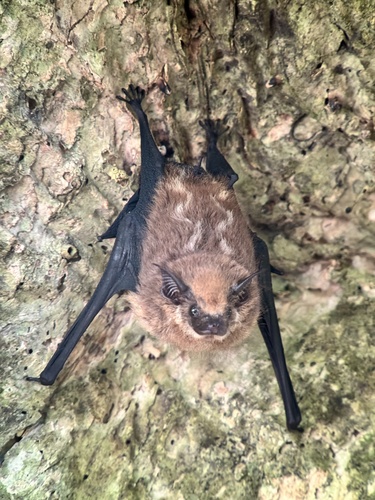
Its key characteristic is longitudinal white stripes running down its back from the shoulders.
Fur Color and Size
It generally has brown fur, and individuals reach roughly 45 millimeters, or 1.8 inches, in total length.
Comparison to Rhynchonycteris naso
It looks similar to the species Rhynchonycteris naso, but is slightly smaller and has paler fur. Unlike R. naso, S. leptura does not have white fur on its antebrachium.
Odiferous Gland Description
The lesser white-lined bat has a distinctive odiferous gland on the distal part of its arm that opens to the dorsal section of the wing, and this opening is larger in males than in females.
Sexual Dimorphism
This species shows sexual dimorphism, with females larger than males.
Geographic Range
This bat is native to northern South America and parts of Central America.
Roosting Habitat Preferences
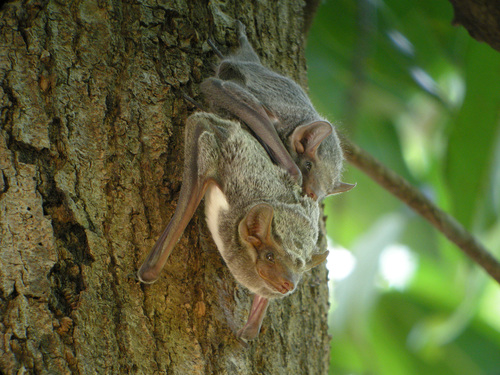
It occurs in heavily forested areas and usually roosts in trees, preferring open roosting spots. While it favors tree roosts, it has also been recorded roosting inside buildings.
Roost Site Selection
It does not show a preference for any specific tree type, but tends to select areas with heavy canopy cover, and does not require roosts located near a body of water.
Elevation Range
Most individuals of this species live at low elevations, but the species can occur in areas up to 900 meters above sea level.
Foraging Niche Separation
It can be found in the same general regions as other bat species, but usually does not share their foraging areas. R. naso forages above water at low elevations, while S. leptura forages higher up, within the tree canopy.