About Cormura brevirostris (Wagner, 1843)
Species Identification
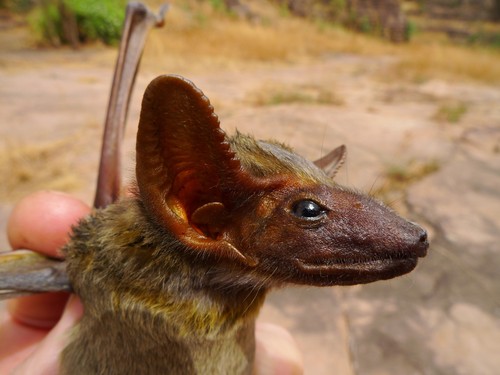
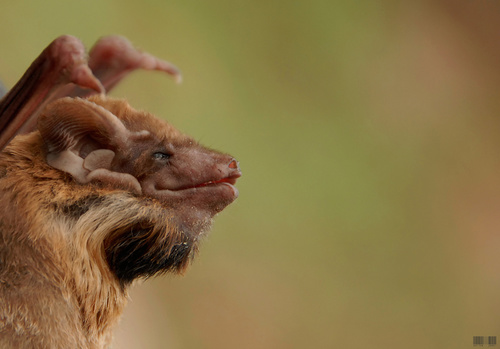
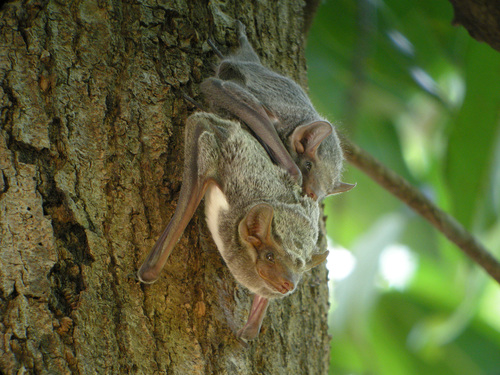
The chestnut sac-winged bat (scientific name Cormura brevirostris (Wagner, 1843)) is a relatively small species in its family.
Size Measurements
Adult individuals typically reach 7 cm (2.8 in) in total length, and weigh between 7 and 11 g (0.25 to 0.39 oz).
Fur Coverage
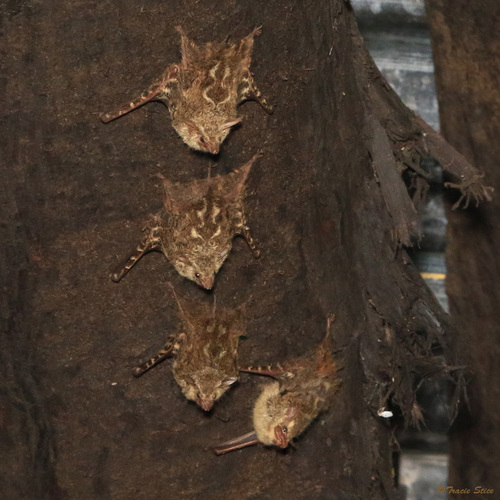
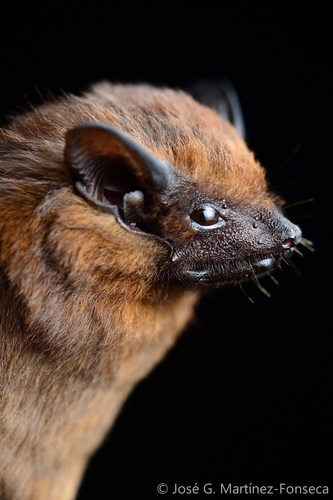
Soft, dense fur covers the bat's body, and also extends onto the inner portions of both the upper and lower wing surfaces, reaching as far as the midpoint of the humerus and the midpoint of the femur.
Fur Coloration
This fur is colored brown-black or red-brown, and is darker on the animal's upper body, and paler on its underside.
Wing Structure
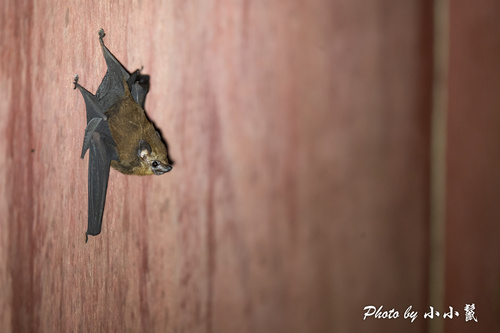
The bat's wings are black, with wing membranes that extend all the way to the ankles.
Tail Placement
The tail projects from the center of the interfemoral membrane between the bat's legs, but does not extend past the membrane, so it cannot be seen in silhouette.
Tail Dimensions
The full tail measures around 1.5 cm (0.59 in) in length, though only 1 to 3 mm (0.039 to 0.118 in) of the tail tip is visible above the membrane.
Male Wing Sacs
Males of this species have sacs located in the center of the forward-facing wing membranes; these sacs stretch from the edge of the membrane almost to the elbow.
Distinguishing Feature
This feature distinguishes Cormura brevirostris from all other sac-winged bats, which typically have their sacs positioned much closer to the body.
Southern Distribution Range
In terms of distribution and habitat, in the southern part of its range, the chestnut sac-winged bat occurs from eastern Ecuador and Peru, through northern Bolivia, and extends as far east as central Brazil.
Northern Distribution Range
Further north, it can be found across all of Colombia, Venezuela, and the Guianas, and extends through Central America as far north as eastern Nicaragua.
Subspecies Status
No subspecies of this bat have been identified.
Habitat Type
Its natural habitat is subtropical or tropical moist lowland forest.