About Saccopteryx bilineata (Temminck, 1838)
Taxonomy and Range
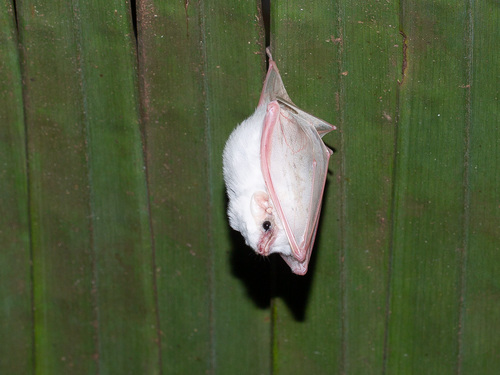
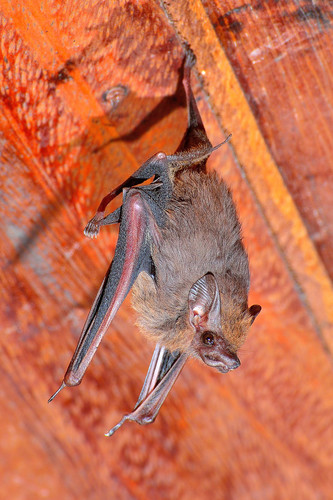
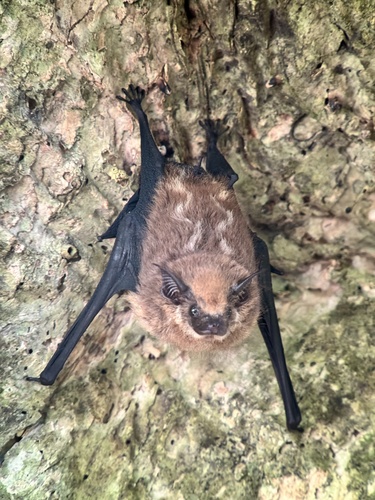
The greater sac-winged bat, with the scientific name Saccopteryx bilineata, is a member of the Emballonuridae bat family native to Central and South America.
Habitat and Roosting
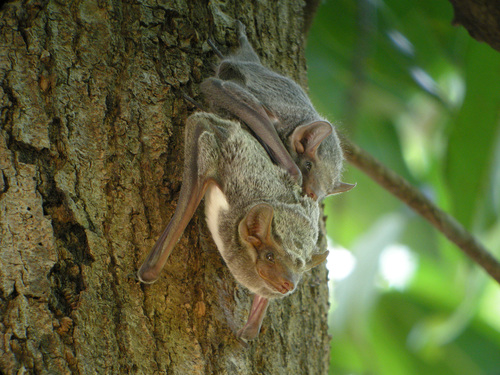
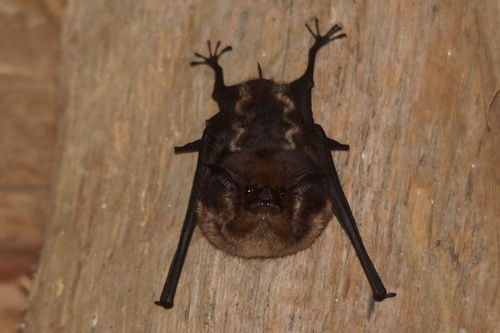
This is the most common bat species observed in rainforests, because they frequently roost on the outer surfaces of large trees.
Diet and Echolocation
Greater sac-winged bats are insectivores that use oral echolocation calls to track their prey, which includes flies, beetles, butterflies, and moths.
Facial Morphology
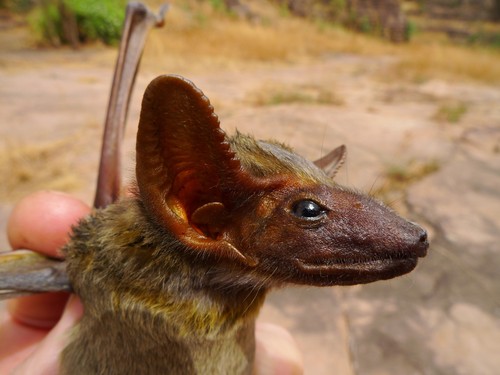
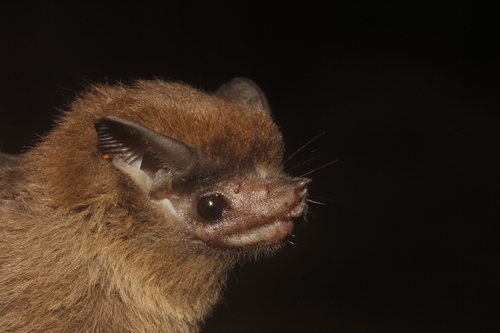
Their long nose and upper lip are highly mobile, and can shift upward to widen the mouth opening.
Wing Sac Etymology
The common name "sac-winged" comes from small pouches located on the species' wings.
Wing Sac Function
Male greater sac-winged bats use these wing sacs to attract females and mark their harem territory.
Wing Sac Content Preparation
During daily grooming, males fill these sacs with drops of urine and glandular secretions.
Female Courtship Display
When displaying for females, a male hovers in front of the female and fans her vigorously to let her smell the mixture stored in his wing sacs.
Territorial Warning Behavior
Males also shake the contents of their wing sacs toward other bats that are outside their harem territory, to warn intruders away.
Wing Sac Scent Production
Microbial fermentation inside the wing sac may produce distinct, identifiable scent signals.
Pup Vocalization Observation
Researchers have recorded sac-winged bat pups producing a variety of calls in a mixed, disorganized order.
Pup Vocalization Example
For example, a female pup may produce the male courtship trill, followed by echolocation clicks, then adult territorial challenge calls.
Vocalization Comparison
These mixed-up vocalizations are compared to human infant babbling and the mispronounced songs of young birds.
Babbling Significance
This observation is the first recorded example of mammal babbling that occurs outside the primate order.