About Taphozous nudiventris Cretzschmar, 1826
Common Name and Size
Taphozous nudiventris, commonly called the naked-rumped tomb bat, is a moderate-sized species of sac-winged bat, with males typically slightly larger than females.
Head and Snout Features
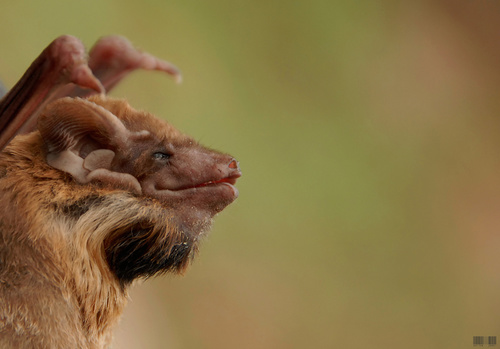
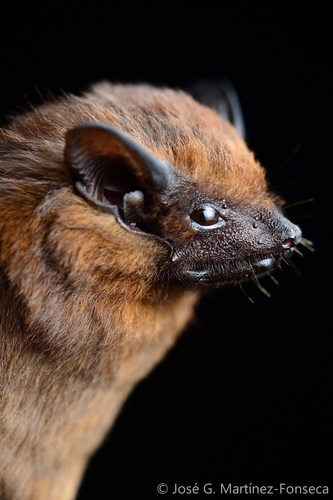
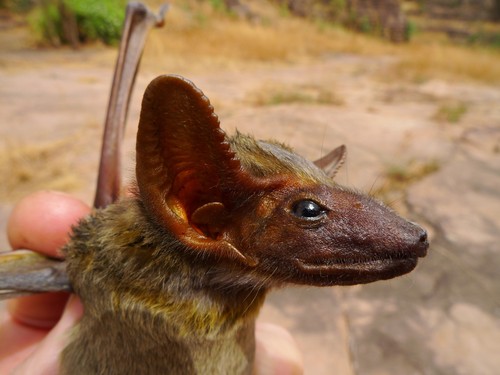
Its head is fairly flat, with a long, cone-shaped snout and a shallow depression between its large eyes. The lower lip has a grooved protuberance, and the ears are triangular and point backward.
Facial and Throat Structures
This species has no nose-leaf; throat pouches are well-developed in males, and less developed in females.
Fur Distribution
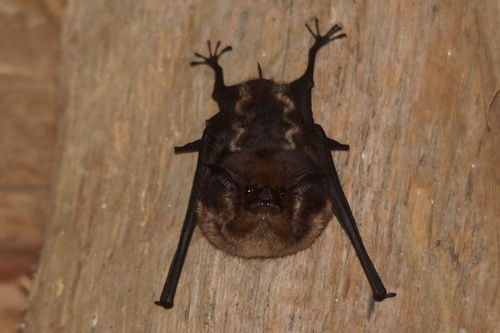
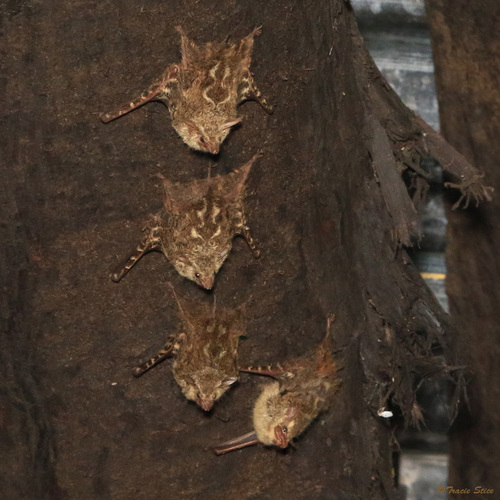
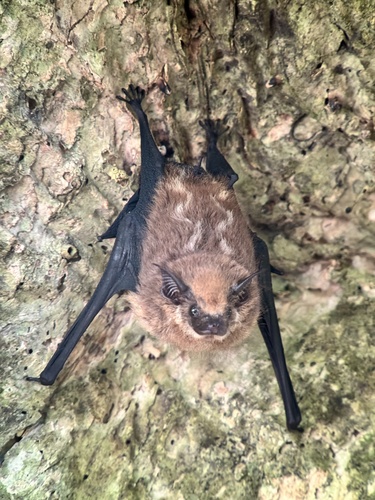
Its fur is short and sleek, and covers the whole body except for the rump, lower belly, and hind limbs. There is a sharp division between furred and hairless areas, with roughly one third of the bat's total body surface lacking hair.
Pelage Coloration
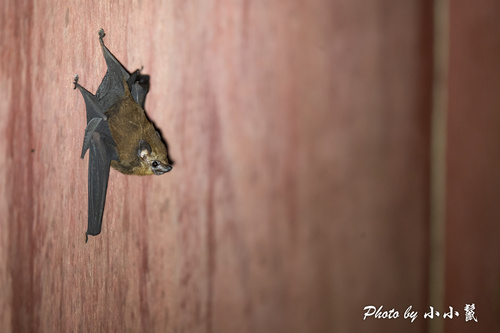
Dorsal pelage ranges from pale greyish-brown to deep brown or rusty-brown, while ventral pelage is paler than the back.
Wing and Tail Features
Its wing membrane is dark brown, and the tail projects freely from the upper surface of the interfemoral membrane.
Geographic Distribution
This bat is widely distributed across northern Africa and western Asia. Its range extends from Morocco and sub-Saharan Africa through Egypt and the Middle East to Pakistan and India.
Habitat Preferences
It occupies semi-arid, arid, and tropical forest habitats, and requires a combination of open hunting areas and suitable roosting sites in rocky or underground locations. It is often found near human settlements, but cannot tolerate much disturbance at its roosts.
Flight and Foraging Behavior
The naked-rumped tomb bat is agile, flying fast and high in open areas while hawking for insects. It is a social species that becomes active around half an hour before sunset, and individuals stream out from their daytime roosts shortly after sunset.
Diet
Its diet consists of beetles, moths, grasshoppers, crickets, cockroaches, and flying ants.
Roosting Sites
It roosts gregariously in stone crevices, caves, crags, ruins, and old buildings. In Egypt, it roosts within the Karnak Temple Complex alongside several other bat species, each occupying its own separate area.
Migration and Torpor
Populations in Iraq and Pakistan make annual migrations: in summer, they roost in cool caves and buildings and build up fat reserves, while in winter they relocate to warmer buildings, where they may enter a state of torpor.
Roosting Segregation by Sex
For most of the year, males and females roost together, but males move to other roosting sites before young are born.
Juvenile Development
For the first few weeks of life, newborn bats cling to their mother while she flies; after this period, young roost beside their mothers and stay behind when their mothers go foraging. Even after young begin to forage on the wing themselves, they continue to accompany their parent.
Reproduction
The gestation period is nine weeks, but females may store sperm during hibernation, so fertilisation and pregnancy do not occur until spring.
Predators
Naked-rumped tomb bats are preyed on by owls and hawks; hawks will sometimes catch them as they leave their daytime roosts.