About Diclidurus albus Wied-Neuwied, 1820
Taxonomic Classification
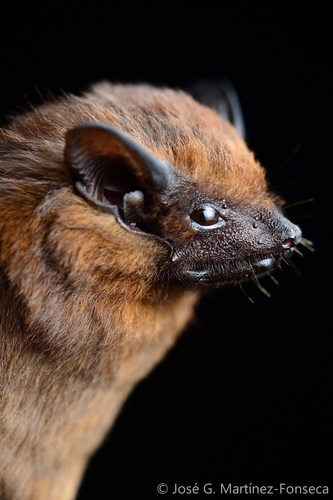
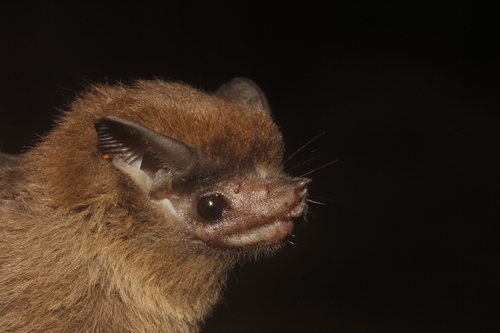
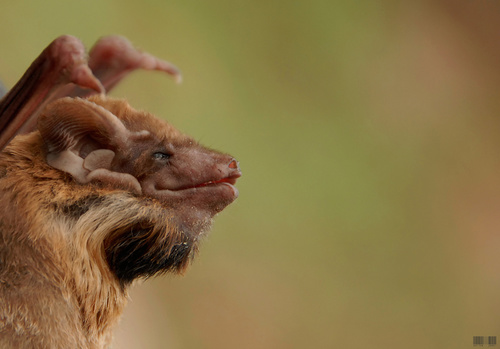
The northern ghost bat, scientifically named Diclidurus albus Wied-Neuwied, 1820, is a member of the Emballonuridae family in the Chiroptera order. It is medium-sized within its genus Diclidurus.
Fur Coloration
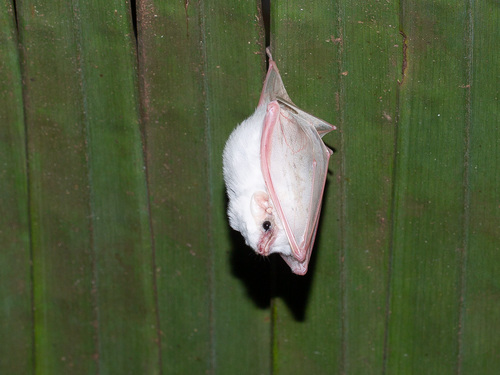
Its fur ranges from pure white to pale grey, with dark-grey fur at the base of individual hairs.
Wing and Uropatagium Gland Structure
Unlike most other Emballonuridae species, it lacks wing-sacs. Instead, it has a large glandular structure located at the center of its uropatagium.
Etymology
The species gets its common name from its typical geographic range and the form of this gland. Its generic name Diclidurus comes from the Latin word diclid meaning two-valved, which refers to the multi-chambered structure of the uropatagium gland.
Distinguishing Morphological Trait
The northern ghost bat can be told apart from other species in its genus by its vestigial thumb, which has an almost entirely reduced claw.
Sexual Dimorphism
This species exhibits sexual dimorphism: males are typically slightly larger than females.
Body Weight
Diclidurus albus has an intermediate body weight when compared to other members of the Emballonuridae family.
Clavicle Structure
It has a broadly shaped clavicle bone with large areas for attachment of the pectoralis muscle.
Gland Function Hypothesis
The large glandular structure on its uropatagium is thought to have a function analogous to the wing sacs of other emballonurids. In other emballonurids, wing sacs enlarge during the breeding season to attract females.
Male Reproductive Anatomy
The northern ghost bat’s penis does not contain a baculum; instead, it is made up of four cartilaginous bodies. It measures approximately 5.5 mm long and 3.1 mm in diameter.
External Male Genitalia Features
The glans penis is white, and the prepuce is covered in a layer of short, fine hair.
Testes Structure
The testes are spindle-shaped, symmetrical, and enclosed in a black tunica.
Female Reproductive Anatomy
In females, the ovaries are ovoid, roughly 2.8 mm long and 0.8 mm in diameter.
Habitat and Roosting Preferences
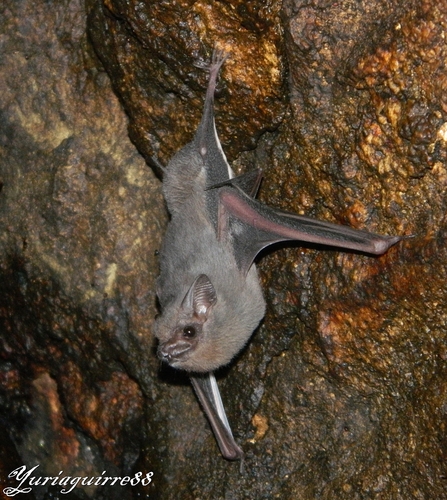
Northern ghost bats live in tropical and coastal forests, and they often roost in caves, open areas, or palm trees. When roosting in palm trees, individual bats occupy the space closest to the rachis, the central stem of the palm frond.
Roosting Camouflage
Hanging northern ghost bats are inconspicuous, and resemble a wasp’s nest in appearance.
Additional Roost Sites
Roost sites also include deep rock crevices and abandoned mines.
Colony Size Dynamics
While the species prefers to roost in colonies, it currently only forms small groups at most, because few roosting sites are large enough to support larger colonies. Colonies containing more than 100 bats in a single location are rarely observed.
Solitary Roosting Behavior
It is also common for this bat to roost alone under palm leaves.
Geographic Distribution
The distribution of the northern ghost bat is restricted to the Neotropics. Its range extends north to the tropical mainland of Mexico and south to the tropical regions of Brazil.
Distribution Range Comparison
Its distribution is more limited than that of other species in its genus.
Altitudinal Range
It occurs at altitudes ranging from sea level up to 1500 m.