About Rhynchoedura ornata Günther, 1867
Common Name and Activity Pattern
Rhynchoedura ornata, commonly called the western beaked gecko, is a small nocturnal gecko.
Size Measurements
The maximum total length of the species is 95 millimetres, with a maximum snout-vent length of 50 mm.
External Morphology
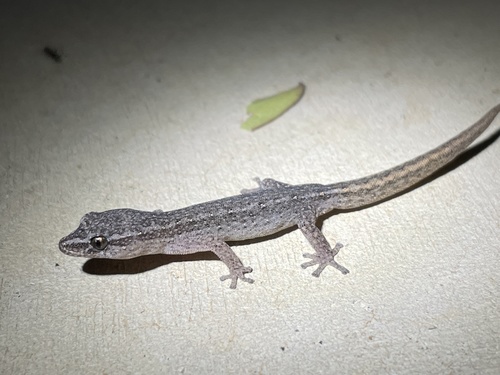
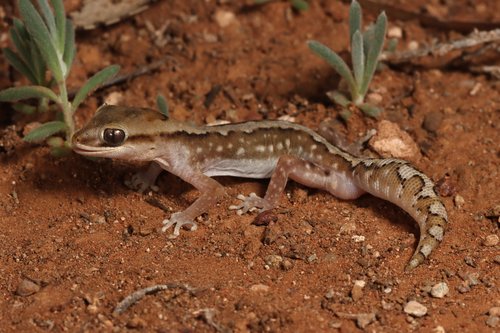
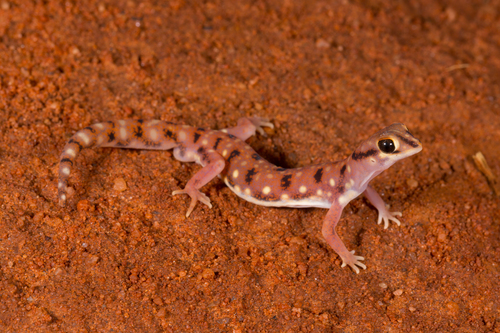
Individuals have a long slender tail, small slender clawed digits, and a narrow beak-like snout. This characteristic pinched head shape readily distinguishes the species from other geckos.
Head and Scale Features
The distinctive beak structure is formed by projections of the rostral and mental shields, and preanal pores are present.
Dorsal Coloration
The upper body is reddish-brown to red, covered in tiny yellow, brown, and white spots.
Head Markings
The head is light brown or grey, with a creamy or white stripe extending from below the eyes.
Ventral Coloration
The lower surface of the body is stark white.
Thermoregulation Behavior
This gecko thermoregulates by moving between warmer and cooler positions.
Sexual Dimorphism and Maturity
Females are often larger than males, and reach sexual maturity in less than one year. Early maturity allows for greater egg development, which increases offspring viability.
Reproduction
Females produce two leathery eggs per clutch.
Diet
Its favoured prey is termites.
Shelter Sites
Individuals are occasionally found sheltering beneath shrubs, but most often shelter in abandoned burrows dug by spiders and other lizards.
Home Range
During their lifetime, individuals maintain a small home range of around 30 metres.
General Distribution
This species is widespread and common across interior Australia, occurring in arid to semi-arid regions across a wide variety of habitats and soil types. Its recorded range includes New South Wales, the Northern Territory, Queensland, South Australia, Victoria, and Western Australia.
Range Exclusions
It does not occur in southern coastal regions or the tropical north of Australia.
Western Australia Range
In Western Australia, it is found in the northeastern part of Southwest Australia, with its range extending to the northern and northwest coasts.
Type Location
The species' type location is Nickol Bay.
Habitat Associations
Habitats include sand hills and plains, and it is often associated with Triodia, as well as mallee and mulga country.
Victorian Conservation Status
Under Victorian wildlife legislation, the species is classified as endangered and listed as Schedule 4.
Ownership Regulations
Ownership requires an "advanced" license, and written notice must be provided for any transaction involving the species.