About Woodworthia brunnea (Cope, 1869)
Species Nomenclature
Woodworthia brunnea (Cope, 1869), commonly called the Canterbury gecko, is a species of gecko, a type of specialised lizard.
General Gecko Traits
All geckos have permanently open large eyes, and large fleshy tongues they use to clean their eyes and lip scales. The lower surfaces of gecko toes have broad scale-like plates that hold millions of microscopic hair-like structures called setae; each setae produces an attractive magnetic force that lets geckos adhere to smooth surfaces.
Woodworthia Genus Coloration
Woodworthia gecko species are typically darker in colour than other New Zealand gecko species.
Dorsal Coloration & Patterning
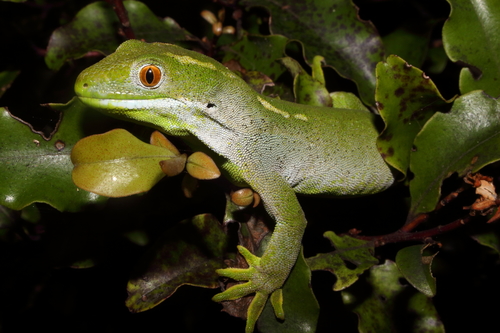
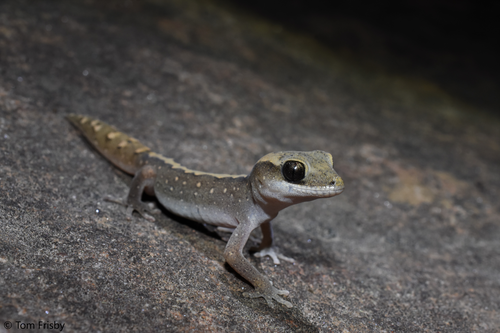
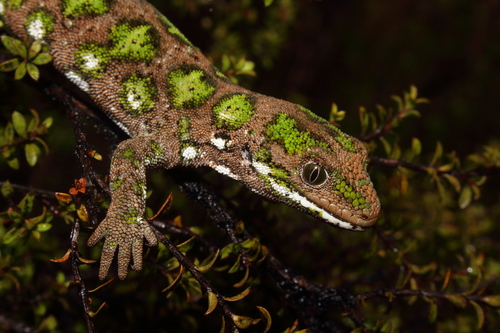
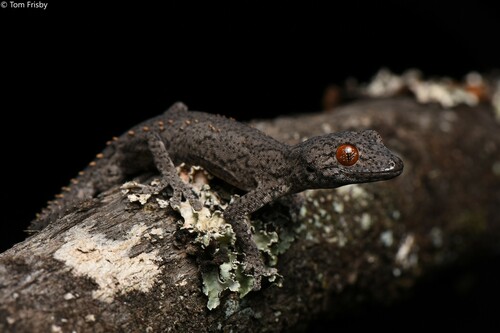
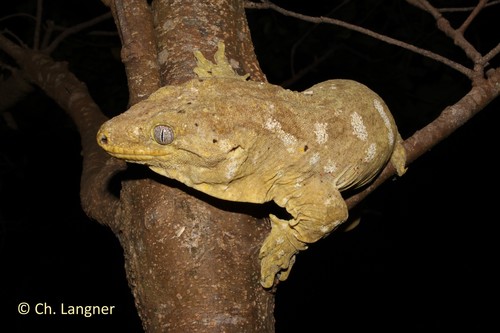
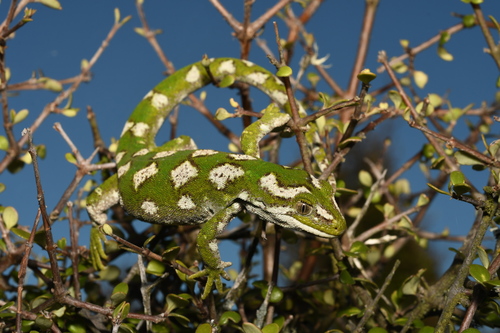
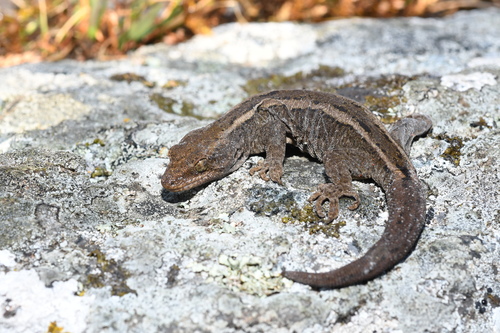
Canterbury geckos are usually brown, grey, or olive, with bright pale bands, blotches, or stripes, plus large blackish patches that are often present on intact tails. Eye colour ranges from green and brown to bright yellow, and most individuals have a narrow or broad pale stripe running from the eye to the nostril.
Head Scale Morphology
The rostral scale contacts or nearly touches the nostril.
Ventral Coloration
Their undersides are usually pale and uniformly coloured, though a small number of individuals have spotted bellies. They have pink mouths, with a pink tongue that is grey at the tip.
Size Variation by Habitat
Canterbury geckos from coastal dune habitats are smaller than individuals from forest or rocky habitats: dune populations measure 53–68 mm (2.1–2.7 in) snout-to-vent length, while forest/rocky populations measure 53–80 mm (2.1–3.1 in). Intact tails are usually the same length as the snout-vent length.
Foot Morphology
Canterbury gecko toes have 9-12 lamellae and straight distal phalanges, and the soles of their feet are usually light grey.
Taxonomic Classification Note
This species is highly variable in colour and patterning, which likely explains why it was difficult to classify as a distinct species in earlier years.
Distribution Range
The Canterbury gecko is endemic to the South Island of New Zealand, with a range extending from southern Marlborough to mid-Canterbury and the Banks Peninsula. It also occurs inland on the Canterbury plains and on coastal hills south to around the Rakaia River, and small dune-land sized individuals have been observed on Kaitorete spit.
Population Status
It is locally abundant around Banks Peninsula and the Port Hills, but has disappeared from many parts of the Canterbury plains due to habitat loss and land use change.
Terrestrial Habitat Types
Canterbury geckos primarily occupy lowland areas across a wide variety of habitat types, including forest trees where they retreat under loose bark or in deep hollows, especially in standing dead trees. They also live in creviced rock outcrops, rock tumbles, bluffs and associated scrubby vegetation, as well as dune lands among driftwood, scrub, rocks, and pohuehue along coastlines, most notably Birdlings Flat/Kaitorete Spit.
Climate Preference
This species prefers the drier East Coast of the South Island over the wetter West Coast.
Range Climate Conditions
Around its Banks Peninsula range, average annual rainfall is around 969 mm (38.1 in), average summer temperatures range from a low of 4°C to a high of 23°C, average winter temperatures range from a low of 2°C to a high of 13°C, and the region receives 2100–2300 hours of sunshine annually.
Site Fidelity & Home Range
Canterbury geckos have high site fidelity and very small home ranges.
Modified Habitat Adaptation
They have adapted to widespread habitat modification, and can be found in shelterbelts and other wild areas within agricultural landscapes.
Elevation Range
This is a generalist facultative species that inhabits coastal, lowland, and montane/subalpine regions of the South Island, and is restricted below the tree line in most areas.
Unusual Habitat Records
On predator-free islands, they have been recorded living in seabird burrows, and are often found in modified environments including inorganic debris and buildings near human habitation.
Favoured Vegetation
Like other New Zealand lizards, Canterbury geckos favour small-leaved coprosmas for the protective habitat their tangled branches provide, and pohuehue (Muehlenbeckia complexa), which hosts many invertebrates and produces fruit ideal for lizards.
Conservation Status
The New Zealand Department of Conservation lists this species as Indigenous (Endemic), with a New Zealand threat classification of declining.
Female Reproductive Cycle
For New Zealand geckos and skinks, females typically mate and begin vitellogenesis in autumn, storing sperm over winter and ovulating in spring. Pregnancy usually lasts around three months, but gestation can extend to 14 months because it is temperature dependent. This pattern is seen in nocturnally foraging species such as the Canterbury gecko.
Male Reproductive Cycle
As documented by Cree & Hare in New Zealand Lizards, male geckos and skinks undergo spermiogenesis during summer and/or autumn, with prolonged or continuous spermatocytogenesis and no period of complete testicular regression.
Cool Climate Reproductive Parallels
New Zealand lizard species share this reproductive pattern (autumn mating with prolonged vitellogenesis, the possibility of a secondary spring mating season, prolonged pregnancies and less-than-annual female reproduction) with lizards in cool climates of South America and Tasmania.
Sexual Maturity
Native New Zealand geckos and skinks reach sexual maturity and begin reproducing around three years of age, with variation based on species and individual condition; size appears to be the main factor determining an individual's ability to mate.
Captive Reproduction Notes
In captivity, geckos have mated and produced viable offspring at two years of age, though these first births usually produce only one hatchling, instead of the typical two.
Activity Pattern
Canterbury geckos are primarily nocturnal, but are known to bask in the sun at the entrance of their retreats.
Social Behavior
They often form large social aggregations, especially in predator-free areas where they are abundant.
Longevity Record
This species holds the record for the longest recorded longevity of any New Zealand gecko, with an individual recorded reaching 53 years of age in the wild.
Reproductive Mode
Canterbury geckos are viviparous: eggs hatch inside the female's oviduct before young are born. Vivipary is thought to be an adaptation to New Zealand's cooling climate during the ice ages, matching the pattern that most other viviparous lizards occur in colder global regions.
Reproductive Output
Young are born between late February and March, and females typically produce a maximum litter of two. They mate once per year, usually in spring or summer.
Temperature Effects on Reproduction
Because gecko reproduction is very responsive to temperature, cooler climates lengthen the reproductive cycle, so females may only produce a litter every second or third year instead of annually.
Thermoregulation Behavior
Like many other New Zealand geckos, Canterbury geckos are thermoregulators that bask in the sun either directly or beneath thin cover, and can lighten or darken their colour to help absorb thermal energy.