About Strophurus intermedius (Ogilby, 1892)
Species Classification and Size Context
Strophurus intermedius is one of the larger species of gecko native to Australia.
Base Body Coloration
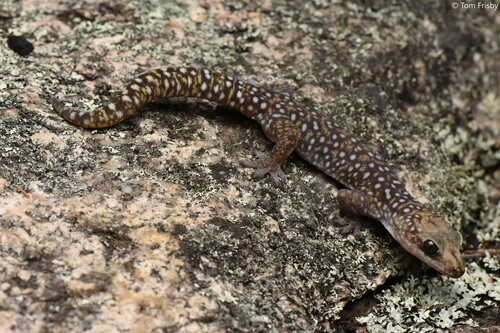
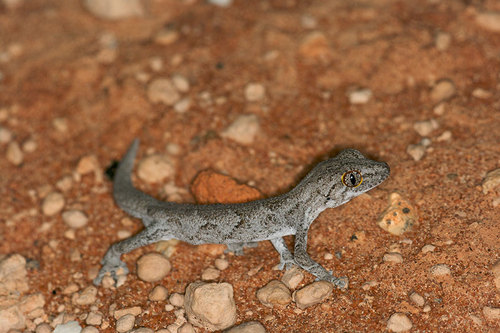
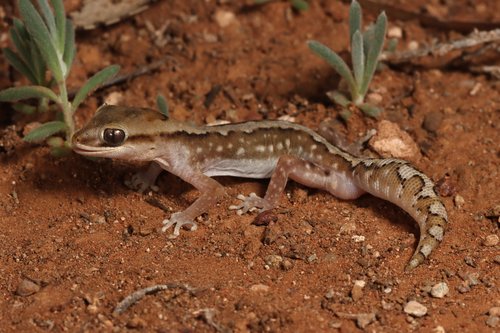
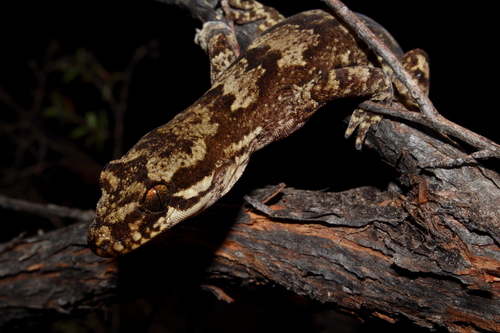
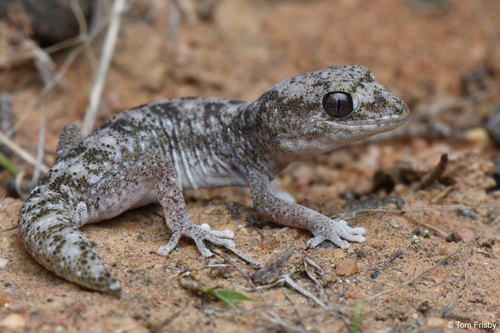
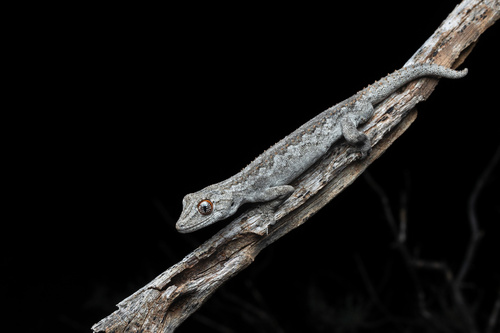
Its body is grey with patterning, and it has a pale belly.
Common Name Origin
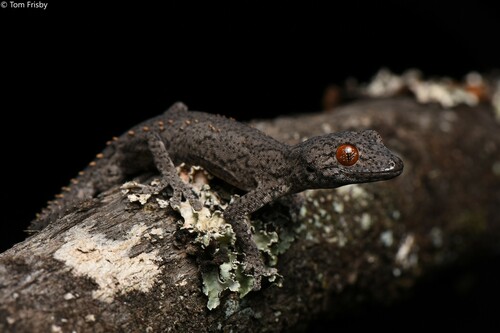
It gets its two common names, eastern spiny-tailed gecko and southern spiny-tailed gecko, from two longitudinal rows of prominent tubercles running along the full length of its back and tail.
Spine Appearance
These spines are orange-brown in color, and grow more prominent toward the tail.
Spine Defense Function
This spiny feature serves as a defense mechanism: the spines on the tail exude a harmless but bad-smelling orange fluid onto attackers.
Body and Limb Structure
S. intermedius has strong limbs and a strong body.
Digit Adhesive Features
The tips of its digits have adhesive discs, like digits of most Gekkota species.
Mouth Lining Color
The inside lining of its mouth is blue.
Eye Iris Features
The iris of its eye has a bright orange rim.
Head Morphology
Its head is oviform and convex, with a rounded snout and large eyes, and it has no spines above the eyes.
Adult Snout-to-Vent Length
Adult S. intermedius have an average snout-to-vent length of 64 mm (2.5 in).
Sexual Dimorphism
This species is sexually dimorphic: adult females are larger than adult males, and males have large hemipenal bulges that females lack.
Partial State Distribution
Geographically, S. intermedius occurs in the southernmost parts of the Northern Territory, Western Australia, and Queensland.
Full State Distribution
It is found throughout the entire states of New South Wales and South Australia, and across the northern half of Victoria.
Highest Population Density Area
It is most common around Alice Springs, Northern Territory.
Activity Pattern
In terms of ecology and habitat, S. intermedius is nocturnal (active at night) and terrestrial (land-dwelling).
Thermal Trait and Habitat Type
It is an ectotherm that inhabits warm semi-arid habitats.
Daytime Shelter Sites
During the day it hides under rocks, under tree bark, or inside logs, and can also be found in spinifex grass.
Nocturnal Foraging Activity
It is active hunting for food at night.
Vegetation Habitat Types
It generally occurs in vegetation types including shrubland, woodland, and grassland.
Reproductive Mode
S. intermedius is oviparous.
Sexual Maturity Age
Both male and female individuals reach sexual maturity at two years of age.
Female Egg-Laying Traits
Females begin reproducing at two years old, and lay clutches of two eggs during the summer.
Egg Incubation Period
Eggs take approximately 45 days to hatch.
Female Reproductive Period Length
Females are reproductively active over a 6-month period each year.