About Rana muscosa Camp, 1917
Taxonomic Publication and Size
Rana muscosa, formally published by Camp in 1917, ranges from 4 to 8.9 centimetres (1.6 to 3.5 inches) in length, with females typically larger than males.
Dorsal Coloration and Patterning
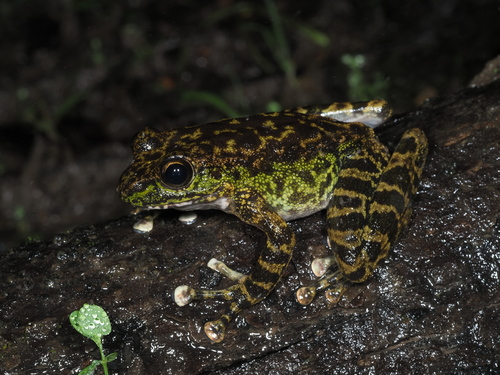
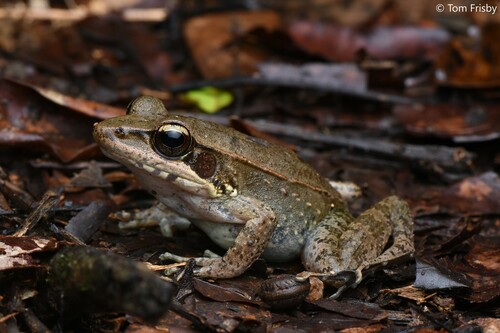
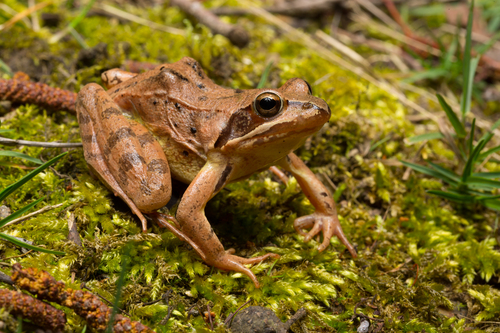
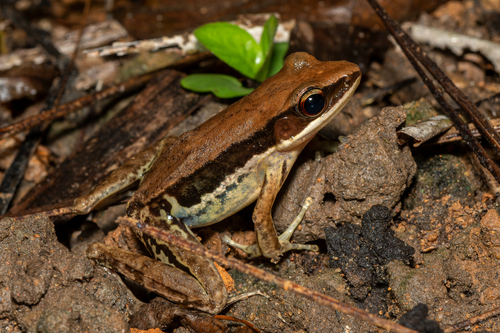
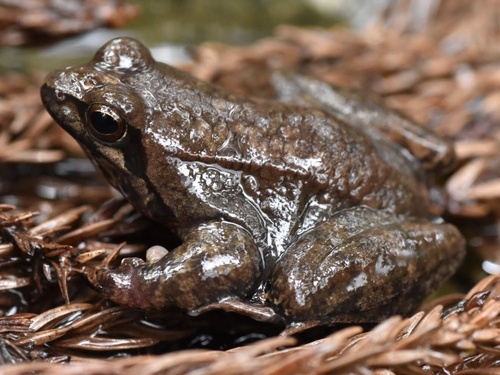
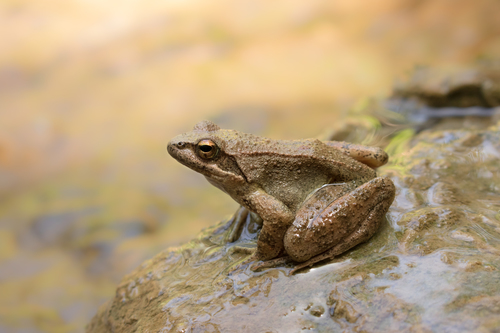
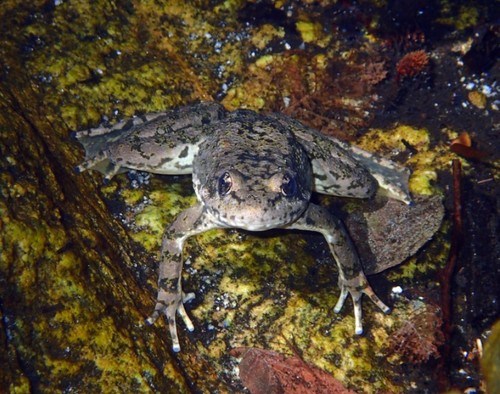
Its coloration and patterning are highly variable: the base color is yellowish, brownish, or olive, overlaid with black and brown markings.
Hind Leg Underside Coloration
The underside of the hind legs comes in different yellow hues, ranging from bright sun yellow to pale yellow, and larger individuals may show faint orange hints on their hind legs.
Thigh and Throat Coloration
The throat ranges in color from white to yellow, and the thighs may be light orange or yellow.
Dorsal Spot Pattern
Along with its overall variable coloration, the species has a dorsal pattern of dark spots that vary in both shape and size.
Etymology of Specific Epithet
The specific epithet muscosa comes from the Latin word meaning "mossy" or "full of moss", a reference to the species' coloration.
Defensive Odor
When handled, the frog releases a defensive odor that resembles garlic.
Habitat Preferences
This frog inhabits mountain creeks, lakes, lakeshores, streams, and pools, and prefers sunny areas.
Aquatic Association and Respiration
It rarely travels far from water, and can stay underwater for very long periods of time, likely through cutaneous gas exchange.
Adult Microhabitat
Adults are often found on rocks near shorelines.
Oviposition Site Requirements
Close proximity to water is critical because the species lays its eggs either underwater attached to rocks or in shallow water.
Tadpole Habitat Needs
Tadpoles require a permanent water habitat for at least two years while they develop, as tadpoles can die from lack of moisture, particularly during dry summers.
Elevation Range
Rana muscosa has been recorded at elevations between approximately 1,214 and 7,546 feet (370 and 2,300 m) in California.
Geographic Distribution
Its suitable habitats are primarily located north of California in the Sierra Nevada, and south of California in the Transverse Ranges.
Post-Winter Emergence
The frog emerges from its wintering site shortly after snowmelt.
Breeding Season Timing
Its breeding season starts once peak meltwater flow has passed, occurring around March through May in the southern part of its range, and as late as July in higher, more northern mountains.
Breeding Maturity Timeline
The time to reach breeding maturity varies from 1 to 4 years, depending on snow levels and temperature.
Larval Temperature Vulnerability
Very cold temperatures can cause larval death.
Fertilization and Egg Placement
Fertilization is external, and egg clusters are secured to vegetation in flowing water, or left floating freely in still water.
Tadpole Development Period
Juveniles may remain tadpoles for 3 to 4 years before completing metamorphosis, though this development rate varies greatly based on the area's temperature and elevation.
Tadpole Age Classes and Metamorphosis Timing
Tadpoles are grouped into two classes: first-year tadpoles and second-year tadpoles, and metamorphosis usually occurs during the tadpole's second summer.
Metamorph and Juvenile Classification
Individuals undergoing the transition from tadpole to young frog are called metamorphs, and are classified as juveniles once they survive their first winter.
Reproductive Maturity Age
The frog becomes reproductively mature after 2 years in the juvenile stage.
Elevation Impact on Development
Overall, growth and development rates are slower at higher elevations.