About Papurana daemeli (Steindachner, 1868)
Adult Size
Papurana daemeli (Steindachner, 1868) shows sexual dimorphism in snout-vent length: maximum recorded length is 64 mm (2.5 in) for males and 81 mm (3.2 in) for females. For individuals found in Australia, typical sizes range 43–58 mm (1.7–2.3 in) for males and 58–81 mm (2.3–3.2 in) for females.
Body and Limb Structure
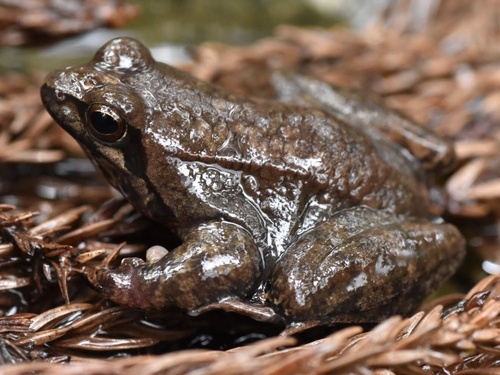
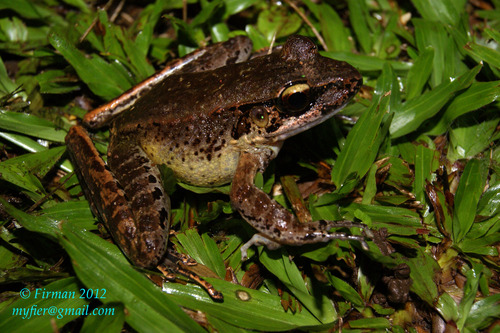
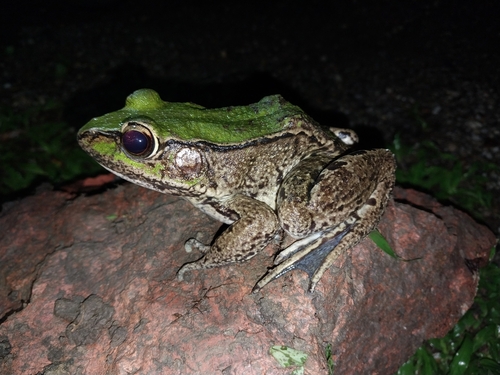
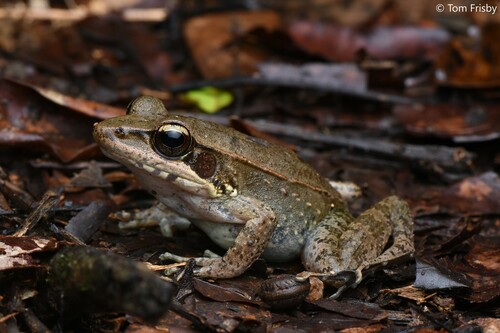
This species has an elongated body with long, muscular limbs. The tympanum is distinct, and it is relatively larger in males than in females.
Skin Traits
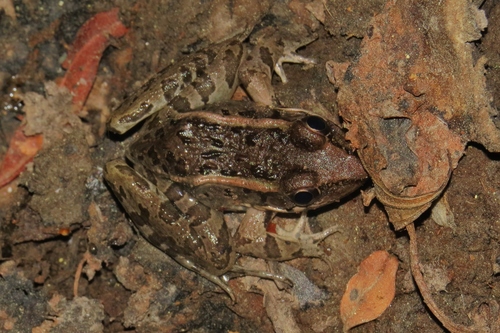
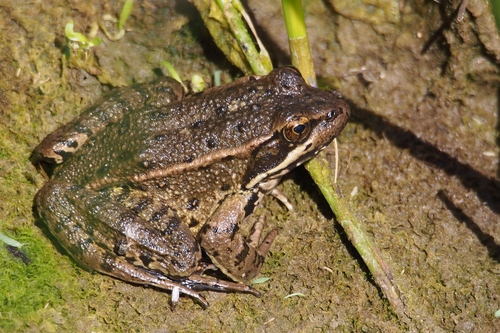
A dorsolateral skin fold runs from behind the eye to the hindlimb. Skin texture is either smooth or weakly granular.
Facial Markings
Its characteristic facial markings are not prominent: the dark loreal stripe is often incomplete, and the post-ocular stripe is discontinuous and not clearly defined.
Coloration
The dorsal surface is dark brown, and typically lightens in color toward the sides. The base color of the ventral surface ranges from off-white (dirty white) to a pale straw shade, overlaid with scattered gray cloudy markings.
Male Vocal Features
Males have paired lateral vocal sacs. The male advertisement call is a distinctive pulsed call made of 2 to 5 notes, and has been described as sounding similar to duck quacking or an exaggerated, sneering laugh.
Tadpole Morphology
Tadpoles of this species can reach a total length of 60 mm (2.4 in) and have long tails.
Species Ecology
Papurana daemeli is a semi-aquatic frog species.
Habitat Range
It inhabits rainforests, seasonally dry monsoon forests, and tropical woodlands, and is most often found near permanent standing or slow-moving water bodies including streams, swamps, lakes, pools, puddles, and lagoons. It can also survive in disturbed habitats, such as rural gardens and urban areas.
Microhabitat Use
Individual frogs usually hide among dense vegetation close to water. In New Guinea, this species has been recorded at elevations up to 880 m (2,890 ft) above sea level.
Breeding Behavior
Males produce their advertisement calls from locations near water at various times throughout the year.
Diet
Papurana daemeli preys on arthropods including spiders, shrimps, cockroaches, grasshoppers, beetles, moths, as well as other frogs.