About Procapra gutturosa (Pallas, 1777)
Common Names
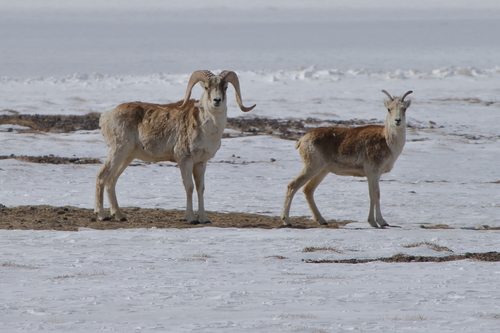
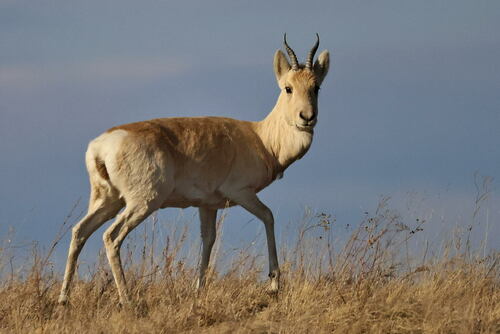
Procapra gutturosa, commonly called dzeren or Mongolian gazelle, has a seasonal coat: in summer, it is tawny light brown with pale pinkish tones, while in winter the coat becomes thicker, longer, and paler.
Rump Markings
This species has a distinctive heart-shaped white patch on its rump, split along the center by a darker median line.
Male Horn Structure
Males have lyre-shaped horns that curl backward from the forehead.
Locomotion Capabilities
The Mongolian gazelle is an extremely capable long-distance runner and a strong swimmer.
Ecosystem Type
Mongolian gazelles inhabit cold, semi-arid, temperate ecosystems.
Habitat Preferences
They favor flat or gently undulating steppes and dry grasslands, and prefer steppe and desert steppe habitats that have clustered vegetation.
Total Global Range
The species' estimated total global range is 746,281 km².
Range Distribution by Country
91% of this range lies within Mongolia (681,863 km²), 5% within China (34,718 km²), and 4% within Russia (29,700 km²).
Mating Season Timing
The species' mating season occurs in late autumn or winter.
Male Mating Season Trait
During this period, males experience goiter-like swelling of the throat.
Mate Competition Behavior
Competition for mates is intense, but fights between males rarely occur.
Gestation and Birth Timing
Gestation lasts approximately 5 to 6 months, and births take place in June and July.
Female Birthing Behavior
When giving birth, groups of dozens of females separate from the main herd before rejoining it after birthing is complete.
Litter Size
Females usually give birth to a single calf, and twins occur only occasionally.
Newborn Calf Traits
Newborn calves weigh around 3 kg, and can keep pace with their mother within a few days of birth.
Sexual Maturity Age
Young Mongolian gazelles reach sexual maturity and are able to mate at 17 to 18 months old.