About Pipistrellus pipistrellus (Schreber, 1774)
Size
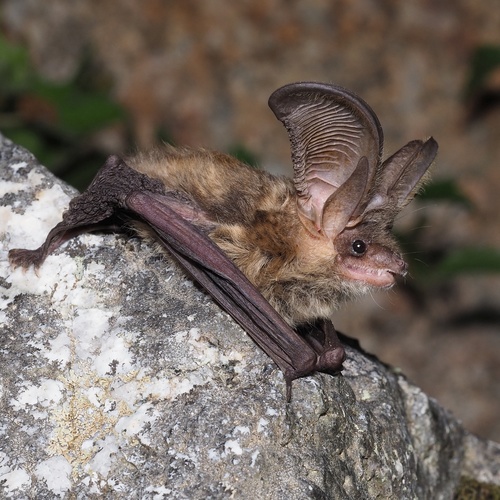
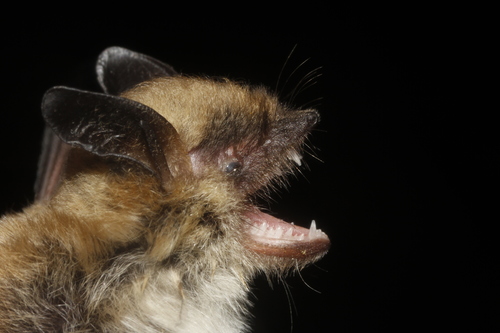
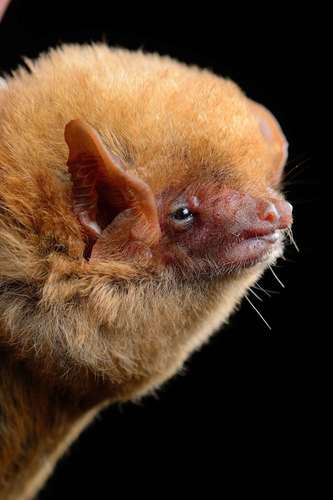
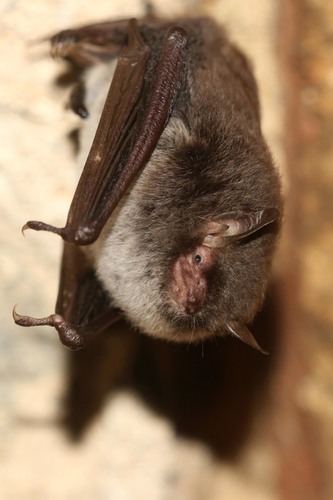
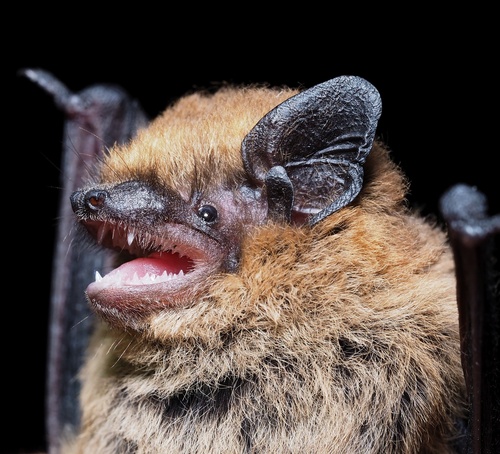
Pipistrellus pipistrellus, the common pipistrelle, is a very small bat species. It has a head-and-body length of 3.5–5.2 cm (1.4–2.0 in), with a tail that adds an additional 2.3–3.6 cm (0.91–1.42 in). Its forearm measures 27.7–32.2 mm (1.09–1.27 in) in length, and it has a short muzzle.
Body Mass
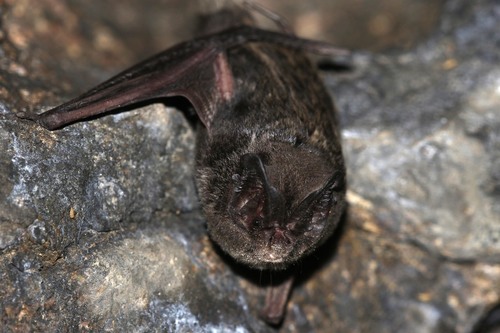
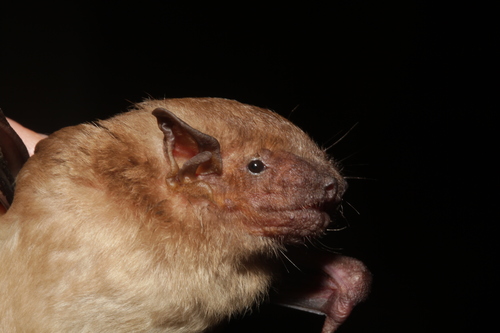
Body mass ranges from 3.5 to 8.5 g (0.12 to 0.30 oz), while wingspan ranges from 18 to 25 cm (7.1 to 9.8 in). Its fur is brown and varies in tone.
Habitat
It is common in woodland and farmland, and also lives in towns, where females roost in lofts and buildings while rearing young.
Distribution
This species has a Palearctic distribution. It is found in the British Isles, southern Scandinavia, across most of Continental Europe, and in parts of Northwest Africa.
Asia
In Asia, it also occurs in India, China, and Myanmar.
Courtship
Males attract females by establishing courtship territories roughly 200 m (660 ft) in diameter. These territories are held from mid-July to the end of October, with the most intense activity taking place in September. Courtship territories are typically located near common winter roosts for the species.
Male Singing
Males patrol their territories while "singing" to attract female bats that are traveling to winter roosts. Male courtship territories are densely clustered, giving females a choice that is similar to a lek mating system.
Mating
Though copulation happens in the fall, fertilization is delayed until after hibernation, because females store sperm. Females are pregnant during May and June. Pregnant females gather in large communal roosts called maternity colonies, which can hold dozens or hundreds of individuals.
Birth
Birth usually occurs in June. Most litters have only one offspring, called a pup, though twins are regularly produced in some populations.
Weaning
Females nurse their pups through July, and pups are usually fully weaned by August. Females reach sexual maturity at one year of age.