About Dasypterus ega (Gervais, 1856)
Common Name and Etymology
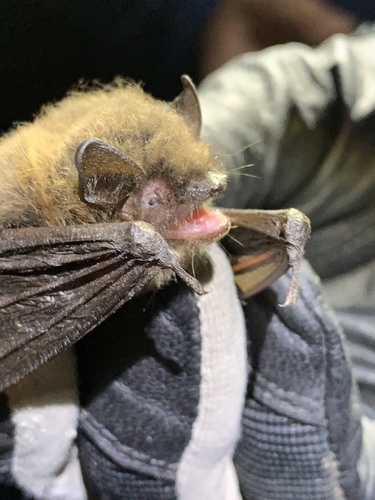
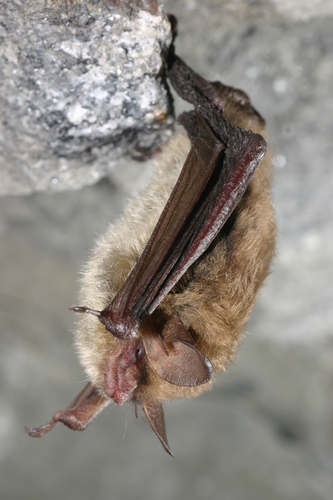
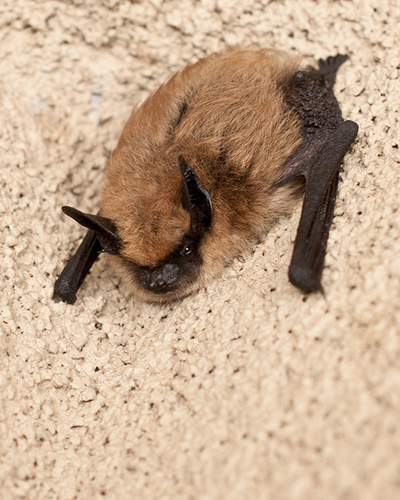
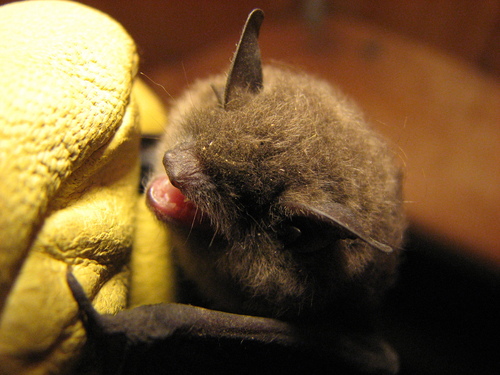
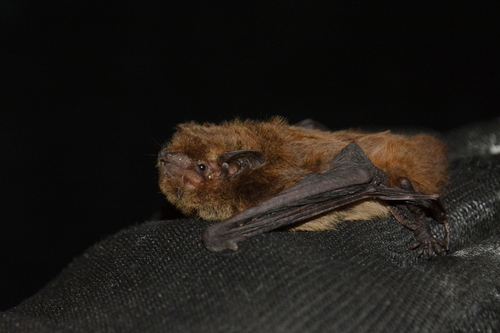
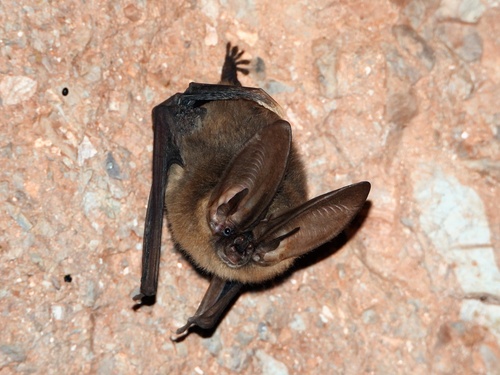
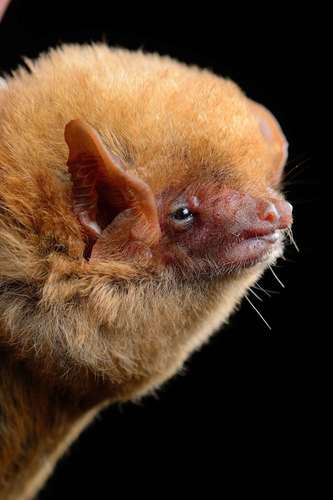
Dasypterus ega, commonly known as the southern yellow bat, is a small bat named for the yellow fur that covers its body.
Sexual Dimorphism
On average, females are larger than males, with a forearm length that averages 4% (1.83 mm) greater than that of males.
Geographic Range
Southern yellow bats range from the southwestern United States down to northern Argentina and Uruguay.
Southernmost Distribution Record
The southernmost known record of the species is from Buenos Aires province, Argentina, located at 40° S.
General Habitat
They live in wooded areas including forests, foliage, and palms.
Roosting Site Generalities
They roost in trees and vegetation, and will occasionally occupy sites that resemble large dead leaves, such as dried corn stalks and thatched roofing.
Texas Roosting Preference
In Texas, their preferred roosting sites are the frond "skirts" of both wild and ornamental palm trees, such as Sabal mexicana and Washingtonia robusta.
Palm Frond Skirt Characteristics
These frond skirts are accumulations of dead fronds attached to the tree trunk, which create the dark habitat this species favors.
Food Source Association
Palms also host the insects that southern yellow bats feed on.
Taxonomic Synonym and Reproductive Cycle Type
This species, previously referred to as Lasiurus ega, is monoestrous, meaning it has only one breeding cycle per year.
Copulation and Fertilization Traits
Copulation occurs before the end of hibernation, but females delay ovulation and store sperm for six months, with fertilization taking place later.
Reproductive Organ Inactivity Period
Following mating in July, which is early winter, all reproductive organs involute and remain inactive until the following April, which is autumn.
Gestation and Birth Period
Gestation lasts 3 to 3.5 months, and young are born in late seasonal time.