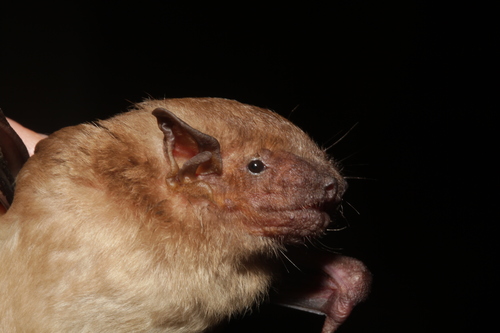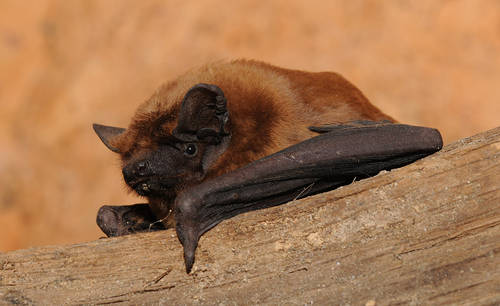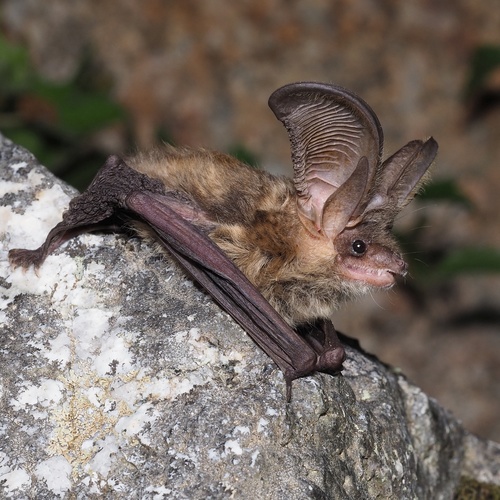
About Plecotus austriacus (J.Fischer, 1829)
Scientific Naming and Origin
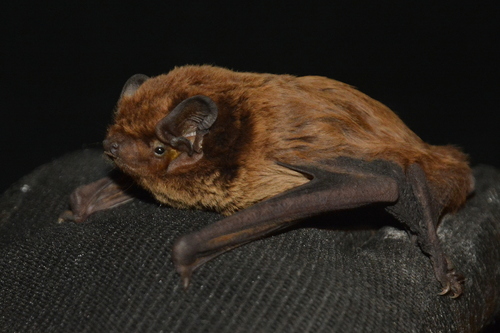
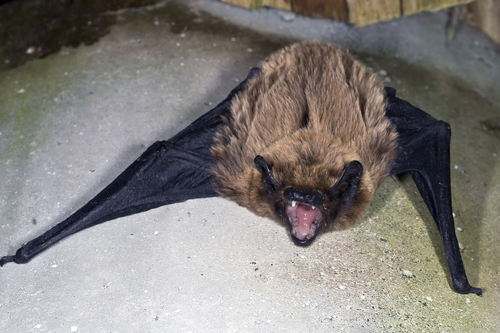
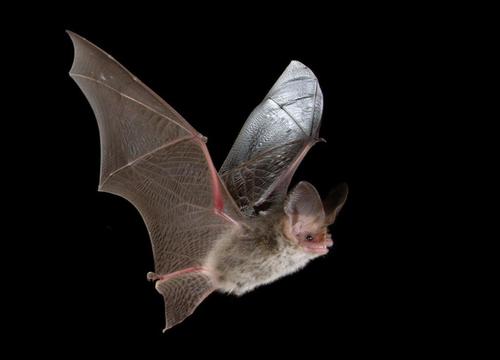
The grey long-eared bat, scientifically named Plecotus austriacus, is a fairly large bat native to Europe.
Ear Characteristics
It has distinctive long ears that feature a unique fold.
Wild Hunting Behavior
This species typically hunts above woodland, often hunts during the day, and preys mostly on moths.
Captive Diet Observation
Individuals in captivity have been recorded eating small lizards.
Taxonomic Recognition History
It is extremely similar in appearance to the more common brown long-eared bat, and was only recognized as a separate species in the 1960s.
Species Distinguishing Feature
It can be told apart from the brown long-eared bat by its paler belly.
Geographic Distribution
This bat is distributed across nearly all of Europe, except for the Scandinavian Peninsula.
Conservation Status and Population
It is classified as a near threatened species, and is more commonly encountered in Southern Europe.
Preferred Habitats
Its preferred habitats include woodlands, grasslands, and a small number of urban areas.
Foraging Habitats
Its main foraging habitats are lowland meadows and marshes.
Prey Location Method
It locates insect prey through echolocation.
Echolocation Parameters
The echolocation frequencies this bat uses range between 18 and 45 kHz, carry the most energy at 28 kHz, and have an average duration of 5.8 milliseconds.