About Barbastella barbastellus (Schreber, 1774)
Overview
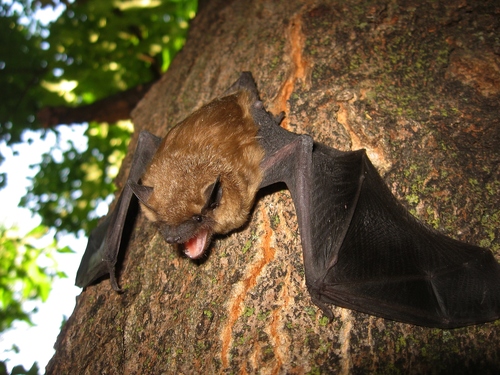
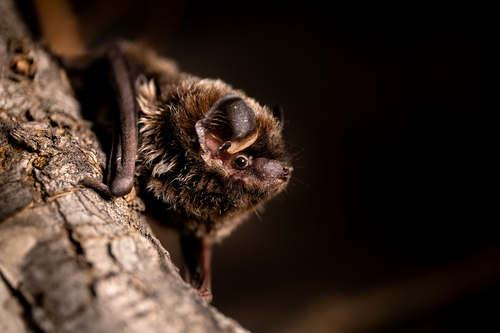
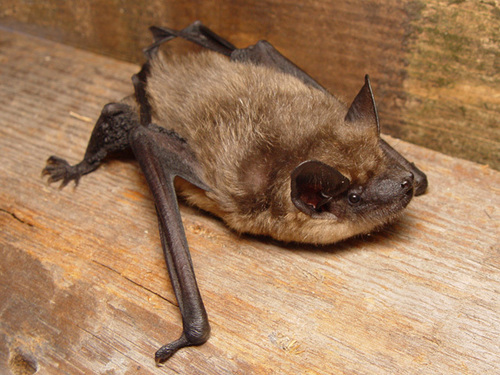
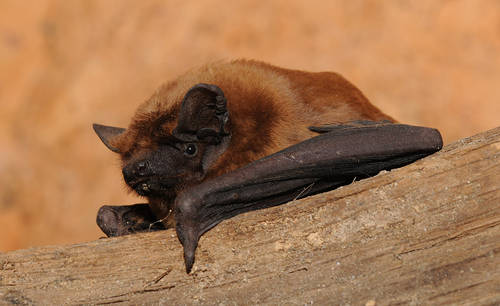
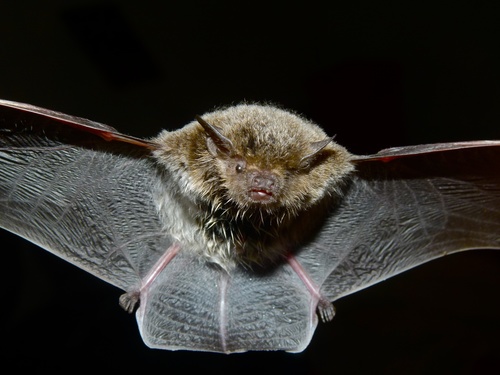
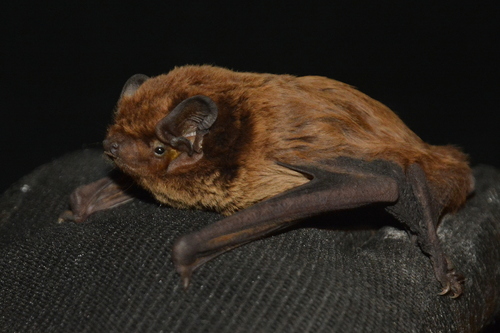
Barbastella barbastellus, commonly called the barbastelle, is a medium-sized bat. It has a characteristic pug-shaped nose, and broad ears that are joined across the top of its head by a band of skin; the rear surfaces of these ears are covered in gingery-brown fur.
Ear Structure
The tragus of the ear is triangular, broad at the base, with a tip that runs nearly parallel starting about halfway along the tragus's length. The head and body of the bat measure between 40 and 55 mm, its wingspan ranges from 26 to 29 cm (10 to 11 in), its forearm length is 3.5 to 4.5 cm (1.4 to 1.8 in), and its body mass falls between 6 and 13 g (0.21 to 0.46 oz).
Roosting Habitat
Barbastelles roost in tree splits or behind loose tree bark year-round, generally in mature deciduous forests, and they will also roost in rock crevices and human buildings. In central Italy, tall dead beech trees in unmanaged woodland are their preferred roost trees. While barbastelles typically stay within a single roosting area, they move very frequently between individual roost sites.
Winter Roosts
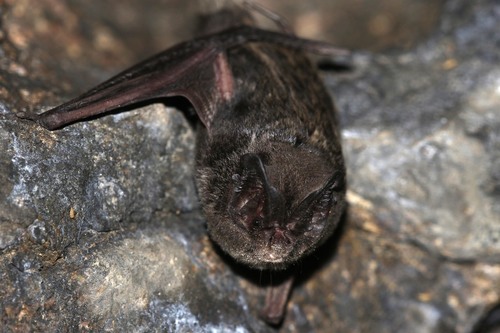
For the winter, barbastelles migrate to underground roosting sites, though they may remain in tree roosts early in the winter season. Winter roost sites include natural caves and human-made structures such as basements, mines, and bunkers. They are relatively resistant to cold, and typically hibernate in cold sites and exposed positions.
Distribution and Status
This species is rare and its populations are mostly decreasing across its entire range. 19th-century historical records note western barbastelles in Senegal, but this record is considered doubtful. In Albania, only four specimens have ever been recorded; all were caught in 2005 near Shebenik-Jabllanicë National Park, close to the border with North Macedonia.
Regional Records
This national park is known for its beech forest, which forms part of the UNESCO World Heritage Site "Ancient and Primeval Beech Forests of the Carpathians and Other Regions of Europe". In Belgium, barbastelle bats occur in the Sonian Forest. In Ireland, the species was reported from the west coast in 1997 based on echolocation calls, but later surveys and research re-assessed this data, concluding the calls were mis-identified and the species is not present on the island of Ireland. In Italy, the species is found across the whole country, including its islands.
Country Records
In Montenegro, the species is present during summer in both the Mediterranean and Alpine biogeographic regions, occurring at altitudes from 80 m up to 1700 m above sea level. The barbastelle has been extinct in the Netherlands since 1984. In Norway, the species was once considered extirpated, having only been recorded in 1896, 1911, 1913 and 1949, but it was rediscovered there in 2004 and 2008.
UK Roosts
In the United Kingdom (Britain), only a small number of breeding roosts are known: Paston Great Barn in Norfolk, parts of Exmoor and the Quantock Hills in Devon and Somerset (including the area around Tarr Steps), Wimpole Wood in Cambridgeshire, the Mottisfont woodland in Hampshire, and Ebernoe Common in West Sussex. The UK distribution of the species is available on the National Biodiversity Network website.
Maturity and Mating
Barbastelle individuals reach sexual maturity after one or two years. After complete sexual segregation through most of spring and summer, the mating season begins at the end of summer, sometimes during swarming events.
Birth and Nursing
Mating usually ends when hibernation begins, but some late mating has been observed during winter and early spring. Around May to June, each pregnant female gives birth to one or two juvenile offspring, which she breastfeeds for up to six weeks.