About Phoenicoparrus jamesi (P.L.Sclater, 1886)
Size Comparison
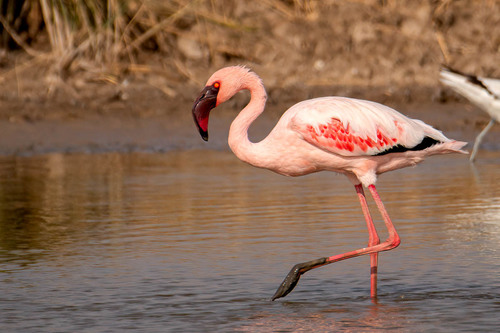
The James's flamingo is smaller than the Andean flamingo, and around the same size as the lesser flamingo, an Old World species.
Etymology
The first specimen was collected by Charles Rahmer during a collecting expedition sponsored by Harry Berkeley James (1846–1892), a manager of a Chilean saltpetre mine born in Walsall, England, after whom the species is named.
Standard Measurements
It typically measures 90–92 cm (2.95–3.02 ft) long and weighs approximately 2 kg (4.4 lb).
Neck Structure
James's flamingos have a very long neck formed of 19 long cervical vertebrae, which allows a large range of movement and rotation for the head.
Leg Structure
They are also distinct for their long, thin legs. The knee is not visible from the outside, and is located at the top of the leg; the joint at the middle of the leg, often mistaken for the knee, is actually the ankle.
Plumage Coloration
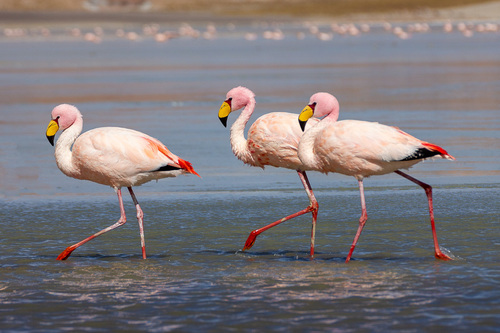
Its plumage is very pale pink, with bright carmine streaks across the neck and back. When perched, a small amount of black is visible in its wings, which comes from its flight feathers.
Adult Facial and Limb Features
Adults have bright red skin surrounding their yellow eyes, brick red legs, and bright yellow bills with black tips.
Similar South American Species Distinction
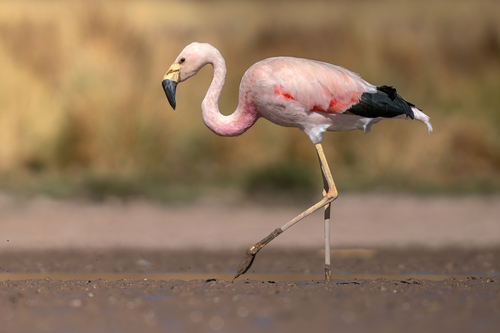
The James's flamingo is similar to most South American flamingo species, but can be told apart from related taxa: the Chilean flamingo is pinker, with a longer bill that is not yellow; the Andean flamingo is larger, with more black on the wings and bill, and has yellow legs.
Key Identification Traits
The easiest ways to identify James's flamingos are their lighter colored plumage and the bright yellow color of their bills.
Foot Structure Taxonomic Trait
A useful trait to separate the two species in the genus Phoenicoparrus from all other flamingo species is the structure of their feet: the two Phoenicoparrus species have three toes and no hallux, while the other three flamingo species have three forward-facing toes plus a hallux.