About Phoeniconaias minor (É.Geoffroy Saint-Hilaire, 1798)
Taxonomy and Classification
The lesser flamingo (scientific name Phoeniconaias minor) is the smallest flamingo species, though it counts as a tall and large bird by most general standards.
Size Measurements
Adult individuals weigh between 1.2 and 2.7 kg (2.6 to 6.0 lb), have a standing height of around 80 to 90 cm (31 to 35 in), and measure 90 to 105 cm (35 to 41 in) in both total length from beak to tail and wingspan.
Plumage Coloration
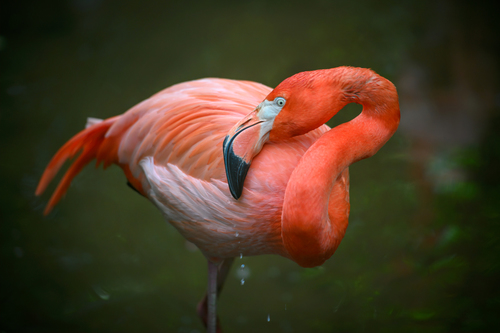
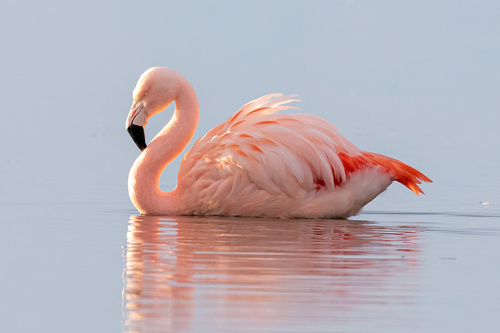
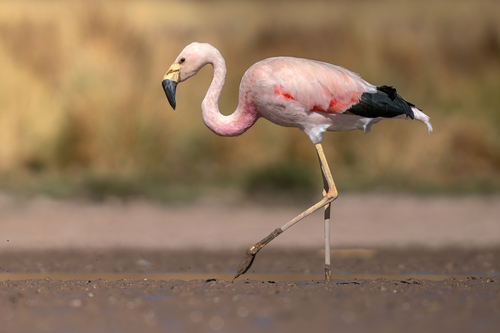
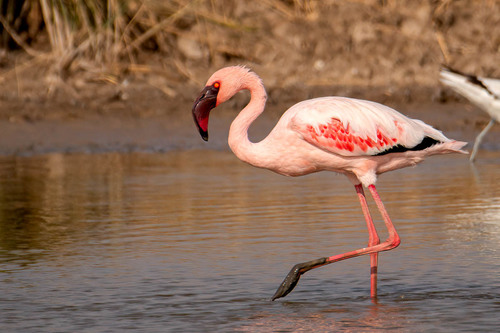
Most of its plumage is pinkish white.
Interspecies Distinction
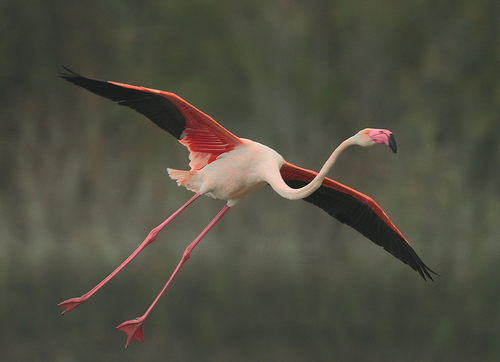
The clearest distinction between the lesser flamingo and the greater flamingo, the only other flamingo species native to the Old World, is the much more extensive black marking on the lesser flamingo's bill. Size is a less reliable characteristic for telling the two species apart, unless they are found in the same location, because males and females of each species also differ in height.
Related Extinct Species
The extinct species Phoeniconaias proeses, which belongs to the same genus and is known from Pliocene deposits in Australia, is thought to have been even smaller than the lesser flamingo.
Population Estimate
The lesser flamingo may be the most common flamingo species, with a peak population that probably reaches up to two million individual birds.
Primary Diet Source
This species feeds primarily on Spirulina, a type of algae that only grows in very alkaline lakes.
Habitat Indicator Role
The presence of lesser flamingo groups near bodies of water indicates the water is sodic alkaline, which is unsuitable for irrigation.
Plumage Color Origin
Although Spirulina is blue-green in color, the algae contains photosynthetic pigments that give the birds their characteristic pink color.
Feeding Adaptation
The lesser flamingo's deep bill is specially adapted to filter tiny food items.
Other Algal Prey
Other types of algae consumed by the species include Synechocystis minuscula, Synechococcus pevalekii, Synechococcus elongatus, Monoraphidium minutum, Oscillatoria sp. and Lyngbya sp.
Secondary Invertebrate Prey
To a lesser extent, the species also feeds on small invertebrates, including copepods (Paradiaptomus africanus), rotifers (Brachionus), diatoms (Navicula), and microscopic alkaliphilic cyanobacteria (Arthrospira fusiformis, A. maxima).