About Phalacrocorax urile (Gmelin, 1789)
Nomenclature
This species has the scientific name Phalacrocorax urile (Gmelin, 1789), commonly called the red-faced cormorant.
Non-breeding Plumage
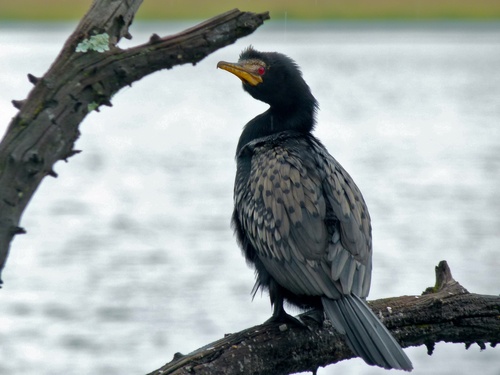
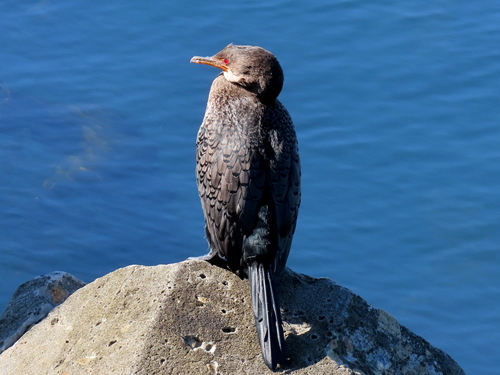
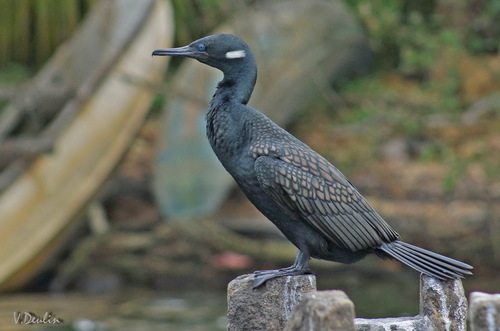
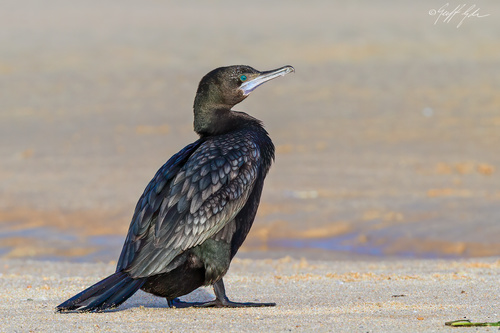
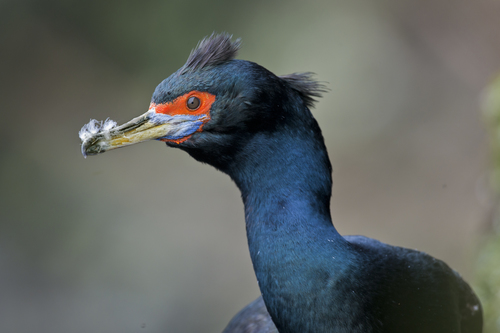
Adult red-faced cormorants have glossy, deep greenish-blue plumage, which turns purplish or bronze on the back and sides.
Breeding Ornamentation
When in breeding condition, individuals develop a double crest, white plumes on the flanks, neck, and rump, and bright orange or red bare facial skin on the lores and around the eyes — this colored facial skin is the source of the species' common name.
Species Identification Trait
While this facial skin color is less vivid outside of the breeding season, it is still distinct enough to separate the red-faced cormorant from the otherwise similar pelagic cormorant.
Limb Coloration
The legs and feet of this species are brownish black.
Wing Measurements
Wing extent ranges from 25 to 29 cm (9.8 to 11.4 in), and females have average wing lengths about 5 cm (2.0 in) shorter than males.
Weight Measurements
Adult weights fall between 1.5 and 2.3 kg (3.3 and 5.1 lb), with females averaging 350 g (12 oz) lighter than males.
Diet
Analysis of stomach contents indicates the red-faced cormorant is primarily a bottom feeder, and particularly feeds on cottids.
Adult Predators
Adult red-faced cormorants have few predators, though river otters, various corvids, bald eagles, and golden eagles may attempt to prey on them.
Egg and Chick Predators
Gulls and corvids are common predators of this species' eggs and chicks.