About Phalacrocorax sulcirostris (Brandt, 1837)
Physical Description
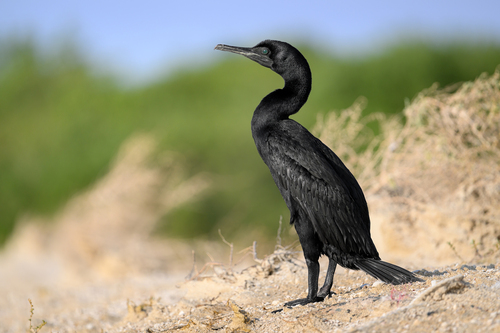
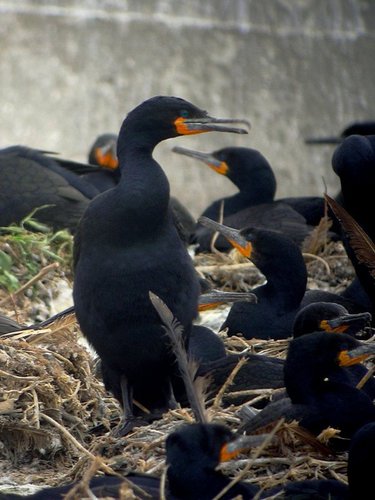
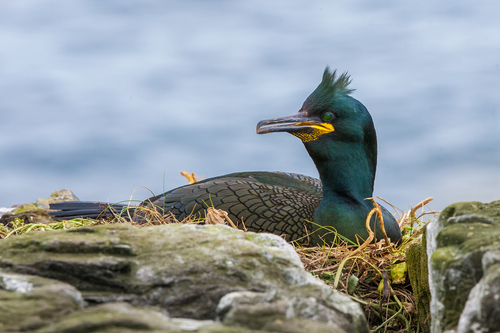
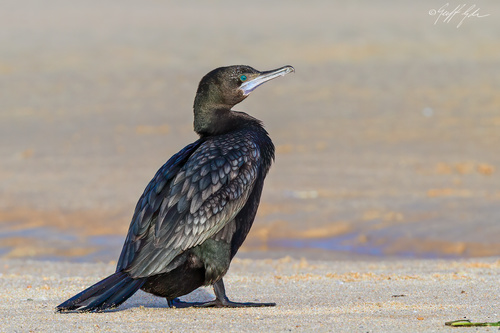
The little black cormorant, scientifically named Phalacrocorax sulcirostris (Brandt, 1837), is a small cormorant that measures 60–65 cm (23.5–25.5 in) and has all-black plumage. Its back carries a greenish sheen.
Breeding Season Plumage
During the breeding season, irregular white feathers appear around the head and neck, and a distinct whitish eyebrow is visible. After breeding season, the plumage fades to a browner color. Males and females have identical plumage.
Bill and Limb Features
This species has a long, slender grey bill, with black legs and feet. Adult little black cormorants have green irises, while juveniles have brown irises. Immature birds have a mix of brown and black plumage.
Distribution Range
The distribution of the little black cormorant extends from the Malay Peninsula through Indonesia (excluding Sumatra) and New Guinea, including the D'Entrecasteaux Islands, across all of Australia, and it also occurs on the North Island of New Zealand.
Habitat Preferences
It is predominantly a freshwater species, found in inland bodies of water, and only occasionally occurs in sheltered coastal areas. It is almost always found in or near water.
Diet Composition
The little black cormorant feeds mainly on fish, and consumes a higher proportion of fish than the frequently co-occurring little pied cormorant, which eats more decapods. A field study conducted at two storage lakes, Lake Cargelligo and Lake Brewster, in south-western New South Wales found that introduced common carp made up over half of this species' food intake.
Coordinated Feeding Behavior
Flocks of little black cormorants feeding in a coordinated pattern have been observed on the Wyong River, on the Central Coast of New South Wales, Australia. When feeding, all birds travel in the same direction: they take off from the water, flap their wings against the water while moving forward a few metres, then land on the water, wait for other birds to land in front of them, and dive below the surface to catch groups of startled fish.
Feeding Flock Characteristics
Individuals have been observed returning to the surface to swallow their caught fish before moving forward again. Feeding flocks can number in the hundreds, and maintain a tight formation 10 to 20 metres across as they move forward.