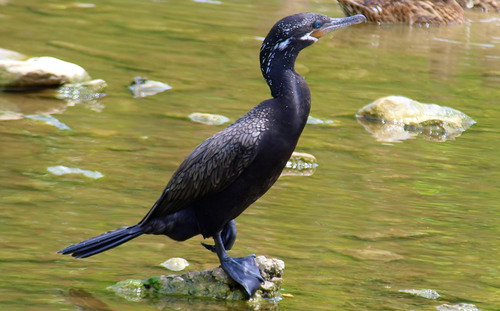
About Phalacrocorax brasilianus (Gmelin, 1789)
Size and Morphometrics
Phalacrocorax brasilianus (Gmelin, 1789) measures 64 cm (25 in) in length, with a wingspan of 100 cm (39 in). Adult males weigh between 1.1 and 1.5 kg (2.4 to 3.3 lb), while adult females weigh 50 to 100 g (1.8 to 3.5 oz) less than males. Individuals from southern populations tend to be larger than those from more northerly populations.
Body Shape
This species is small and slender, particularly when compared to the larger, heavier-built double-crested cormorant. It has a long tail and often holds its neck in an S-shape.
Adult Plumage
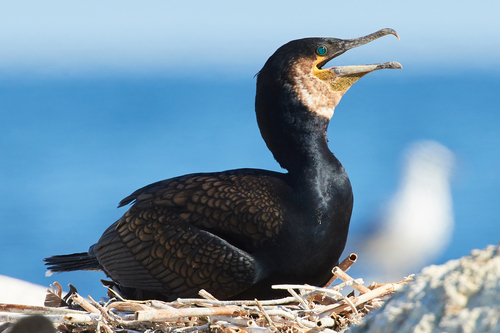
Adult plumage is primarily black, with a yellow-brown throat patch. During the breeding season, white tufts grow on the sides of the head, scattered white filoplumes appear on the sides of the head and neck, and the throat patch develops a white edge. The upper wings are somewhat grayer than the rest of the bird's body.
Juvenile Plumage
Juvenile individuals are brownish in color.
Prey Composition
The diet of Phalacrocorax brasilianus consists mainly of small fish, but it also eats tadpoles, frogs, aquatic insects (such as dragonfly nymphs), and shrimp.
Inland Population Prey
Detailed information about its prey is limited, but inland populations appear to feed on small, abundant fish less than 10 cm (3.9 in) long that weigh around one or two grams each, found in ponds and sheltered inlets. This includes fish from the Poecilia genus, especially the sailfin molly (Poecilia latipinna).
Solitary Foraging Behavior
This cormorant forages by diving underwater, propelling itself through the water with its feet. Its dives are brief, lasting between 5 and 15 seconds.
Group Foraging Behavior
It is also known to forage in groups, where multiple birds beat the water with their wings to drive fish forward into shallower water.