About Phalacrocorax aristotelis (Linnaeus, 1761)
Size Measurements
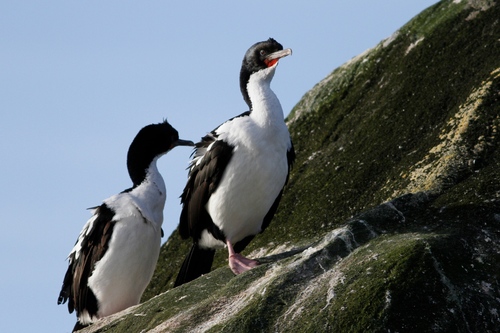
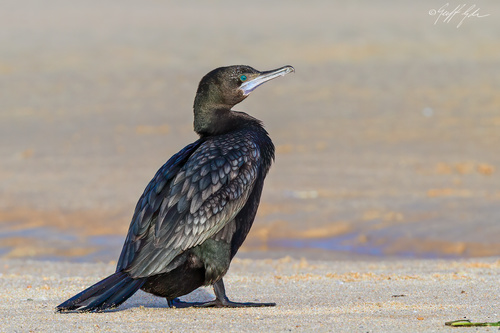
This is a medium-large black bird, 68 to 78 cm (27 to 31 in) long, with a wingspan of 95 to 110 centimetres (37 to 43 in).
Non-breeding Physical Features
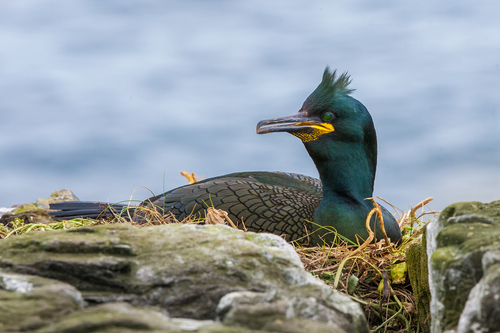
It has a fairly long tail and a yellow throat patch.
Breeding Season Physical Traits
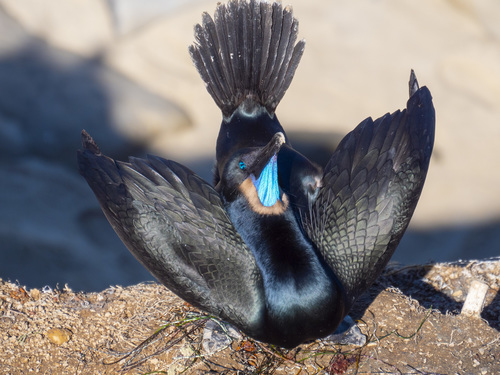
Adult individuals grow a small crest during the breeding season.
Distinction From Great Cormorant (Breeding Adults)
It can be told apart from the great cormorant by its smaller size, lighter build, and thinner bill; breeding adults also have the distinguishing crest and a metallic green-tinged sheen on their feathers.
Juvenile Plumage Distinction
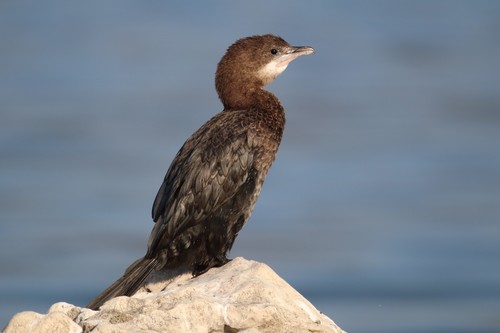
Juvenile European shags have darker underparts than juvenile great cormorants.
Tail Feather Count
The European shag’s tail has 12 tail feathers, while the great cormorant’s tail has 14.
Alternative Common Name
The green sheen on this species’ feathers gives it the alternative common name green cormorant.
Breeding Season Distribution Sites
During the breeding season, which runs from late April to mid-July, European shags are easily found at specific locations: Saltee Islands, Ireland; Farne Islands and Isles of Scilly, England; Isle of May, Deerness and Fowlsheugh, Scotland; Runde, Norway; Iceland; Denmark; Faroe Islands; Galicia, Northern Spain; and Dalmatia and Istria, Croatia.
2017 Monaco Breeding Record
In April 2017, eight new European shag chicks hatched in Monaco.
2015 British Population Estimate
In 2015, the British population of the species numbered 18,000 breeding pairs.
Largest Known Colony
The largest known colony of European shags is located in the Cíes Islands, Spain, holding 2,500 breeding pairs.