About Phalacrocorax capensis (Sparrman, 1788)
Adult Size & Plumage
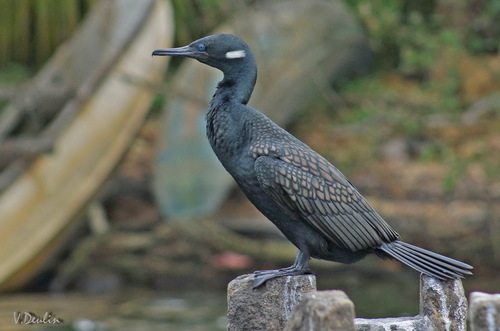
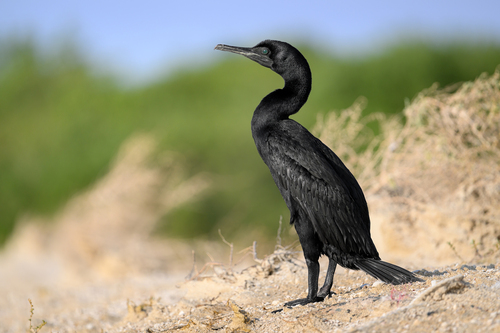
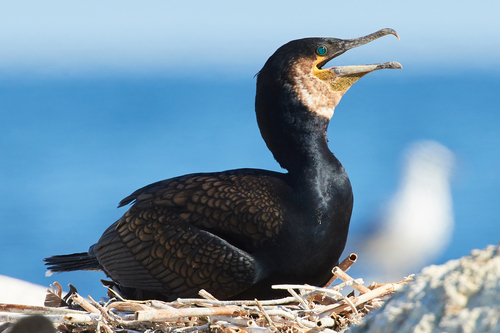
The Cape cormorant (Phalacrocorax capensis) is a bird species with uniform blue-black, glossy plumage across its entire body. It exhibits little to no sexual dimorphism: both males and females are 61–64 cm long, weigh 1.1–1.3 kg, have similar plumage, and have a wingspan of roughly 260 mm.
Facial Characteristics
The Cape cormorant’s beak is dark grey-black, with a distinct deep yellow-orange gular pouch. Its eyes are turquoise, surrounded by a greenish eye-ring.
Age & Breeding Plumage
Non-breeding adults and immature individuals have duller plumage, and immature adults have a brown throat. Juveniles are even browner than immature adults, with grey eyes and a gular pouch that is black, white, or speckled. Breeding adults have bottle green wings.
Geographic Range
The non-breeding range of Cape cormorants extends from Lobito, Angola, to Maputo Bay, Mozambique. Their breeding range is smaller, spanning from southern Angola to the Eastern Cape province of South Africa. This species stays close to the Benguela Upwelling System, an area with high food availability.
Namibian Breeding Population
Namibia alone hosts around 57,000 breeding pairs of Cape cormorants.
Population Decline Cause
Overfishing within the species’ range has caused anchovies, sardines, and rock lobster—its main prey—to shift their distributions south and east. Because Cape cormorants have a limited foraging range during the breeding season, this shift in available food resources has caused a strong decline in the species’ population.
Nesting Site Preferences
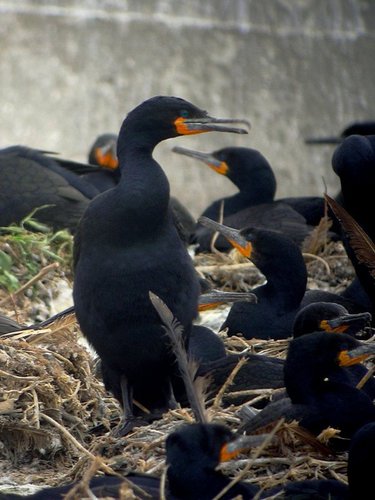
Cape cormorants nest in colonies located in remote areas that are protected from predators (such as the black-backed jackal) and human disturbance. Man-made guano platforms built off the coast of Namibia for economic purposes provide the species with useful permanent roosting and nesting sites.
Roosting & Other Habitats
They can also roost in large groups on wide beaches, a behavior that lowers their risk of predation. Other habitats used by Cape cormorants include coastal islands, coastal rocks, lagoons, and coastal marine waters.