About Phalacrocorax varius (Gmelin, 1789)
Scientific Naming and Plumage
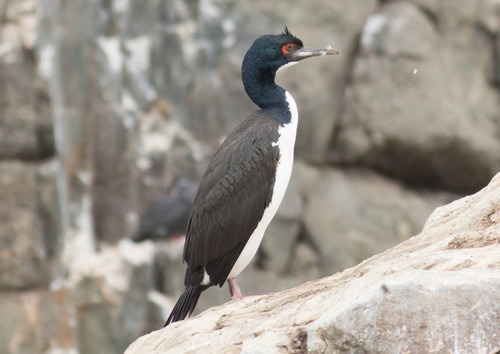
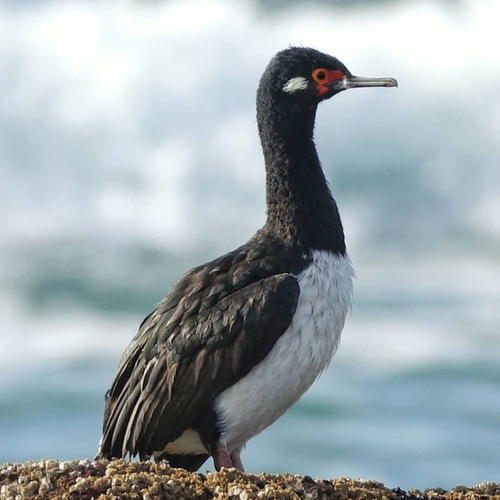
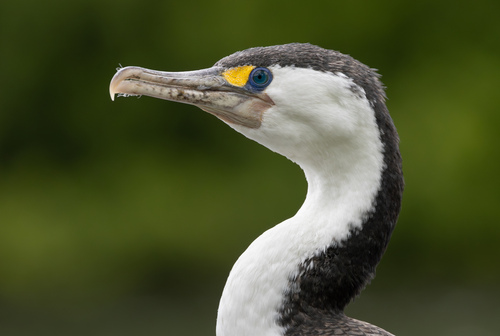
The pied cormorant, with the scientific name Phalacrocorax varius (Gmelin, 1789), has distinct two-toned plumage: its back and the upper surfaces of its wings are predominantly black, while its underside is white.
Weight
Males weigh approximately 2.2 kg, and females weigh around 1.7 kg.
Body Size and Wingspan
The species stands between 65 and 85 cm tall, with a wingspan ranging from 110 to 130 cm.
Etymology of Common Name
A small yellow patch located between the bill and eye on each side of the head is thought to be the origin of its historical common name.
Locomotion Adaptations
It has large webbed feet that it uses to chase fish underwater, and steers with partially opened wings.
Head and Limb Morphology
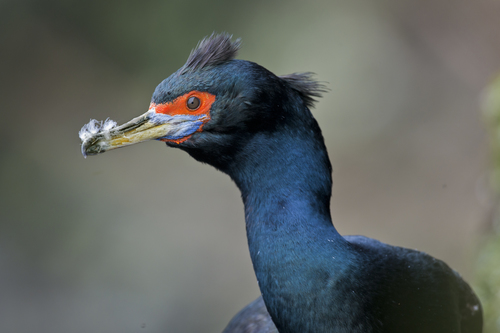
The bird has a large hooked bill, green eyes surrounded by a blue eye ring, and black legs and feet.
Underwater Eye Protection
A special nictitating membrane protects its eyes when it is underwater.
Feather Drying Behavior
Because its feathers do not have adequate waterproofing, pied cormorants are often seen spreading their wings after diving to dry their feathers.
Feather Waterproofing Function
This reduced waterproofing may help the birds stay underwater longer, as it lowers their buoyancy.
Subspecies Variation
The two recognized subspecies have slight physical differences from one another.
Similar Species
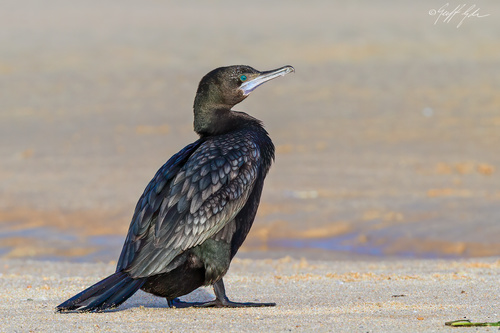
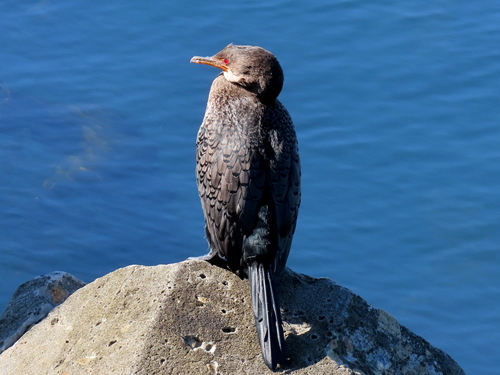
Species similar to the pied cormorant include the slightly smaller black-faced cormorant and the substantially smaller little pied cormorant.
Global IUCN Conservation Status
The IUCN Red List of Threatened Species classifies the pied cormorant as Least Concern, due to its large range and relatively stable population.
New Zealand National Conservation Status
In New Zealand, the species is listed as Nationally Vulnerable.
New Zealand Range Expansion
On New Zealand's east coast, its current range extends as far south as Christchurch; this is a recent range expansion, as older sources note the species did not occur further south than Kaikōura.
Cause of New Zealand Range Expansion
This range expansion followed population recovery after heavy persecution of the species in the early 1900s, and most likely represents recolonization of the species' former range.
New Zealand Population Trend
The New Zealand pied cormorant population has grown from around 700 breeding pairs in the 1950s to an estimated 3,000 breeding pairs after 2000.
Australian Distribution
In Australia, the pied cormorant is only moderately common in eastern states, occurring both on the coast and in inland wetlands, but is abundant in south-western Australia, particularly along the coast.
Australian State Occurrence
It is found in all Australian states except Tasmania.
Australian Conservation Status
Its federal conservation status in Australia is 'secure', and it is only classified as 'near threatened' in the state of Victoria.
Commercial Fishing Threats
The pied cormorant faces a high to moderate risk from fishing activities, especially from set nets and inshore drift nets.
Recreational Fishing Threats
Birds in colonies are frequently found entangled in recreational fishing line, with hooks embedded in their bodies.
Historical Human Persecution
In the past, pied cormorants were viewed as competition for commercial fishing and were sometimes shot.
Habitat Types and Social Grouping
Although the species is typically found in marine habitats, where it may occur alone, in pairs, or in very large flocks of hundreds or thousands of individuals, it is also attracted to inland waters including lakes, deep and open wetlands, and rivers.
Regional Habitat Preference
In Australia, pied cormorants are often found at inland waterways, while in New Zealand they prefer coastal areas close to their prey.
Sedentary Behavior and Roosting Sites
Adult pied cormorants are sedentary, and often roost in trees, on rocks, or on logs in the water.
Habitat Tolerance Requirements
The species is not affected by variable salinity, water turbidity, or shoreline vegetation, as long as suitable perches are available.