About Pelophylax chosenicus (Okada, 1931)
Nomenclature and Taxonomy
The Seoul frog, also called the Seoul pond frog or gold-spotted pond frog, has the scientific name Pelophylax chosenicus. It is a species of true frog that occurs on the southern and western Korean Peninsula, and may also be found in Liaoning, China. It is closely related to the eastern golden frog Pelophylax plancyi, and was long treated as a subspecies of that species.
Genus Classification
Although it is sometimes called a pond frog, it does not belong to the genus Rana; it is instead a member of the water frog genus Pelophylax, which is currently recognized as separate from Rana.
Adult Size
Adult Seoul frogs reach roughly 6 centimeters in length.
Physical Appearance
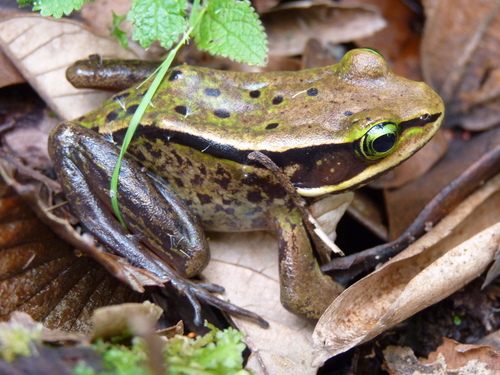
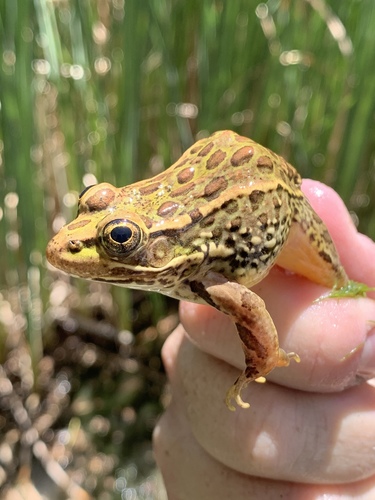
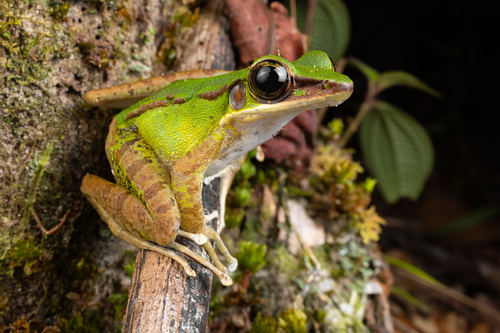
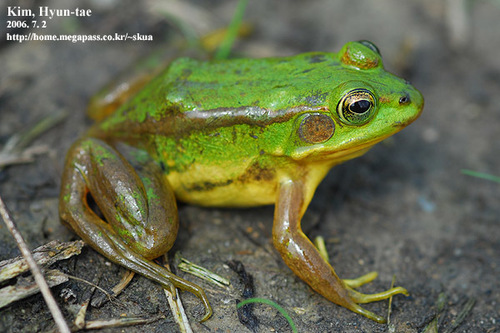
Their back is bright green and bumpy, with light brown patches, while their belly is yellowish-red. The iris of the eye is golden, and the overall body shape is round, appearing swollen.
Habitat and Population Status
This species lives in ponds and rice paddies, but its population has declined sharply, most likely due to habitat degradation. According to Matsui (2004), recent surveys have only found populations of the Seoul frog at four locations.
Reproduction and Conservation Listing
The species' mating season runs from mid-May to June, and it is listed as an Endangered category II species in South Korea.