About Neobatrachus pictus Peters, 1863
Species Identification and Size
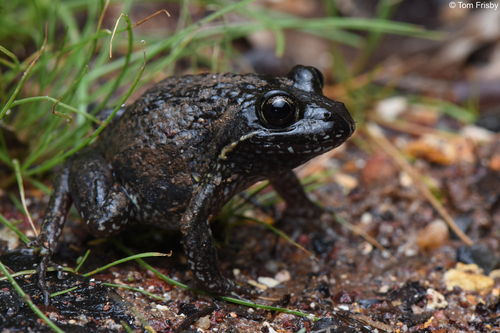
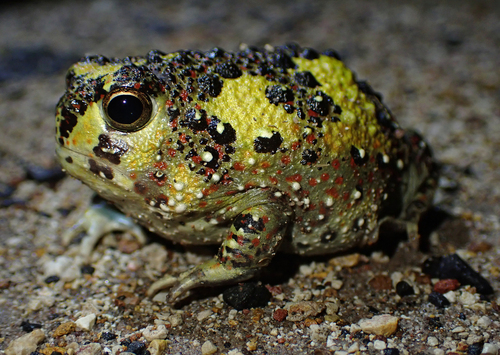
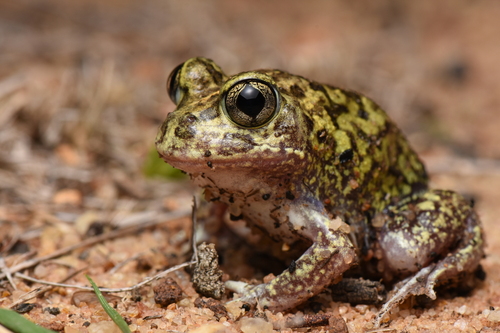
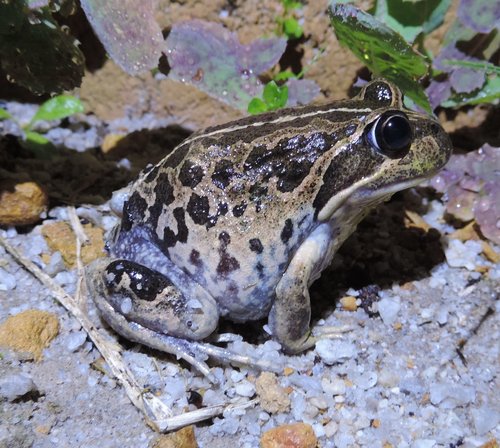
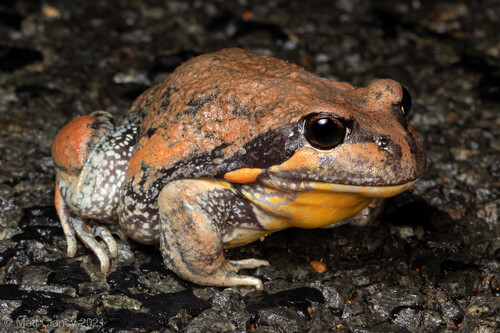
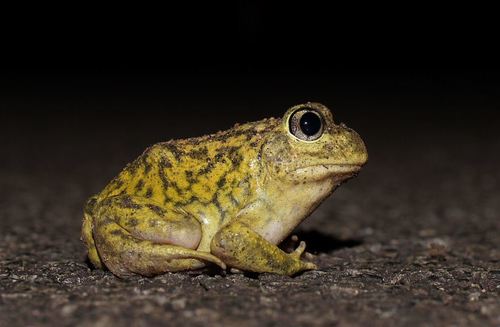
The painted burrowing frog (Neobatrachus pictus Peters, 1863) is a moderately sized, plump frog that grows to a maximum length of 55 mm.
Dorsal Coloration
Its dorsal surface ranges from grey to yellow, marked with brown, olive, or green patches, and it sometimes has a thin, pale stripe running down its back.
Ventral Coloration
The frog's belly is white.
Foot and Burrowing Structure
Its rear toes are partially webbed, and the metatarsal tubercles—shovel-shaped structures on the heel of the foot that help with burrowing—are completely black.
Eye Features
When contracted, the pupil forms a vertical slit, and the iris ranges in color from silver to gold.
Habitat and Range
Painted burrowing frogs live in waterholes, dams, or pools along watercourses, found in woodland, grassland, and cleared areas.
Male Breeding Call
After heavy rain, mostly in autumn and winter, males produce an elongated trilling call while floating in water.
Burrowing Adaptation
Like other species in the genus Neobatrachus, this species is adapted for burrowing and often spends extended periods underground to survive drought.
Egg Characteristics
Its eggs are laid in loosely adherent clumps that may break apart.
Tadpole Size
Tadpoles are large, reaching around 78 mm in length at approximately developmental stage 35.
Development Timeline
Development takes 4 to 7 months, and newly metamorphosed individuals are most often seen between September and November.
Anti-Predator Behavior
When threatened, this species will sometimes rear up on all legs and inflate its body to look larger, which discourages some predators.
Conservation Status
It is an uncommon species threatened by habitat loss, and it is classified as endangered in New South Wales.