Fabaceae — Legume Family
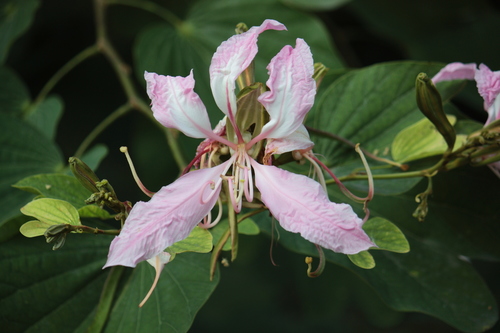
Bauhinia purpurea L.
Bauhinia purpurea L.
Bauhinia purpurea L. is an edible, medicinally used deciduous tree native to South Asia and Myanmar.
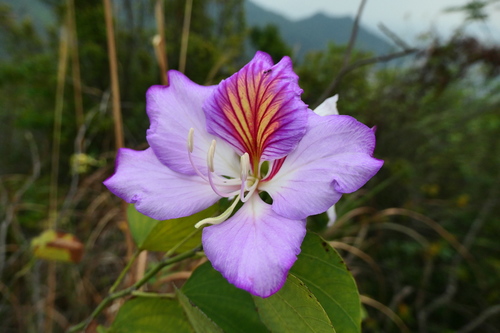
Bauhinia variegata L.
Bauhinia variegata L.
Bauhinia variegata is a small to medium flowering tree grown as an ornamental, with edible parts used in South Asian cuisine.
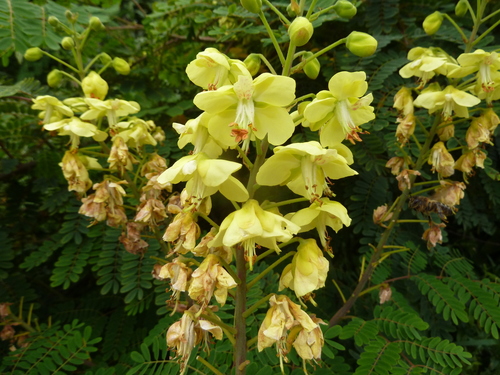
Biancaea decapetala (Roth) O.Deg.
Biancaea decapetala (Roth) O.Deg.
Biancaea decapetala, also called Mauritius Thorn, is a thorny invasive shrub or climbing plant problematic in many introduced ranges.
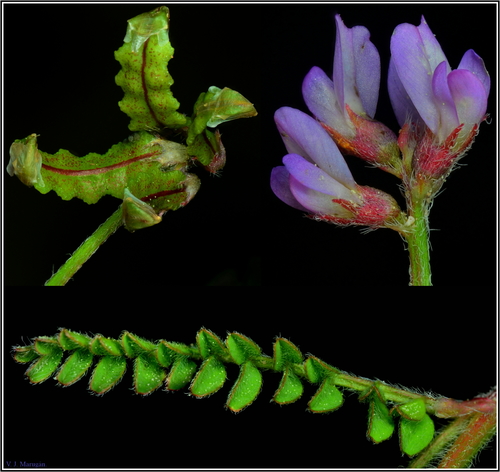
Biserrula pelecinus L.
Biserrula pelecinus L.
The lectotype of Biserrula pelecinus L., as cited by Gillett in 1971, is Herb. Clifford: 361, Biserrula 1 (BM - 000646605).
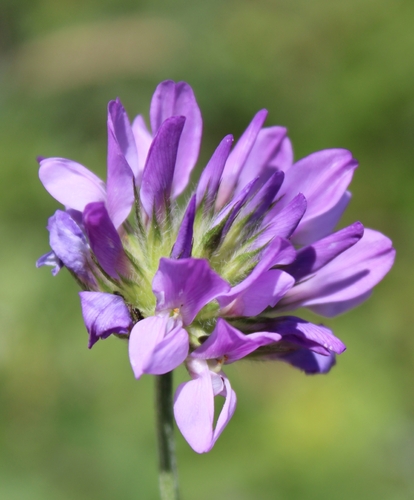
Bituminaria bituminosa (L.) C.H.Stirt.
Bituminaria bituminosa (L.) C.H.Stirt.
Bituminaria bituminosa is a perennial Mediterranean herb with potential uses, recognizable by its characteristic bitumen smell.
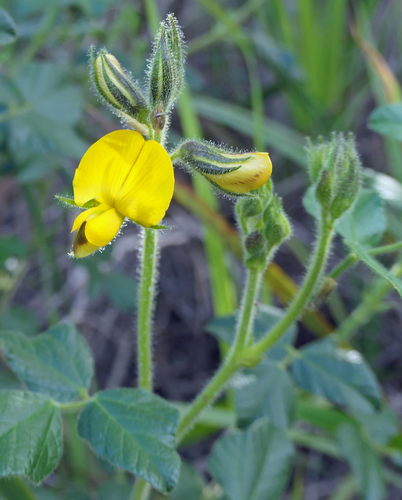
Bolusafra bituminosa (L.) Kuntze
Bolusafra bituminosa (L.) Kuntze
Bolusafra is a monotypic Fabaceae genus native to South Africa, containing only the subshrub Bolusafra bituminosa, or tar pea.
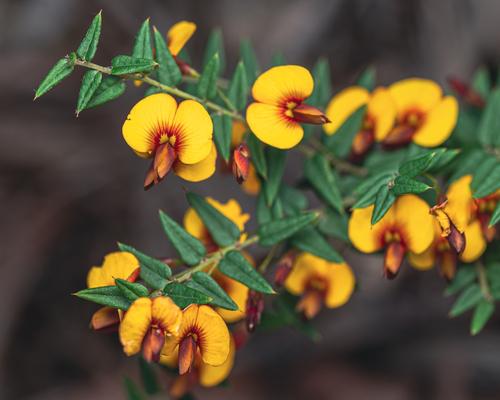
Bossiaea cinerea R.Br.
Bossiaea cinerea R.Br.
Bossiaea cinerea, or showy bossiaea, is a flowering shrub native to southeastern Australia grown in horticulture.
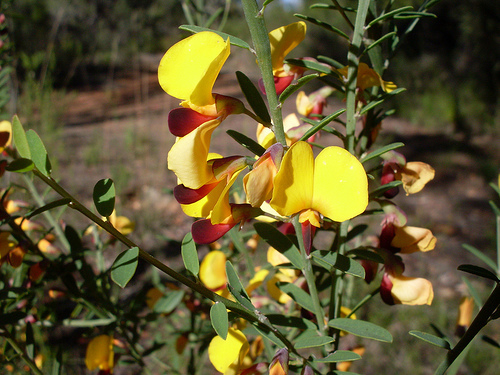
Bossiaea heterophylla Vent.
Bossiaea heterophylla Vent.
Bossiaea heterophylla (variable bossiaea) is a variable-leaved Australian shrub found along eastern Australia from Queensland to Tasmania.
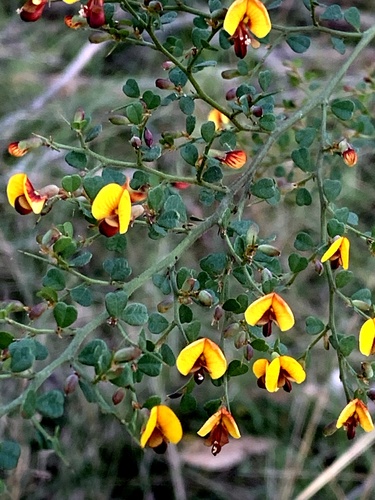
Bossiaea obcordata (Vent.) Druce
Bossiaea obcordata (Vent.) Druce
Bossiaea obcordata is an erect spiny shrub found in forests and heath of southeastern mainland Australia.
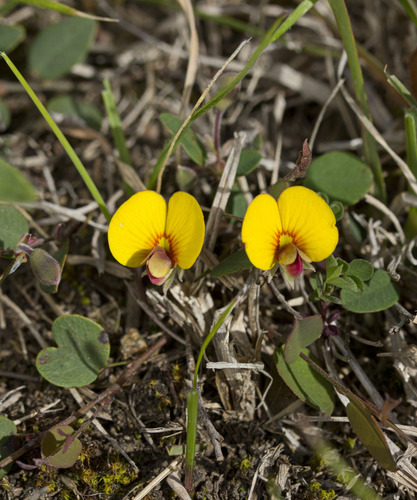
Bossiaea prostrata R.Br.
Bossiaea prostrata R.Br.
Bossiaea prostrata R.Br. is a low, prostrate spreading Australian shrub with characteristic yellow and purple flowers.
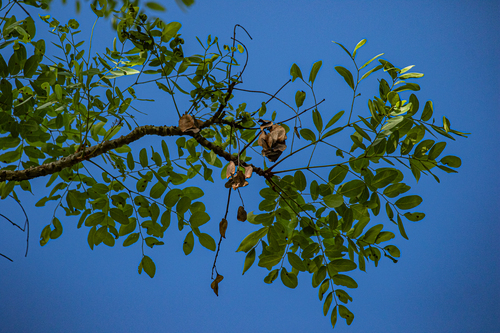
Burkea africana Hook.
Burkea africana Hook.
Burkea africana is a widespread sub-Saharan savanna tree with toxic bark used in fishing and tanning, and valuable timber.
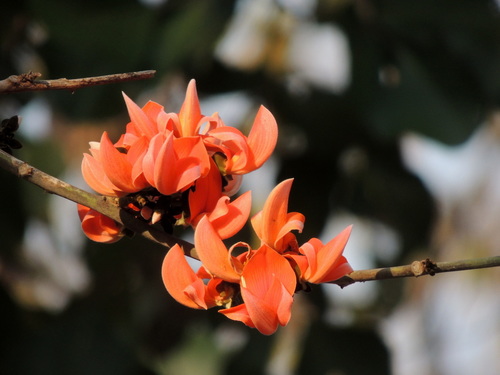
Butea monosperma (Lam.) Kuntze
Butea monosperma (Lam.) Kuntze
Butea monosperma is a small deciduous tree used for timber, food, traditional medicine, and erosion control, with some toxic compounds.
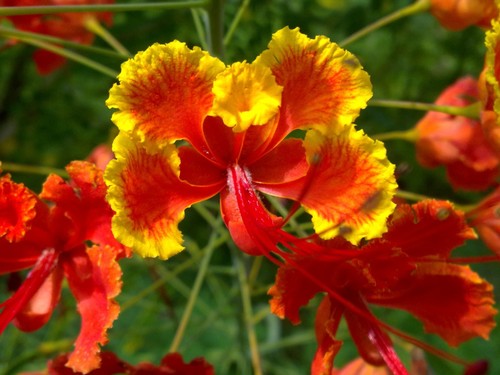
Caesalpinia pulcherrima (L.) Sw.
Caesalpinia pulcherrima (L.) Sw.
Caesalpinia pulcherrima is a cold-sensitive shrub that has been historically used as an abortifacient in traditional medicine.
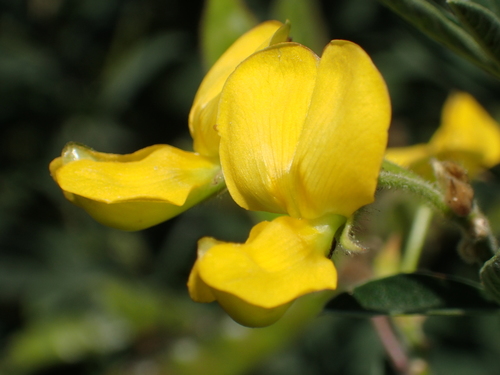
Cajanus cajan (L.) Huth
Cajanus cajan (L.) Huth
Cajanus cajan, commonly called pigeon pea or toor dal, is a widely cultivated legume used for food and traditional medicine.
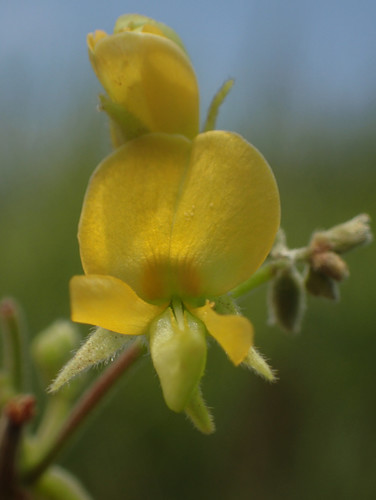
Cajanus scarabaeoides (L.) Thouars
Cajanus scarabaeoides (L.) Thouars
Cajanus scarabaeoides is a wild relative of pigeonpea, used for fodder and traditional medicine in China.
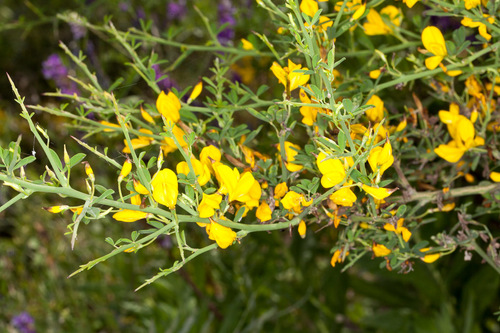
Calicotome spinosa (L.) Link
Calicotome spinosa (L.) Link
Calicotome spinosa (thorny broom) is a spiny Mediterranean fabaceous shrub with bright yellow flowers, introduced to New Zealand.
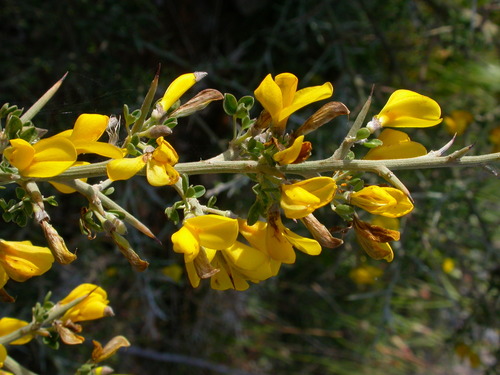
Calicotome villosa (Poir.) Link
Calicotome villosa (Poir.) Link
Calicotome villosa is a spiny yellow-flowered Mediterranean shrub that blooms from January to April.
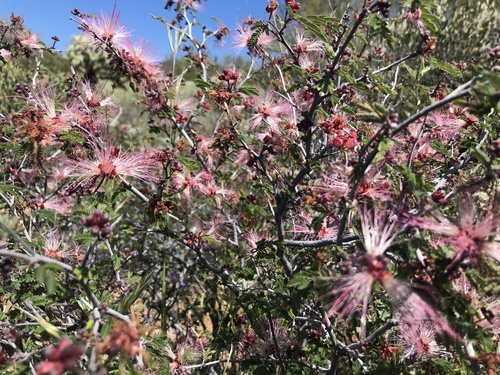
Calliandra eriophylla Benth.
Calliandra eriophylla Benth.
Calliandra eriophylla Benth., or fairy duster, is a drought-tolerant arid shrub native to southwestern US and northern Mexico deserts.
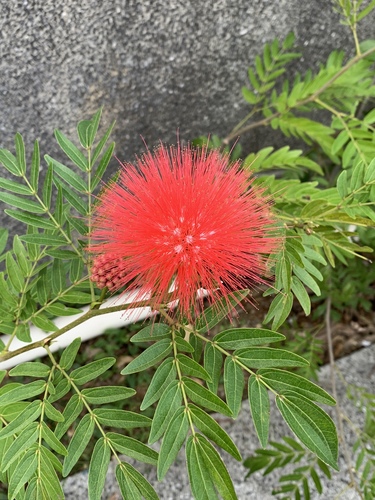
Calliandra haematocephala Hassk.
Calliandra haematocephala Hassk.
Calliandra haematocephala is a rambling shrub or small tree with distinctive red powder-puff flowers, used in green nanoparticle synthesis.
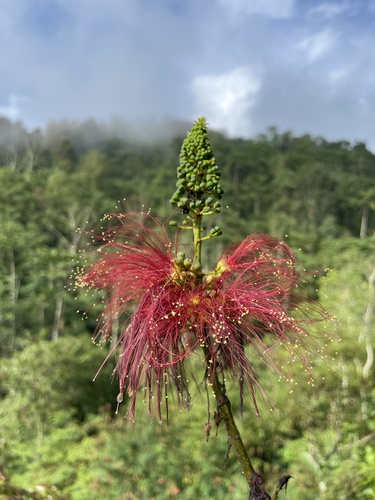
Calliandra houstoniana (Mill.) Standl.
Calliandra houstoniana (Mill.) Standl.
Calliandra houstoniana is a Fabaceae flowering plant historically used by Aztecs to treat coughs.
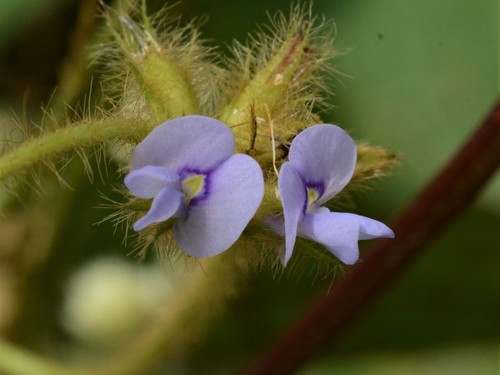
Calopogonium mucunoides Desv.
Calopogonium mucunoides Desv.
Calopogonium mucunoides is a Fabaceae flowering plant, native to New World Tropics, introduced as forage and green manure, and invasive in some areas.
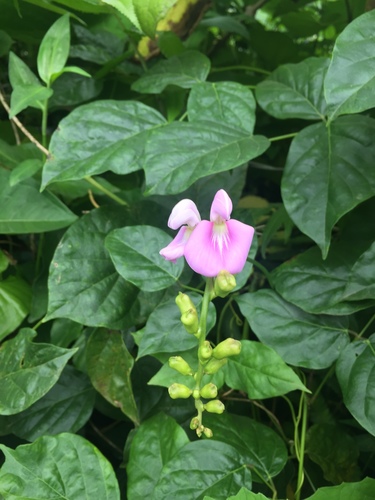
Canavalia cathartica Thouars
Canavalia cathartica Thouars
Canavalia cathartica is a climbing legume adapted to coastal habitats, with multiple agricultural and traditional uses.
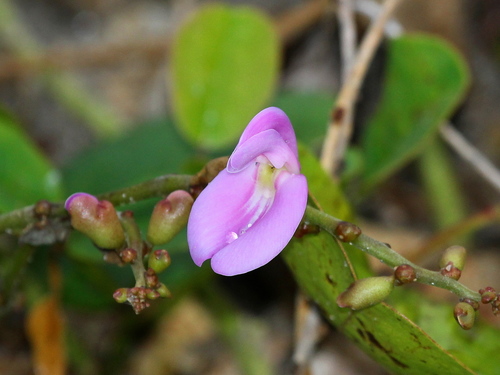
Canavalia rosea (Sw.) DC.
Canavalia rosea (Sw.) DC.
Canavalia rosea is a pantropical Fabaceae flowering beach plant with edible parts and edible flowers used for spice.
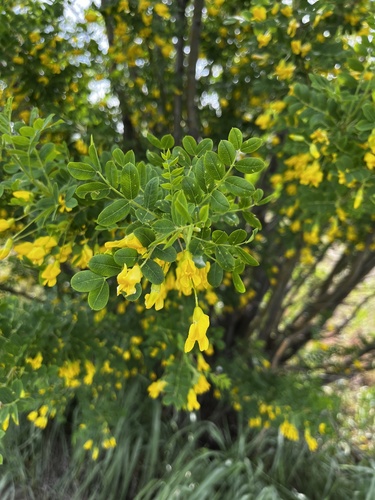
Caragana arborescens Lam.
Caragana arborescens Lam.
Caragana arborescens Lam. is a perennial woody plant used as an ornamental, in windbreaks, and for erosion control with edible seeds.
Related Families
Start Exploring Nature Today
Download iNature for free. 10 identifications on us. No account needed. No credit card required.
Download Free on App Store
