About Cajanus scarabaeoides (L.) Thouars
Classification and Relatives
Cajanus scarabaeoides (L.) Thouars is a very close wild relative of Cajanus cajan, commonly known as pigeonpea. It is a dicot angiosperm belonging to the family Fabaceae.
Growth Cycle
This species can grow as either an annual or a perennial plant, which makes it a flexible crop for subsistence farmers.
Branch Characteristics
Its branches can be straight or winding, and reach up to 135 cm in length.
Leaves and Flowers
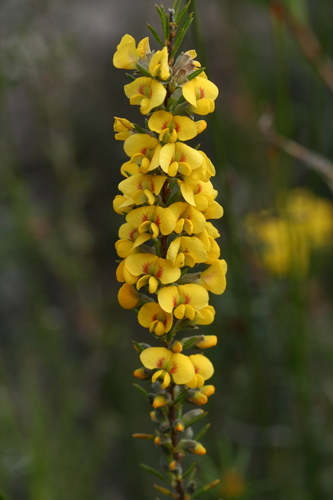
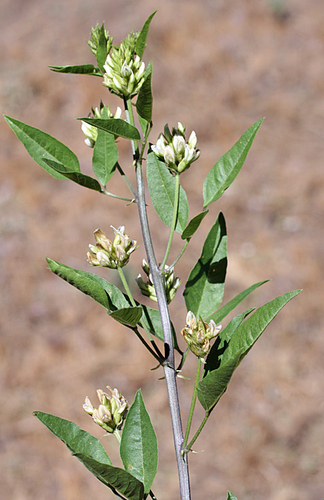
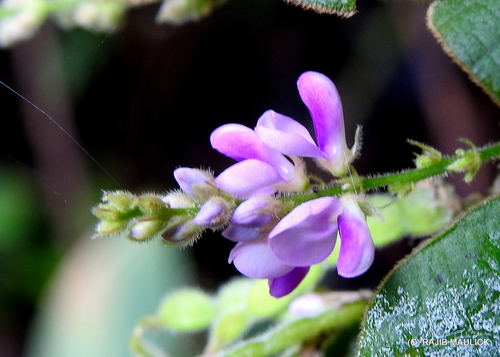
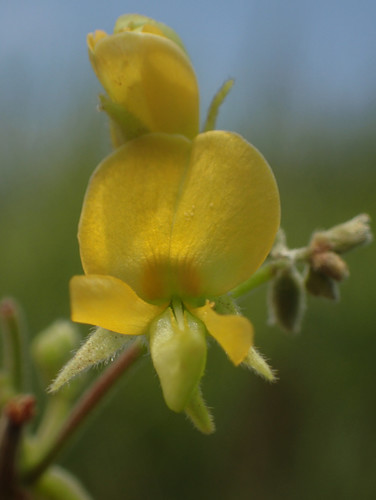
It has pinnate leaves, typically arranged in a trifoliate pattern, and produces yellow flowers marked with red veins.
Pod Dimensions
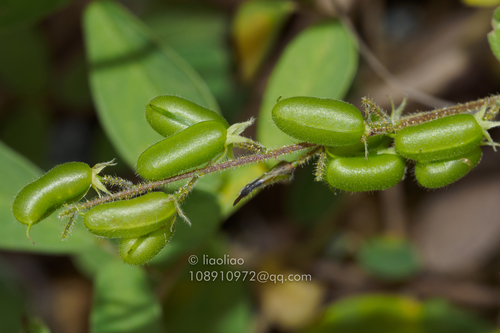
Its pods are oblong in shape, usually measuring 11–34 mm in length and 6–10 mm in width.
Pod Appearance and Seed Count
The seedpods are densely covered with a mix of short and long hairs, are typically dark purple, and hold between 1 and 7 seeds each.
Seed Characteristics
The seeds themselves range from 2.4–4 mm long, 1.8–3 mm wide, and 1–2 mm thick, and are either solid black or speckled.
Seed Yield Comparison
Compared to cultivated pigeonpea, Cajanus scarabaeoides has a higher percentage of seeds per pod: 74% versus 20%. It also produces more multiseed pods, with an average of 6.04 seeds per pod compared to 3.0 seeds in cultivated pigeonpea.
Native Range Overview
Cajanus scarabaeoides is the most widely distributed wild relative of Cajanus cajan, and is native to many countries across both temperate and tropical zones.
African Distribution
In Africa, it is native to Madagascar.
Temperate Asian Distribution
In temperate Asia, it is native to China, Japan and Taiwan.
Tropical Asian Distribution
In tropical Asia, it is native to Bangladesh, Bhutan, India, Nepal, Pakistan, Sri Lanka, Myanmar, Thailand, Vietnam, Indonesia, Malaysia, Papua New Guinea and the Philippines.
Oceanian Distribution
In Oceania, it is native to Australia and Fiji.
Distribution in China and Taiwan
Within Asia, it is the most commonly distributed wild species of the genus Cajanus, and grows abundantly in Taiwan and the Chinese provinces of Yunnan, Guizhou, Guangxi, Guangdong, Hainan and Fujian.
Local Names in China
This species has several local names in China: it is called “Man Cao Chong Duo” in Mandarin Chinese, “Shui Kom Ts’o” in the Guangdong dialect, and “Jia Yan Pi Guo” in the Yunnan dialect.
Livestock Use
In China, Cajanus scarabaeoides is sometimes used as fodder, and has been shown to be effective at reducing diarrhea in cattle.
Medicinal Uses
Additionally, its leaves are used in traditional medicine to improve indigestion and reduce excessive urine production.