Fabaceae — Legume Family
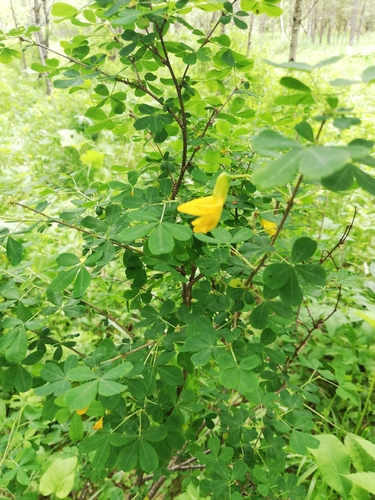
Caragana frutex (L.) K.Koch
Caragana frutex (L.) K.Koch
Caragana frutex is a flowering plant species in the Fabaceae family native from Bulgaria to China.
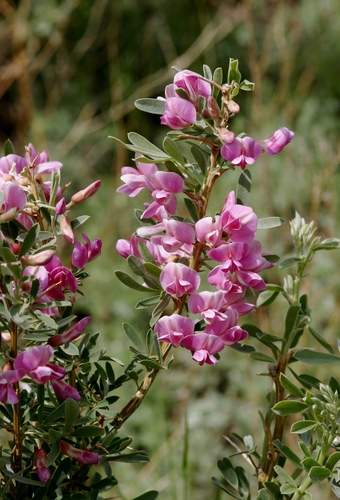
Caragana halodendron (Pall.) Dum.Cours.
Caragana halodendron (Pall.) Dum.Cours.
Caragana halodendron, the common salt tree, is a deciduous spiny shrub native to Russia and southern Asia, often a noxious introduced weed elsewhere.
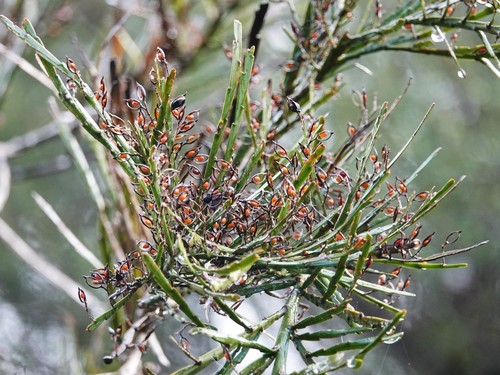
Carmichaelia australis R.Br.
Carmichaelia australis R.Br.
Carmichaelia australis (New Zealand broom) is a leafless endemic New Zealand nitrogen-fixing shrub with a specific Māori cultural association.
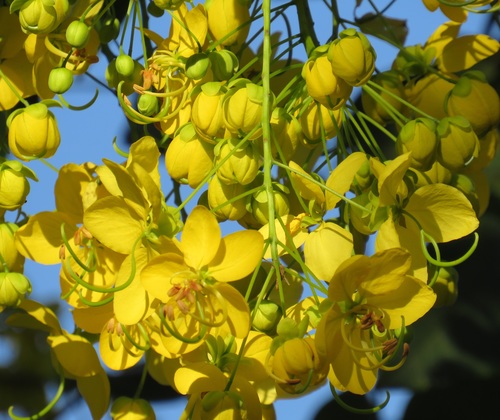
Cassia abbreviata Oliv.
Cassia abbreviata Oliv.
Cassia abbreviata Oliv. is a tropical African tree in the Cassia genus that is an important medicinal plant in Botswana.
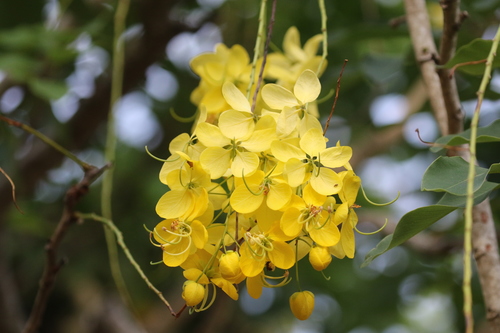
Cassia fistula L.
Cassia fistula L.
Cassia fistula L., the golden shower tree, is a tropical ornamental tree with ornamental, food, and traditional medicinal uses.
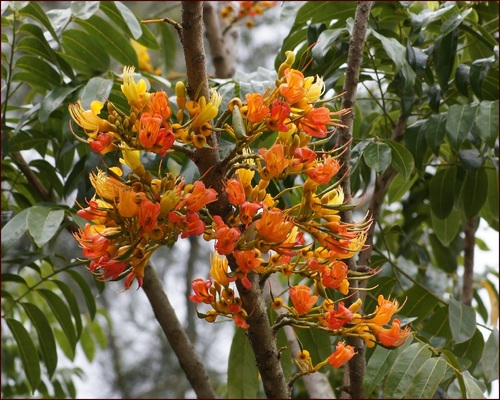
Castanospermum australe A.Cunn. ex Mudie
Castanospermum australe A.Cunn. ex Mudie
Castanospermum australe, or black bean, is a large evergreen tree native to Australasia with edible prepared seeds and ornamental uses.
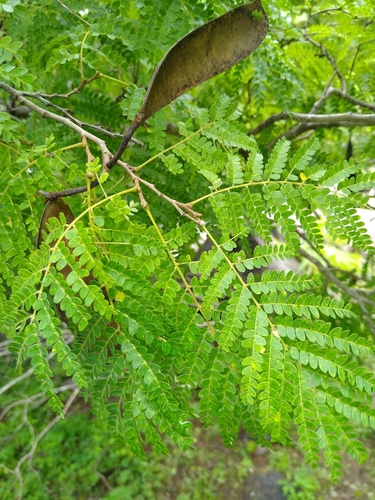
Cenostigma eriostachys (Benth.) Gagnon & G.P.Lewis
Cenostigma eriostachys (Benth.) Gagnon & G.P.Lewis
Cenostigma eriostachys has a lectotype from Costa Rica's Cocos Island, designated by Lewis in 1998, and Schizolobium covilleanum (flowering material) has a type from Panama's Prov. Cocle, collected by Pittier in 1917.
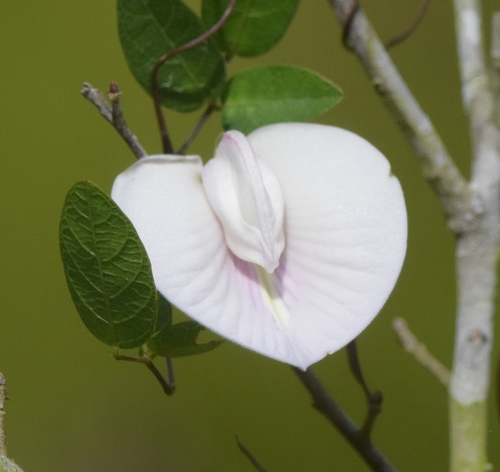
Centrosema arenicola (Small) F.J.Herm.
Centrosema arenicola (Small) F.J.Herm.
Centrosema arenicola is a rare vining flowering plant endemic to central peninsular Florida, USA.
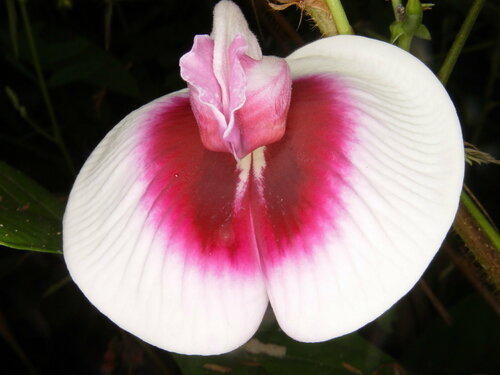
Centrosema plumieri (Turpin ex Pers.) Benth.
Centrosema plumieri (Turpin ex Pers.) Benth.
Centrosema plumieri is native to parts of the Americas including Mexico, Central America, and Brazil, introduced in Tropical Africa, with a selected voucher from Piedade in 2007 (Araújo et al. 520, UFP).
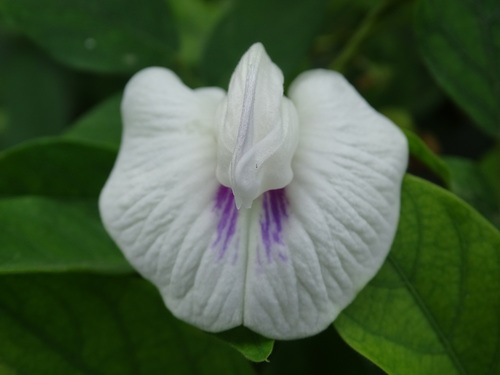
Centrosema pubescens Benth.
Centrosema pubescens Benth.
Centrosema pubescens Benth. is a tropical perennial herb widely used as protein-rich forage for livestock.
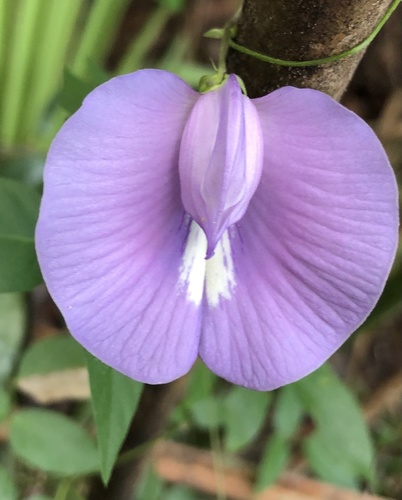
Centrosema virginianum (L.) Benth.
Centrosema virginianum (L.) Benth.
Centrosema virginianum is a nitrogen-fixing perennial vine native to the Americas, naturalized in tropical West Africa.
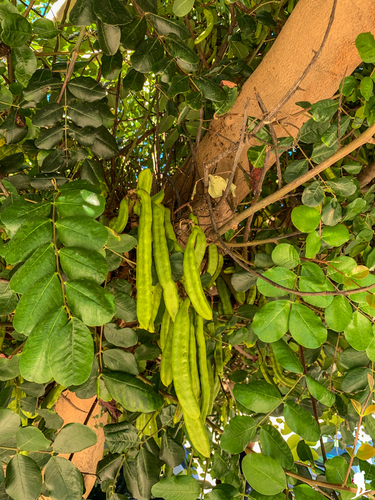
Ceratonia siliqua L.
Ceratonia siliqua L.
Ceratonia siliqua L., the carob tree, is a Mediterranean legume cultivated for its edible sweet pods.

Cercis canadensis L.
Cercis canadensis L.
Cercis canadensis, or eastern redbud, is a small North American ornamental tree with edible parts.
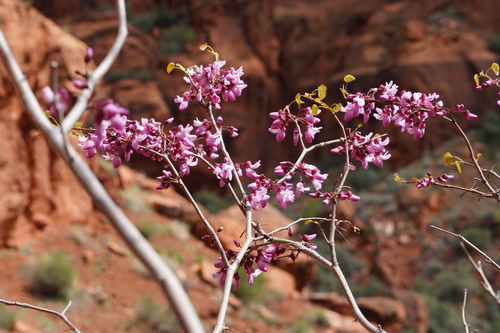
Cercis occidentalis Torr. ex A.Gray
Cercis occidentalis Torr. ex A.Gray
Cercis occidentalis (western redbud) is a North American deciduous shrub/tree used for basketry and cultivated as an ornamental.
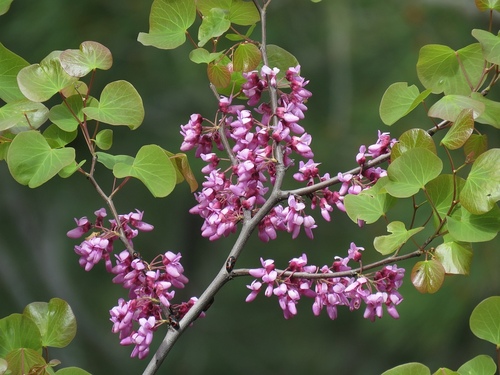
Cercis siliquastrum L.
Cercis siliquastrum L.
Cercis siliquastrum L., the Judas tree, is a small Fabaceae tree with edible flowers, cultivated as an ornamental.
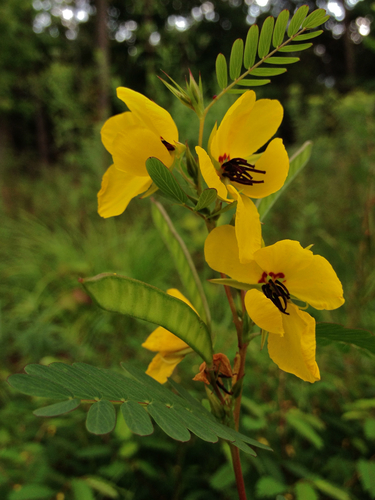
Chamaecrista fasciculata (Michx.) Greene
Chamaecrista fasciculata (Michx.) Greene
Chamaecrista fasciculata, or partridge pea, is a North American legume with historical medicinal uses and erosion control applications.
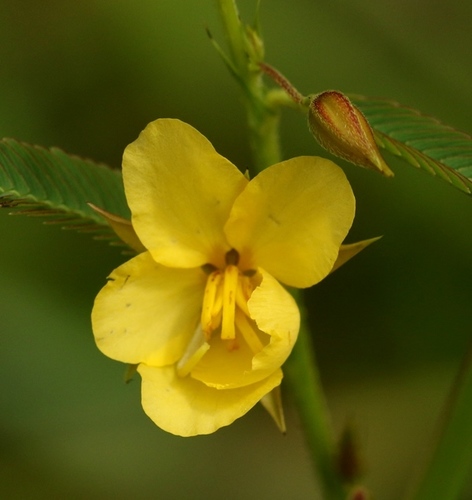
Chamaecrista mimosoides (L.) Greene
Chamaecrista mimosoides (L.) Greene
Chamaecrista mimosoides is a variable subshrub or herb native to Africa, Asia, and northern Australia, with traditional medicinal uses in India.
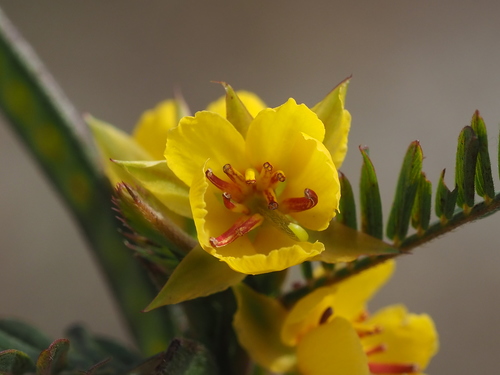
Chamaecrista nictitans (L.) Moench
Chamaecrista nictitans (L.) Moench
Chamaecrista nictitans is an annual low-growing herb native to the Americas with historical medicinal uses.
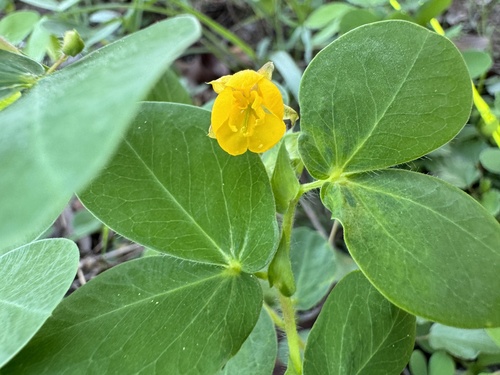
Chamaecrista rotundifolia (Pers.) Greene
Chamaecrista rotundifolia (Pers.) Greene
Chamaecrista rotundifolia, round-leaf cassia, is a perennial forage legume used for livestock feed and sustainable farming.
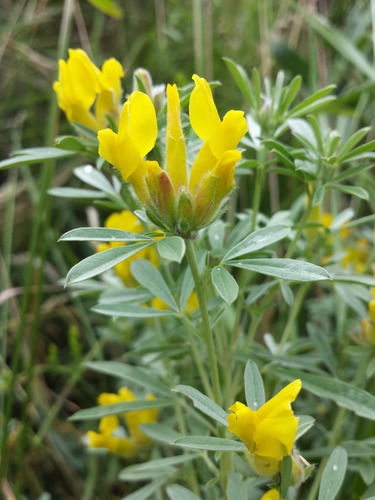
Chamaecytisus austriacus (L.) Link
Chamaecytisus austriacus (L.) Link
Chamaecytisus austriacus is a Fabaceae flowering plant native to parts of Europe and Asia, and introduced to the Baltic states and Belarus.
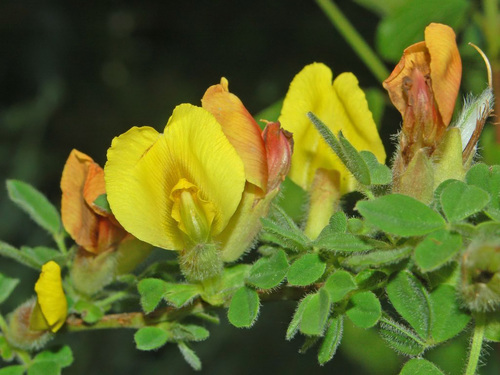
Chamaecytisus hirsutus (L.) Link
Chamaecytisus hirsutus (L.) Link
Chamaecytisus hirsutus is a hairy suffruticose flowering plant found across parts of Europe and Turkey in dry, calcareous habitats.
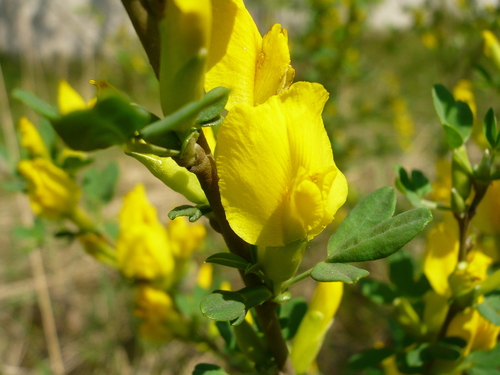
Chamaecytisus ruthenicus (Fisch. ex Wol.) Klásk.
Chamaecytisus ruthenicus (Fisch. ex Wol.) Klásk.
Chamaecytisus ruthenicus, or Ruthenian broom, is a Fabaceae flowering plant native to parts of Eastern Europe and Western Asia, introduced to northern Russia.
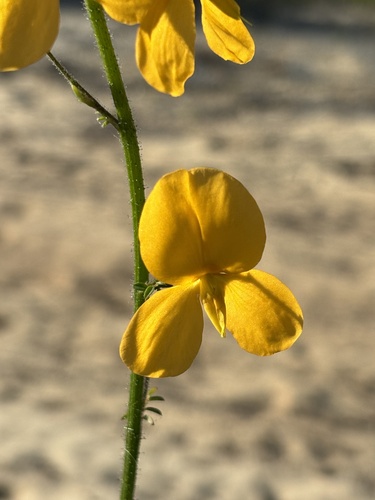
Chapmannia floridana Torr. & A.Gray
Chapmannia floridana Torr. & A.Gray
Chapmannia floridana is a 18-inch-tall perennial dicot flowering plant in the pea family, endemic to peninsular Florida.
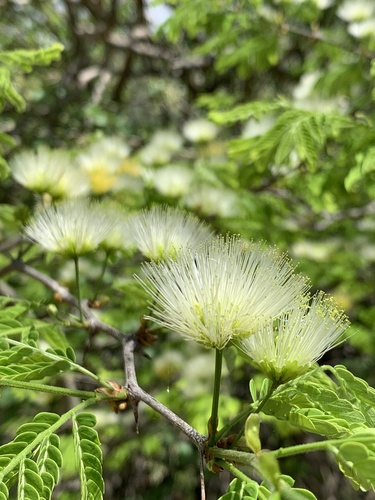
Chloroleucon mangense (Jacq.) Britton & Rose
Chloroleucon mangense (Jacq.) Britton & Rose
Chloroleucon mangense is a tree up to 10 m tall with a sparse crown, grayish exfoliating bark, bipinnate leaves, white - cream - pale yellow flowers, and legume fruits that turn from green to yellowish - black when mature.
Related Families
Start Exploring Nature Today
Download iNature for free. 10 identifications on us. No account needed. No credit card required.
Download Free on App Store
