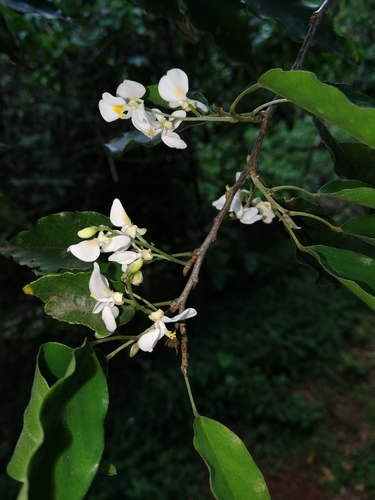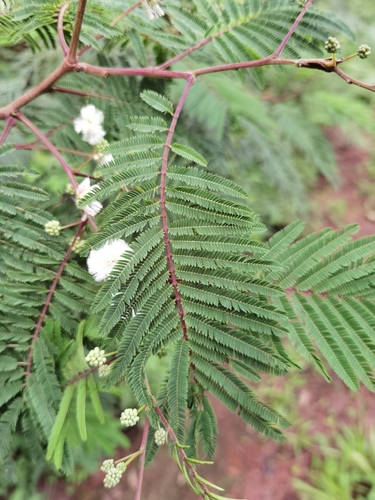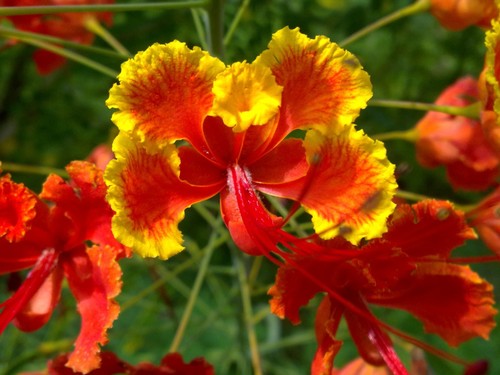
About Caesalpinia pulcherrima (L.) Sw.
Growth and Size
Caesalpinia pulcherrima (L.) Sw. is typically a shrub that reaches 3 meters in height. In climates with little to no frost, it grows larger and is semievergreen; in Hawaii, it is evergreen and grows to over 5 meters tall.
Cold Tolerance
In regions with light to moderate freezing temperatures, the plant dies back to the ground over winter, but regrows from the base in mid- to late spring. This species is more sensitive to cold than other related species.
Leaf Characteristics
Its leaves are bipinnate, 20 to 40 centimeters long, and hold three to 10 pairs of pinnae. Each pinna carries six to 10 pairs of leaflets that measure 15 to 25 millimeters long and 10 to 15 millimeters broad.
Flower Features
Flowers grow in racemes up to 20 centimeters long, and each individual flower has five petals that can be yellow, orange, or red.
Fruit Traits
The fruit is a pod that is 6 to 12 centimeters long.
Genus Seed Toxicity
All mature seeds of plants in the Caesalpinia genus are poisonous.
Edible Seed Exceptions
However, the immature seeds of C. pulcherrima are edible before they reach full maturity, and seeds of some other Caesalpinia species can be eaten after processing, for example C. bonduc seeds after roasting.
Merian's Surinam Encounter
In the 17th century, artist Maria Sibylla Merian encountered this plant in the Dutch colony of Surinam. In her publication Metamorphosis insectorum Surinamensium, Merian recorded that both Indigenous people and enslaved African people in the region used this plant, called flos pavonis or peacock flower, as an abortifacient in traditional medicine.
Indigenous Abortion Use
Merian wrote that Indians, who were mistreated by their Dutch masters, used the plant's seeds to induce abortion so their children would not be born into slavery.
Enslaved People's Reproductive Resistance
Enslaved Black people from Guinea and Angola also said they would threaten to refuse to have children unless they received better treatment, a practice that relied on this abortifacient plant.
Additional Traditional Uses
Enslaved people and American Indians also used the leaves, flowers, bark, and seeds of C. pulcherrima as an abortifacient, and enslaved peoples also used it for suicide in traditional medicine practice.