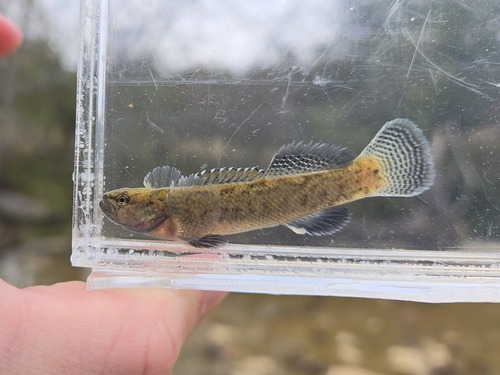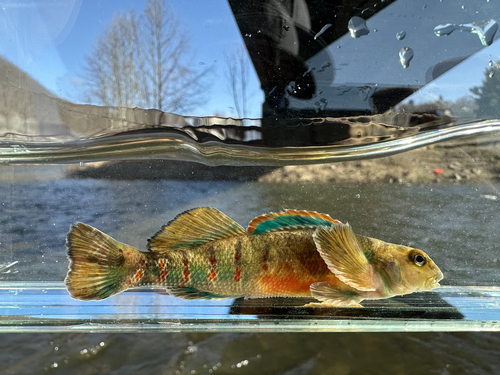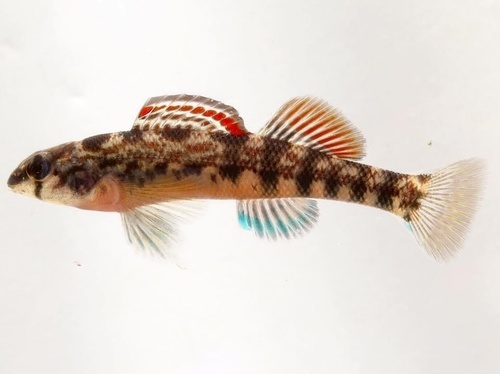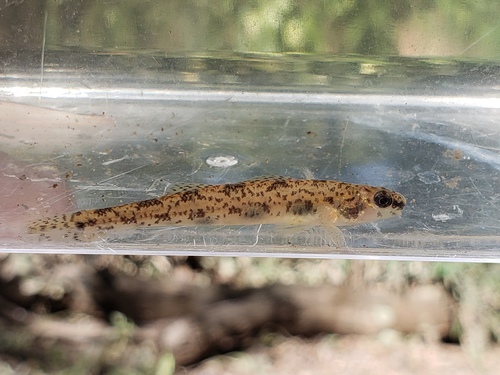
About Etheostoma rufilineatum (Cope, 1870)
Taxonomic Classification
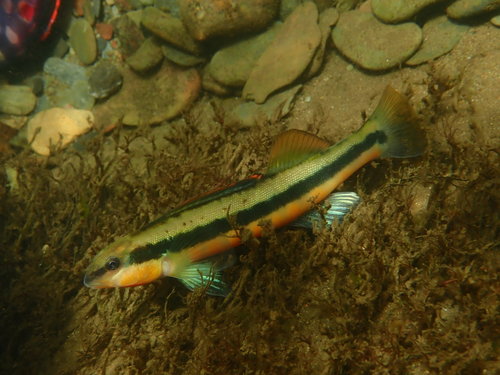
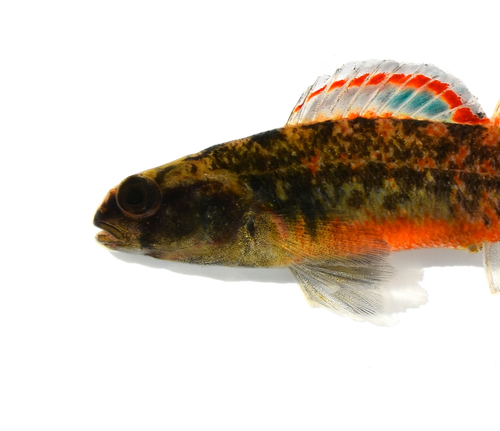
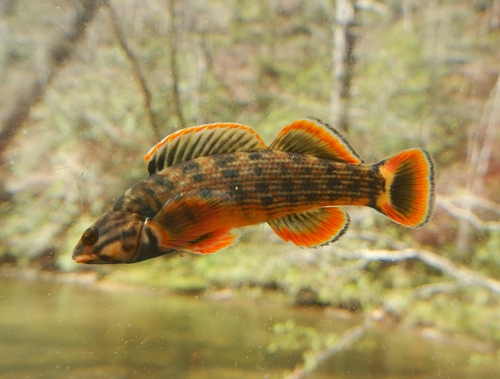
Etheostoma rufilineatum, commonly called the redline darter, is a species of freshwater ray-finned darter fish. It belongs to the subfamily Etheostomatinae, which is part of the family Percidae that also includes perches, ruffes, and pikeperches.
Distribution Range
This species is endemic to the southeastern United States, and both historically and currently, it has only been recorded in the Tennessee and Cumberland River drainages across Tennessee, Virginia, Kentucky, Alabama, North Carolina, Georgia, and Mississippi.
Typical Habitat
Like most other darter species, it typically lives in clear, rocky riffles of streams, creeks, and small rivers.
Size Measurements
The average adult length of the redline darter is 6.9 cm, and the maximum recorded length for this species is 8.4 cm.
Lifespan
The maximum recorded lifespan of a wild redline darter is four years.
Diet Composition
It feeds mainly on aquatic macroinvertebrates, including midge fly, black fly, and caddisfly larvae, as well as water mites and mayfly nymphs.
Spawning Period
Redline darters spawn in spring and early summer, from May through August.
Reproduction Process
Females lay between 21 and 131 eggs, which are fertilized by males then buried in the substrate. Males guard the nest until the eggs hatch.
Conservation Status
Across most of their range, redline darters are one of the most common darter species, so they do not need any specialized targeted management. They do, however, benefit from management activities that support healthy streams and diversity of other darter species, since they share similar habitat requirements.
Flow Requirement
Because of their feeding and reproductive habits, redline darters require flowing water. This means that damming of creeks or streams, by humans or beavers, can lead to the extirpation of this species from those affected water bodies.
Water Clarity Requirement
They also need clear water to feed, so siltation and pollution that increase water turbidity are harmful to the species.
General Behavior
The redline darter shows typical darter behavior. It prefers to live in riffles of small to medium-sized creeks, streams, and rivers, and is rarely, if ever, found in pools.
Additional Habitat Preferences
It can also live in shallow water shoals over bedrock, as long as some scattered cobble or gravel is available. The fish prefers areas with scattered larger rocks, as these rocks provide refuge from predators.
Predation Risk from Aquatic Predators
Living in shallow riffle areas limits predation from larger fish such as smallmouth bass (Micropterus dolomieu), since these larger fish are often too big to enter shallow riffles to feed.
Predation Risk from Terrestrial Predators
However, living in shallower water can make the redline darter more vulnerable to predation by terrestrial hunters including wading birds and raccoons (Procyon lotor).
Habitat and Feeding Link
The species' habitat choice is also tied to its feeding requirements. It feeds on aquatic and terrestrial insect larvae and other small invertebrates including midgeflies, black flies, caddisflies, and water mites, which tend to be more abundant in the habitats the redline darter occupies, making food readily available.
Dietary Flexibility
The availability of different food sources changes by season and location, and the redline darter's feeding habits shift accordingly.
Interspecific Competition
Due to its shared food and habitat preferences, the redline darter often competes directly with other darter species, including Nothotus spp. and many Etheostoma spp. It also competes with other small fish that share similar habitat requirements.